Category: Budget
The Long and Short of Disability Insurance
March 1, 2021

You may have never felt you needed to consider a disability insurance policy because you are young(ish), healthy, and don’t work in a business that exposes you to risky situations. Disability insurance is designed to cover a portion of your income if something happens to you like an injury or illness and you can’t work. Beginning in 2020, adverse effects of COVID-19 have been added to physical injuries, heart attacks, and cancer as major reasons to file claims for disability insurance.
COVID-19 symptoms can linger for months while the virus damages the lungs, heart, and brain, which increases the risk of long-term health problems. People who continue to experience symptoms after their initial recovery are described as “long haulers” and the condition has been called “post-COVID-19 syndrome” or “long COVID-19.”
Older people and people with many serious medical conditions are the most likely to experience lingering COVID-19 symptoms, but even young, otherwise healthy people can feel unwell for weeks to months after infection.
COVID-19 can make blood cells more likely to clump and form clots. Large clots can cause heart attacks and strokes, much of the heart damage caused by COVID-19 is believed to stem from very small clots that block tiny blood vessels in the heart muscle. Other parts of the body affected by blood clots include the lungs, legs, liver, and kidneys. COVID-19 also can weaken blood vessels and cause them to leak, which contributes to potentially long-lasting problems with the liver and kidneys.
People who have severe symptoms of COVID-19 often have to be treated in a hospital’s intensive care unit, with mechanical assistance such as ventilators to breathe. Simply surviving this experience can make a person more likely to later develop post-traumatic stress syndrome, depression, and anxiety.
Much is still unknown about how COVID-19 will affect people over time. Researchers recommend that doctors closely monitor people who have had COVID-19 to see how their organs are functioning after initial recovery.
Many large medical centers are opening specialized clinics to provide care for people who have persistent symptoms or related illnesses after they recover from COVID-19. Most people who have COVID-19 recover quickly. But the potentially long-lasting problems from COVID-19 make it even more important to reduce the spread of the disease by getting vaccinated, wearing masks, avoiding crowds, and frequently washing your hands.
Types of Disability Insurance
If you anticipate a need for disability insurance coverage or want to provide protection just in case an unforeseen injury or illness occurs, consider the two types of disability insurance: short term and long term. Both of them are designed to replace part of your regular income if you are unable to work. Even though they basically provide the same benefits, the following are differences and similarities for you to review.
Short-Term Disability Insurance (STDI)
- How much does it cover? About 60 to 70 percent of your salary.
- How long does it last? Usually 3 to 6 months, depending on the policy’s fine print.
- How much does it cost? About 1 to 3 percent of your annual income.
- How soon until you would receive your first payout? Around two weeks after your healthcare provider confirms your disability.
- Why would you get it? If your employer offers it at no cost to you.
Long-Term Disability Insurance (LTDI)
- How much does it cover? About 40 to 70 percent of your salary.
- How long does it last? Five years or longer if your disability continues.
- How much does it cost? About 1 to 3 percent of your annual income.
- How soon until you would receive your first payout? Usually around 3 to 6 months after your healthcare provider confirms your disability.
- Why would you get it? If you and dependents rely on your income and you don’t have sufficient savings to replace your regular salary long term.
You may be fortunate to have an employer who offers disability income protection insurance. If not, you can elect it during open enrollment or you may want to choose additional disability insurance to supplement what your employer provides. Ideally, you would have a three-month cash reserve to cover you before your payments go into effect. If not, the short-term disability protection, which typically starts after 14 days, would pay until the long-term disability is in place. It is important to understand how your policy defines disability which may not match your definition or need. Usually, workplace policies have a narrower definition of disability than private policies do. Depending upon your occupation, through a private policy you may be able to elect more favorable terms. Your financial advisor or life insurance agent can help you to find a policy that’s right for you.
In the United States, individuals can obtain disability insurance from the government through the Social Security Administration (SSA). To qualify for government-sponsored disability insurance, an applicant must prove that his disability is so severe that it prevents him from engaging in any type of meaningful work at all. SSA also requires applicants to demonstrate that their disability is expected to last for at least 12 months, or that it is expected to result in death.
You may find it helpful to consult an attorney when applying for a claim, regardless of your diagnosis. Qualifying for Social Security disability benefits is determined by your medical eligibility and how severely your condition affects your ability to work—an attorney can help explain the process and represent you if your case goes to court.
By contrast, some private plans only require the applicant to demonstrate that he can no longer continue in the same line of work in which he was previously engaged. If you take out your own policy, it will stay with you whenever you change jobs. But it’s cheaper if you can buy it through your employer that may offer it when you come on board, or you can talk to your HR staff about setting it up later.
STDI replaces a portion of your paycheck for a short period of time—three to six months. Most people get STDI through their employer. You can get an individual policy through some private insurers, but these plans are usually expensive. An alternative to an STDI policy is to save 3 to 6 months of expenses in an emergency fund that you can draw upon if you get sick or injured and have to take time off work for a few months.
Long-term disability insurance (LTDI) provides coverage if you’re out of work for a longer period of time—years or even decades. It, too, is sometimes offered by employers, but even if the benefit is provided, it might not be adequate. Employees often take out individual or a supplemental LTDI policy if the benefit isn’t provided by employers.
When applying for either an STDI or an LTDI policy, make sure you find out answers to the following questions from your insurer:
- What is covered under my policy?
- Does my disability qualify me for coverage?
- When and how do I make a claim?
- What do I do if a claim is denied?
Limits of Disability Insurance
Disability insurance is only designed to replace a portion of your income—it doesn’t cover extra expenses like your medical bills and long-term care costs.
According to Mason Finance, “Most disability policies come with several built-in exclusions in order to protect the insurer from claims submitted as a result of disabilities sustained from what it considers to be ‘high-risk’ activities, such as skydiving, mountain climbing, flying in experimental aircraft, or other such activities. Your insurer may also exclude any preexisting conditions that you have when you apply for coverage.”
While pregnancy isn’t usually covered by long-term policies, complications that extend beyond pregnancy, for example, if your doctor orders you to refrain from working to recuperate from a C-section, you might qualify for benefits—but only if you had a long-term policy in place before you got pregnant.
Short-term policies do cover birth as a disability, but you might be waiting a long six-to-eight weeks for your first payout.
InsureYouKnow.org
If you decide to apply for disability insurance, you can track your policy, payments, and any claims you submit at InsureYouKnow.org.
Driving (or Not) with Auto Insurance
February 15, 2021

Although you may not be driving as much during the COVID-19 pandemic as you did in previous years, you still need to have auto insurance if you own a vehicle. The following tips may help you establish or review your auto insurance policy as you dream about taking road trips while your motionless car is parked in your driveway.
Visit Your Auto Insurer Online
Before the pandemic, you may have felt comfortable visiting your auto insurer’s office to apply for or review your auto insurance policy, or to file a claim for a car accident, vandalism, car theft, hail, fire, floods, falling objects, and collisions with animals. During the COVID-19 pandemic, however, claims are processed virtually. You can use your insurer’s mobile app or website and go through the entire claims process from the comfort of your own home.
In the event of an accident, you may be able to upload photos of your car’s damage that your insurer can use to estimate a repair and then send you a payment quickly.
Get Insurance Before You Buy a Car
Shop for car insurance before you buy a car so you can drive your new car off the dealer’s lot. There are four basic kinds of car insurance coverage: property damage liability, bodily injury liability, collision, and comprehensive. Review each one of these types of coverages carefully and decide which ones fit your needs. You might also want to consider getting protection in the event of an accident caused by an uninsured or underinsured driver.
You’re going to need proof of insurance when you buy a car before you can take it home with you. Follow these steps to get insurance:
- Have a make, model, and year in mind. In the process of car shopping, you’ve most likely identified the types of cars you’re interested in buying. An insurance agent can give you quotations for a few models, so you can budget accordingly.
- Compare quotations from multiple car insurance companies. An independent insurance agent or online car insurance comparison site is an efficient way to price shop. Rates vary considerably among insurers, so you will want more than one or two quotations.
- Understand what coverage types you’ll need. Most states require you to carry car liability insurance. Also, if you’re taking out a car loan or lease, your lender or leasing agent will most likely require collision and comprehensive insurance.
- Ask your insurance agent to set up a policy. If you have the car picked out and know the vehicle identification number (VIN), you can have your policy ready to go before you arrive at the dealership. If you don’t have the VIN yet, ask if the agent can set up a policy with the information you have, like the drivers in your household and the address where you’ll keep the vehicle. Once you decide on the car, call the agent with the VIN to complete the purchase of the car insurance policy.
- Ask about bundling. Some insurance companies offer discounts to protect all your property with one insurer. Multiple-policy discounts can apply to combinations of home, auto, and life, and even motorcycle insurance.
Look into Pay-Per-Mile Insurance
If the pandemic has drastically altered your driving behavior since you aren’t commuting to work or going on road trips, you might want to look into an alternative car insurance model like pay-per-mile insurance.
In this plan, you’ll get charged a base rate per month plus a per-mile rate. Your monthly bill will depend on how much you drive. For example, if you drive 600 miles in a month at a $29 base rate and a $0.05 per-mile rate, your bill for that month would be $59. But, if you do return to commuting to your office you could end up paying more per month than with a traditional car insurance policy.
Reconsider Dropping Optional Coverage
If you have an older car and you’re considering dropping collision and comprehensive insurance to save on your insurance policy, Forbes Advisor recommends that you reconsider. Dropping coverage could leave you with a significant coverage gap. But you don’t have to drop both. It may be better financially to drop collision insurance but keep comprehensive insurance, which pays for repairs, such as ones caused by hail or falling tree branches that don’t involve your own driving.
Check on Auto Policy for Delivery Job
If you’ve taken on a delivery job and use your car for deliveries from a restaurant, grocery store, or other business, check with your car insurer to see if you need a commercial auto policy. If you’re involved in an accident while working, your personal auto policy may not cover your claim and you could be held responsible for repair bills and medical expenses.
Cover Your Teenage Driver
If you have a teen who’s driving, you’re going to pay a premium rate for his car insurance. Adding an inexperienced teen driver to your insurance will add an average of about $1,700 annually to your car insurance bill, based on Forbes Advisor’s research.
But there are ways to reduce anxiety about teen driving. By being a good driver role model, you can spend time driving with your teen and instill safe driving habits, including not using a phone while driving. If your teenager keeps accidents and violations off his driving record, the result will be substantially cheaper rates.
Protect Senior Driver’s Rates
If you are a senior driver with a perfect driving record, with no accidents or claims, you might wonder why your car insurance rates have increased. You might be in excellent health for someone your age and you might feel that your insurer is discriminating based on how old you are. However, insurance companies are legally allowed to charge any premium they want based on your driving record or age. Even if your reflexes are sharper than many other drivers of your age or drivers who are younger, your insurer will place you in the senior driver’s category along with other senior drivers whose reflexes are not as sharp as yours.
The following methods can help senior drivers save money on car insurance:
- Change your driving status. If you are retired, then changing your driving status to pleasure or leisure can help you save money. This status covers all of your daily routines that are non-work related. Drivers who are placed in this category will be seen as a lower-risk by their insurers and they will pay less on their insurance rates.
- Ask for a senior discount. Many insurance companies offer a discount to seniors who take a defensive driving course. These courses are not expensive and you can can stream them online at home. They can help you refresh your driving skills and knowledge and teach you how age-related diseases and medication can affect driving.
- Drop a driver from your policy. There are some states where not all the licensed drivers from a household are required to have car insurance. In order to reduce your policy rates, you can exclude anyone from your policy who no longer drives. Usually, those persons are older spouses or parents. Also, you can change the primary driver from your policy to someone from the household who is younger, but only if that person is the one who is driving the most.
- Improve your car’s safety. Another method used by drivers of any age to save on car insurance is to install safety devices on the vehicle. You can lower your premiums if you install safety systems like rearview cameras, lane drift, parking assist, and collision warning systems.
- Shop around. Maybe the best option you can have to lower your insurance rates is to shop around and compare different car insurance quotations. Insurance companies have different premiums for different groups of people. Compare insurance quotations to find an insurance rate and coverage to your advantage.
InsureYouKnow.org
At InsureYouKnow.org, file copies of your proof of insurance, policy documents, and any car insurance claims or correspondence you file with your auto insurance carrier.
CARES Acts in Action
January 14, 2021
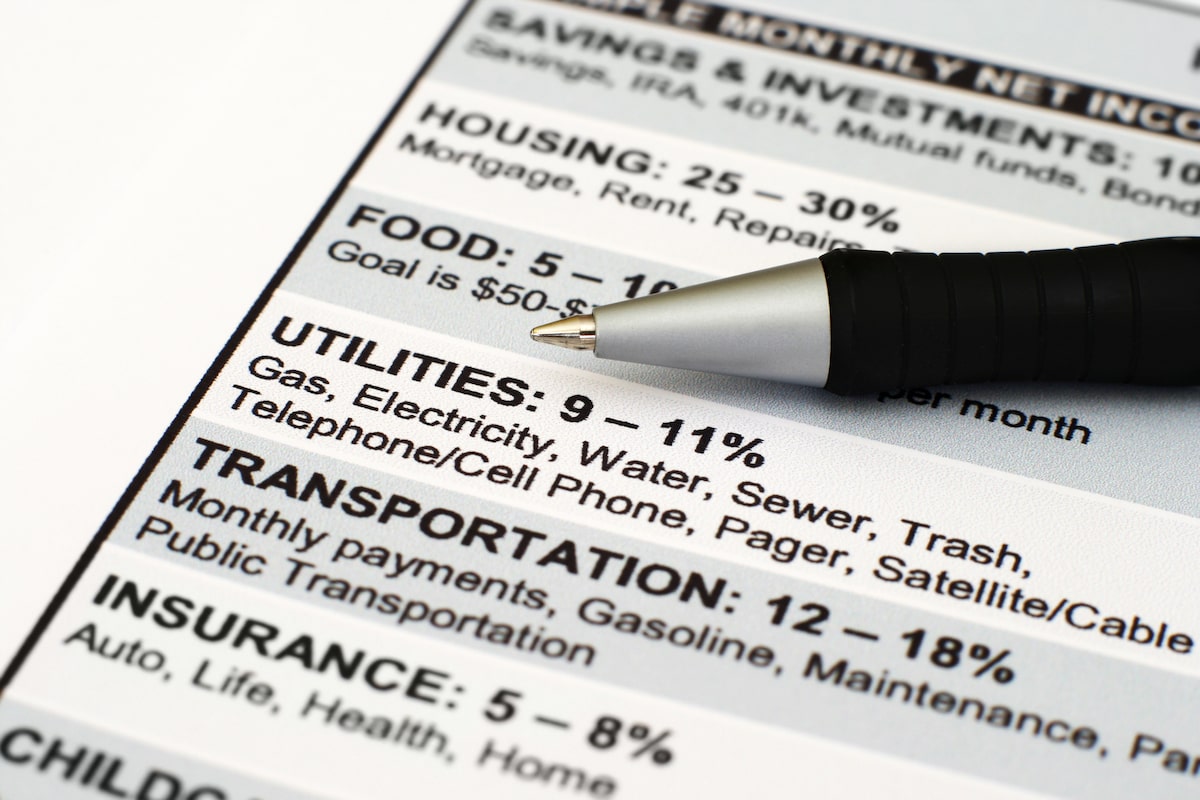
In response to the economic fallout of the COVID-19 pandemic in the United States, the Coronavirus Aid, Relief, and Economic Security Act, also known as the CARES Act, a $2.2 trillion economic stimulus bill, was passed by the U.S. Congress and signed into law by President Trump on March 27, 2020. The CARES Act made it easier for millions of U.S. workers to withdraw or borrow money from their retirement plans through December 30, 2020. People under the age of 59.5 affected by the coronavirus were allowed to take a distribution of up to $100,000 from an IRA, 401(k), or similar account without penalty. It also permitted loans of up to $100,000.
Usually, withdrawing funds from a tax-deferred account before age 59.5 would result in a 10 percent penalty on top of any income taxes incurred. But under the temporary rules part of the CARES Act, people with pandemic-related financial troubles could withdraw without penalty up to $100,000 from any combination of their tax-deferred plans, including 401(k), 403(b), 457(b) and traditional individual retirement accounts. The rules applied to plans only if the employee’s employer opted in.
Virus-Related Withdrawals
Some plans already permitted hardship withdrawals under certain conditions, and the rules for those were loosened in 2019. But the CARES Act rules were even more lenient by allowing virus-related hardship withdrawals to be treated as taxable income, but the liability was automatically split over three years unless the account holder chose otherwise. The tax can be avoided if the money is put back into a tax-deferred account within three years.
Almost 60 percent of Americans withdrew or borrowed money from their IRA or 401(k) during the coronavirus pandemic, according to a survey from Kiplinger and digital wealth management company Personal Capital. Most U.S. retirement accounts were already underfunded and the pandemic caused a significant number of Americans to withdraw money, potentially setting them back even further. They will now have to work longer or delay retirement in order to rebuild their savings.
“The past year rocked the confidence of most Americans saving for retirement,” Mark Solheim, editor of Kiplinger Personal Finance, said in a release. “With many people dipping into their retirement savings or planning to work longer, 2020 will have a lasting impact for years to come.”
When it comes to drawing down savings, younger workers have been more willing to withdraw from retirement accounts during the pandemic. A Transamerica survey found that 43 percent of millennials have either taken out a loan or withdrawal from a retirement account or plan to do so in the near future, compared to 27 percent of Generation Xers and 11 percent of baby boomers.
Boomers were much more likely to completely rule out withdrawing from their retirement accounts, with nearly 3 in 4 (73 percent) saying such a move was out of the question. In contrast, 36 percent of millennials and 56 percent of Gen Xers say they won’t take money from their retirement accounts to deal with financial shortfalls attributed to the COVID-19 pandemic.
Retirement Savings Sacrifices
Many workers are sacrificing their retirement savings in order to keep afloat during the coronavirus pandemic. Now that the original CARES Act has expired, taking an early withdrawal from a retirement account can have far-reaching implications. You may not only have to pay a 10 percent penalty, but you’ll also lose out on having your money earn interest for a longer period of time.
As a result, you may likely have to work longer in order to have enough money for retirement if you withdraw funds from your account now. Nearly a third of Americans say the pandemic has already led to a change in their expected retirement age. Since the start of the coronavirus outbreak, the economy has risen to the top of survey respondents’ list of obstacles with 49 percent saying it is the top barrier to achieving a financially secure retirement. The economy was followed by 33 percent claiming a lack of savings and 32 percent blaming health care costs as reasons to delay retirement.
Emergency Savings Accounts
Effects of the pandemic on emergency savings accounts have brought to light how few households have set aside money inside a retirement plan or for education expenses and it has prompted more employers to start their own programs. For now, about 10 percent of large employers offer some type of support to encourage emergency savings accounts.
But the scope of the damage caused by the pandemic means that even the traditional emergency savings advice of putting aside roughly three to six months of basic living expenses hasn’t been enough to provide a secure provision for an emergency. During the coronavirus pandemic, millions of Americans have lost incomes and work. An employee who lost a job early in the pandemic could have easily used up all his savings while being unemployed.
But withdrawing funds from a 401(k) has consequences, such as increased tax bills and possibly sacrificing future retirement income. According to survey data of 1,902 U.S. workers by Edelman Financial Engines, one in five Americans is considering taking an early withdrawal. But the survey also found that many Americans who have done so regret it.
For most borrowers, doing so was for an essential reason—35 percent spent their funds on housing, and 7 percent took a loan due to a loss of income. Some did so for less pressing reasons, for example, about 20 percent borrowed to pay off credit card debt and 8 percent funded a car purchase.
Borrowing Consequences
Borrowers admit they didn’t understand the consequences or alternatives or not doing enough research on other options available. Many people say they regret their decision for this reason—about 41 percent of people who took hardship withdrawals and 42 percent who took a loan regret it because of a lack of understanding.
Others say they wish they’d understood the other options available. During the pandemic, many lenders have helped to ease the burden on Americans facing financial hardship. As part of the CARES Act, all federally-backed mortgages had the option of forbearance. Banks across the country offered help programs for loans ranging from mortgages to personal loans.
According to Edelman, some wish they’d turned to those programs before making a long-term commitment in reducing their retirement savings. Of people who took hardship withdrawals, 52 percent said they wish they’d explored other options first, while 44 percent of those who took a loan said the same.
Overall, most wish they’d consulted a professional before taking funds from their 401(k). Four out of five borrowers who regret the withdrawal or loan say that consulting a financial advisor would have helped their decision making.
CARES Act II
On December 27, 2020, President Trump signed H.R. 133, another stimulus bill that Congress passed on December 21. This legislation extends unemployment assistance not only for employees but also for independent contractors and other self-employed individuals for 11 weeks. The bill includes the “Continued Assistance for Unemployed Workers Act of 2020,” which provides for an extension from December 31, 2020 until March 14, 2021 of the CARES Act’s unemployment provisions, including a new form of benefits for all self-employed individuals: pandemic unemployment assistance (PUA).
The original CARES Act provided PUA benefits for up to $600 a week for as many as 39 weeks, retroactive to January 27, 2020. The new stimulus bill, CARES Act II, halves that amount and limits PUA to $300/week. Those eligible for PUA also will receive an additional $300/week through the end of the extension period, whereas CARES Act I had added $600/week in federal stimulus payments. Finally, the new stimulus bill provides independent contractors with paid sick and paid family leave benefits through March 14, 2021.
CARES Act II contains a new provision: unemployed or underemployed independent contractors who have an income mix from self-employment and wages paid by an employer are still eligible for PUA. Under CARES Act I, any such worker was typically eligible only for a state-issued benefit based on their wages. Under CARES Act II, the individual now is eligible for an additional weekly benefit of $100 if he earned at least $5,000 a year in self-employment income. The $100 weekly payment which would be added to the $300 weekly benefit, also will expire on March 14.
InsureYouKnow.org
If the original CARES Act or CARES Act II applies to your personal financial situation, you may want to consult a financial advisor about decisions you made in 2020 or plan to make in 2021. Then, keep a record of all your financial decisions at InsureYouKnow.org so you’ll be prepared for additional financial challenges or government stimulus opportunities in the new year.
Home for the Holidays
December 17, 2020
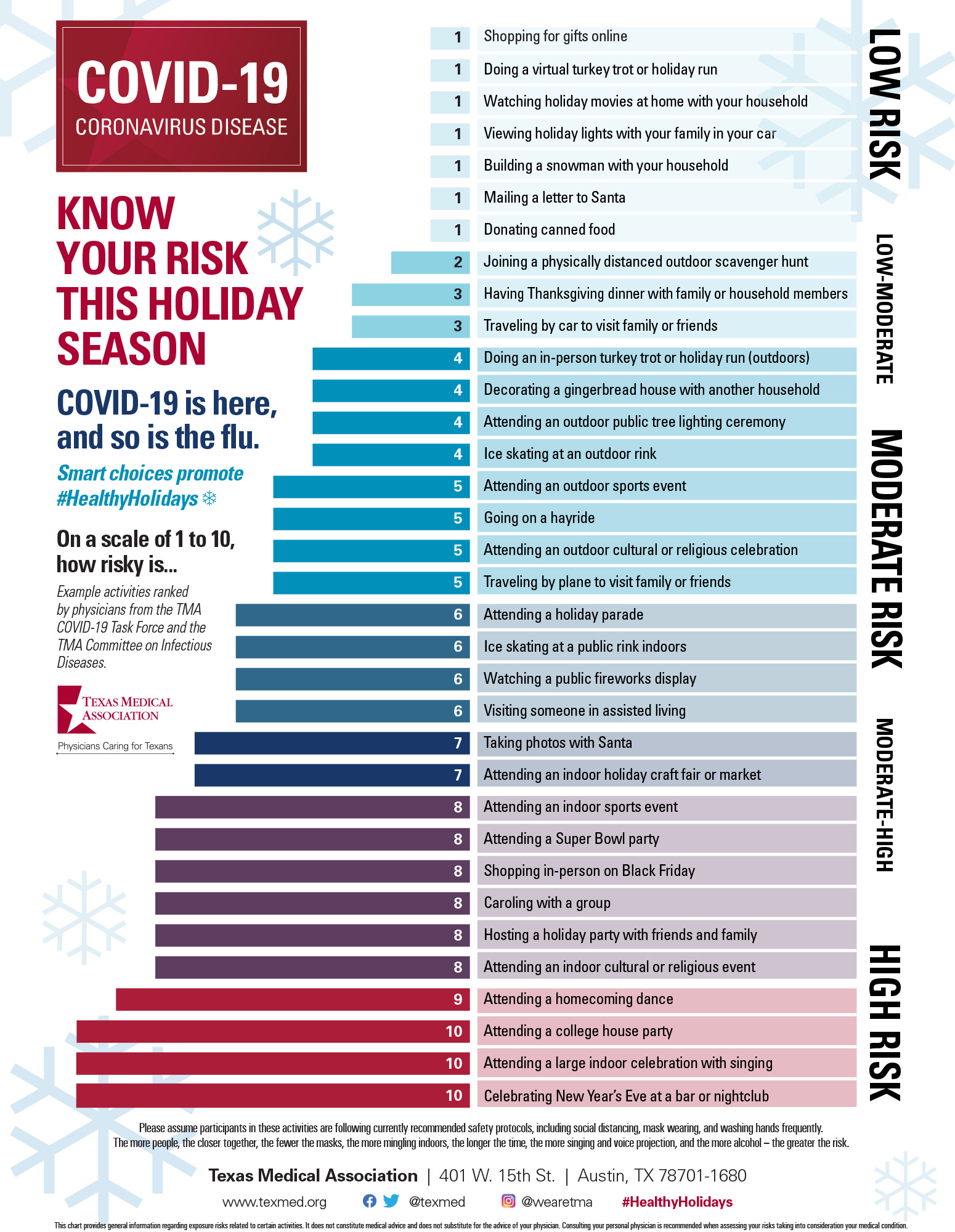
As 2020 comes to a close, memories of past holiday gatherings with family and friends may increase the stressful and isolating feelings you have experienced during the COVID-19 pandemic. Holiday celebrations will be different this year to prevent the spread of COVID-19.
Texas Medical Association has compiled a Know Your Risk This Holiday Season chart to provide a list of high-risk activities to avoid and fun alternatives to adapt that pose lower risk of spreading COVID-19. The chart ranks 34 holiday activities from least to most risky so holiday revelers can make informed choices during the busiest travel and social-gathering season of the year. Among the least risky items on the chart are shopping for gifts online, watching holiday movies at home, or viewing holiday lights with your family in your car. The riskiest activities include attending a large indoor celebration with singing, attending a college house party, and celebrating New Year’s Eve at a bar or nightclub.
The Centers for Disease Control and Prevention (CDC) reports that the best way to stay safe and protect others this holiday season is to stay home and celebrate with people with whom you live. Getting together with family and friends who do not live with you can increase the chances of getting or spreading COVID-19 or the flu.
Travel Plans up in the Air
Travel is highly discouraged because it may increase your chance of getting and spreading COVID-19. Consider postponing travel and staying home to protect yourself and others this year.
If you are considering traveling, the CDC recommends asking yourself the following questions before you make your travel plans.
- Are you, someone in your household, or someone you will be visiting at increased risk for getting very sick from COVID-19?
- Are cases high or increasing in your community or your destination? Check CDC’s COVID Data Tracker for the latest number of cases.
- Are hospitals in your community or your destination overwhelmed with patients who have COVID-19? To find out, check state and local public health department websites.
- Does your home or destination have requirements or restrictions for travelers? Check state and local requirements before you travel.
- During the 14 days before your travel, have you or those you are visiting had close contact with people they don’t live with?
- Do your plans include traveling by bus, train, or air which might make staying 6 feet apart difficult?
- Are you traveling with people who don’t live with you?
If the answer to any of these questions is “yes,” you should consider making other plans, such as hosting a virtual gathering or delaying your travel.
The safest thing to do is to stay home, but if you do decide to travel, testing can make travel safer but it does not eliminate all risk.
Safety Measures from Home and Back
If you decide to travel, get a flu vaccine prior to traveling and follow these safety measures during your trip to protect yourself and others from COVID-19:
- Wear a mask in public settings—on public and mass transportation, at events and gatherings, and anywhere you will be around people outside of your household.
- Avoid close contact by staying at least 6 feet apart from anyone who is not from your household.
- Wash your hands often with soap and water for at least 20 seconds or use hand sanitizer that contains at least 60 percent alcohol.
- Avoid contact with anyone who is sick.
- Avoid touching your face mask, eyes, nose, and mouth.
According to the CDC, for those who decide to travel, COVID-19 tests should be considered one to three days before the trip and again three to five days afterward. The agency also recommends travelers reduce non-essential activities for a full week after they return or for 10 days if not tested afterward.
Based on extensive modeling, the CDC has revised quarantine guidance and now recommends that people who have been in contact with someone infected with the virus can resume normal activity after 10 days, or seven days if they receive a negative test result. That’s down from the 14-day period recommended since the pandemic began.
At InsureYouKnow.org, you can keep track of travel insurance, medical records, including any COVID-19 testing and results as well as vaccines for the flu and COVID-19, when it becomes available. Social gatherings next winter are predicted to be more enjoyable and fraught with less fear of contracting and spreading a coronavirus. You’ll also have more opportunities to travel and to reconnect with family and friends after a COVID-19 vaccine has been disseminated worldwide.
Ensure Your Health Care Coverage
November 15, 2020
Changing your calendar to the month of November signals the need to review your health insurance coverage for the coming year. If you don’t have health insurance coverage through an employer, you’ll need to buy it yourself if you want coverage in 2021.
The Affordable Care Act (ACA) (also known as Obamacare), enacted in March 2010, called for the creation of a health insurance exchange in each state, with three primary goals:
- Make affordable health insurance available to more people. The law provides consumers with subsidies (“premium tax credits”) that lower costs for households with incomes between 100 percent and 400 percent of the federal poverty level.
- Expand the Medicaid program to cover all adults with income below 138 percent of the federal poverty level.
- Support innovative medical care delivery methods designed to lower the costs of health care in general.
In the article, “Insurance Coverage after Job Loss—The Importance of the ACA during the Covid-Associated Recession,” published on October 22 in The New England Journal of Medicine, the authors state, “The ACA, having created several new options for health insurance unrelated to employment, will protect many recently unemployed people and their families from losing coverage.” The article also emphasizes, “The very virus that has brought about record unemployment levels is the same agent that makes health insurance—and the new options created under the ACA—more important than ever.
Open Enrollment for 2021
In every state, open enrollment for ACA-compliant 2021 health coverage for individuals and families started on November 1 and, in most states, will end on December 15, 2020. This deadline applies to the 36 states that use HealthCare.gov and it also may apply in some of the states that run their own exchanges.
You can enroll for a health insurance plan online, over the phone, or in-person. When you enroll in a plan through the exchange, you need to have the following information on hand for each enrollee:
- Name, address, email address, Social Security number, birthdate, and citizenship status.
- Household size and income if you’re planning to apply for premium subsidies or cost-sharing reductions. A wide range of documentation can be used to prove your income, including pay stubs, W2s, or your most recent tax return.
- Coverage details and premium for any employer-sponsored plan that’s available to your household (regardless of whether you’re enrolled in that plan or have declined it).
- Payment information that the insurer will be able to use to charge your premiums.
- Your doctors’ names and zip codes, so that you can check to make sure they’re in-network with the health plans you’re considering.
- A list of medications taken by anyone who will be covered under the policy. Each insurance plan has its own formulary so you’ll want to check to see which one will best cover the medications you need.
- If you want to enroll in a catastrophic plan and you’re 30 years old or older, you’ll need a hardship exemption (note that premium subsidies cannot be used with catastrophic plans, so these are generally only a good idea if you don’t qualify for a premium subsidy, but can meet the requirements for a hardship exemption).
Coverage Effective January 1
In almost all cases, your coverage will take effect on January 1, 2021 if you sign up during the open enrollment window in the fall of 2020. If you’re already enrolled in an individual-market plan and you’re picking a different plan during open enrollment, your current plan will end on December 31 and your new plan will take effect seamlessly on January 1 if you continue to pay your premiums.
December Deadline Limitations
If you don’t enroll in an ACA-compliant health insurance plan by the end of open enrollment on December 15 in most states, your buying options may be limited for the coming year. Open enrollment won’t come around again until November 2021, with coverage effective January 1, 2022. Exceptions include:
- Medicaid and CHIP enrollment are available year-round for those who qualify. If your income drops to a Medicaid-eligible level later in the year, you’ll be able to enroll at that point. Similarly, if you’re on Medicaid and your income increases to a level that makes you ineligible for Medicaid, you’ll have an opportunity to switch to a private plan at that point, with the loss of your Medicaid plan serving as the qualifying event that triggers a special enrollment period.
- Native Americans can enroll year-round in in plans through special provisions in the ACA that apply to Native Americans.
- If you have a qualifying event during the year, you’ll have access to a special enrollment period. Qualifying events include marriage (if at least one spouse already had coverage prior to the marriage), the birth or adoption of a child, loss of other minimum essential coverage, or a permanent move to a new geographical area where the available health plans are different from what was available in your prior location (if you already had coverage prior to your move).
You can access a guide to all of the qualifying events that trigger special enrollment periods in the individual market including details about the specific rules that apply to each of them.
No Federal Penalty but Some States Levy Tax Penalties
There is no federal government penalty for being uninsured in 2021 but four states (Massachusetts, New Jersey, California, and Rhode Island) and Washington, DC, impose tax penalties for not having health insurance.
For More Information About ACA-Healthcare Coverage
Follow these steps:
- Get a quotation at healthinsurance.org.
- ‘Window shop’ anonymously on your state exchange (if you’re in Washington, DC, or one of the 14 states that run their own exchanges) or HealthCare.gov’s plan browsing page if you’re in one of the other 36 states.
- Consult with a trained advisor by setting up an appointment with a navigator or broker in your area who will be able to help you sort through the available options and figure out which one will best meet your needs.
- Talk with your health care providers if you’re considering a policy change during open enrollment. You’ll want to know which provider networks include your doctors, and whether any network changes are planned for the coming year.
Auto-Renewal for Existing ACA-Compliant Health Plan
If you’re already enrolled in an ACA-compliant health plan through your state’s marketplace, you can probably let your plan automatically renew for 2021. Auto-renewal is an option for nearly all exchange enrollees, although Pennsylvania and New Jersey have transitioned away from HealthCare.gov and are using their own new enrollment platforms instead. Residents in those states need to pay close attention to notifications they receive from the marketplace with instructions on how to renew coverage or select a new plan for 2021.
But, relying on auto-renewal for ACA-compliant insurance coverage may not be in your best interest. No matter how much you like your current plan, it pays to shop around during open enrollment and see if a plan change is worth your while because:
- In most states, you won’t be able to pick a new plan after your coverage is auto-renewed.
- Your subsidy amount will generally change from one year to the next. If your subsidy gets smaller, auto-renewal could result in higher premiums next year.
- If you receive a subsidy, auto-renewal could be risky even if the subsidy amount isn’t declining. This FAQ explains details that you may encounter if you let your individual health insurance plan automatically renew.
- If your plan is being discontinued, auto-renewal will result in the exchange or your insurer picking a new plan for you.
- Auto-renewal might result in a missed opportunity for a better value.
You might still decide that renewing your current plan is the best option for 2021. But, it’s definitely better to actively make that decision rather than letting your plan auto-renew without considering other available options.
After you have squared away your health care coverage for 2021, you can record all the decisions you make, enrollment forms you submit, and confirmations you receive at InsureYouKnow.org. By doing that, you’ll be able to review your health insurance coverage commitments in November 2021 in preparation for 2022.
Reduce, Reuse, and Recycle
October 30, 2020

On Sunday, November 15, acknowledge America Recycles Day 2020 by recognizing the importance and impact of recycling, which has contributed to American prosperity and the protection of our environment since 1997 when it was created by the National Recycling Coalition. In 2009, this holiday became an integral part of the Keep America Beautiful Campaign. Today, there are thousands of events across the United States to raise awareness about recycling and to encourage people to recycle.
The recycling rate has increased from less than 7 percent in 1960 to the current rate of more than 35 percent. A study by the U.S. Environmental Protection Agency (EPA) found that every 10,000 tons of materials recycled supports nearly 16 jobs and $760,000 in wages.
The recycling efforts of communities and business throughout the United States have helped with this success and growth. To build on recycling progress, EPA as well as local recycling providers encourage every American to contribute by recycling right that includes checking with your local collection agency to be certain that items you put in your recycling bin are acceptable. Items like cardboard, metal cans, and paper are commonly accepted by local curbside programs, but items like plastic bags, electronics, and batteries are not. Visit the EPA website at How Do I Recycle?: Common Recyclables to see how and where to recycle specific categories of items you are ready to reduce in your environment.
According to HolidaysCalendar.com, interesting recycling facts include:
- 60 percent of trash could be recycled
- Aluminum cans can be recycled endlessly
- Aluminum cans can go from recycling back to store shelves in 2 months
- Recycling one can saves enough energy to run a TV for almost 3 hours
- 80 billion aluminum cans are used each year around the world
- Americans throw away more than 25 trillion Styrofoam cups a year
- 5 million plastic bottles are used in America every hour and most of them are tossed in the trash
- Plastic bags in the oceans kill a million sea creatures a year
- Every year, a billion trees worth of paper is thrown away
- Wood and paper thrown away each year could heat 50 million homes for two decades
- Recycling one ton of plastic can save almost 2,000 gallons of gasoline
Ways to Observe America Recycles Day
The simplest way to observe this holiday is by looking at what you throw away and making a commitment to recycle more. You also can encourage your friends and neighbors to do the same. On social media, you can use the hashtag #AmericaRecyclesDay.
Benefits of Recycling
- Reduces the amount of waste sent to landfills and incinerators
- Conserves natural resources such as timber, water, and minerals
- Increases economic security by tapping a domestic source of materials
- Prevents pollution by reducing the need to collect new raw materials
- Saves energy
- Supports American manufacturing and conserves valuable resources
- Helps create new well-paying jobs in the recycling and manufacturing industries in the United States
Steps to Reduce Waste
Find out what you can do to help make a difference in your environment every day. Whether you’re at home, on the go, in the office, or at school, you are faced with many opportunities to go green by reducing, reusing, and recycling. Click on the following links to reach EPA’s recommendations by specific categories.
Ways to Recycle More, Recycle Right
Check out EPA’s Frequent Questions on Recycling page for more information on ways you can contribute and where.
During the COVID-19 pandemic, alternative instructions may apply to your recycling efforts and EPA offers the following tips.
- Focus on waste prevention where possible, and when recycling, keep the materials as clean and dry as possible.
- Follow the guidelines of your local recycling hauler and only put items in your recycling bin that they accept.
- If your community is not processing recycling due to the materials recovery facility being closed or another reason, consider dropping materials off at a recycling center, while following Centers for Disease Control and Prevention, state, and local public health guidelines.
- Keep plastic bags, masks, wipes, and latex gloves out of the recycling bin.
- If someone in your home has COVID-19, treat your recyclables as trash.
- Don’t put your recyclables in plastic bags.
- Clean and shake dry recyclables to ensure products get recycled.
- Break down cardboard boxes and put them in the recycling bin whenever possible.
- Put recycling and trash in the appropriate bins, not next to them. Leaving materials next to bins increases risks to sanitation workers and can attract pests.
- Do not put lithium, lithium-ion or spent lead-acid batteries (e.g., car batteries) in your trash or recycling bins. These batteries can contain hazardous materials and can contaminate groundwater or cause fires at recycling facilities. Batteries from electronics and cars can be recycled at specified retail and other locations. You can also check with your city or county to see if they have a household hazardous waste collection program.
- If you are cleaning thoroughly, consider setting aside items (e.g., batteries, paints, weed killers, plastic bags, clothing, and other donations) to donate, recycle, or dispose of later when it’s safe to bring them to a drop off location or collection event. Follow local guidelines. Many localities are limiting service and are not picking up yard waste or bulk items at this time.
- Return grass clippings back onto your lawn instead of bagging them.
- Thank your recycling collectors, haulers, and sorters—they are providing a vital service during this time!
Resources for Educators
EPA encourages educators to use online and printed resources to show students how to reduce, reuse, and recycle for America Recycles Day.
Recycling not only saves space in landfills, reuses important resources, and saves energy but it also prevents the needless destruction of many aquatic animal species and helps in the fight against global warming. Spend time on November 15 to figure out how you can recycle more. When you review your home, school, and work spaces and recycle unneeded printed and computer files, consider transferring financial and personal information from cumbersome arrangements to InsureYouKnow.org. If you do, you’ll be able to easily access timely information without having to cull through loads of documents hidden in filing cabinets, boxes, or on your computer.
Racing to Retirement?
September 14, 2020

If you had been carefully planning your retirement and thought that you had a few more years to accumulate a nest egg before you officially called it quits, you may be prompted during the COVID-19 pandemic, to shift gears and reevaluate your options.
Employees worldwide are enduring furloughs pending a rebound in the economy, permanent layoffs because of drastic downturns at their workplaces, or have decided not to return to a work environment that may expose them to COVID-19. If one of these, or another reason, has spurred you to consider or plan to retire sooner than you had anticipated, make sure your retirement income strategy is right for your current and future financial situation. You may want to consult a financial planner who can help you project and protect your retirement benefits while you decide when to retire.
Retirees with limited financial resources face numerous risks, including out-living their money, investment losses, unexpected health expenses, the unforeseen needs of family members, and even reductions in retirement benefits. Some workers, including teachers, restaurateurs, and healthcare providers, whose professions require close contact with others, have started withdrawing from the workforce earlier than they had planned because of challenges and concerns resulting from the COVID-19 pandemic.
The pandemic has hit older workers hard. The unemployment rate among Americans age 55 and up reached a staggering 13.6 percent in April, up from just 2.6 percent in January, according to the U.S. Bureau of Labor Statistics. As of August, the percentage had gone down to 7.7 percent but other data show that one in five Americans in their 60s has lost his job or has been furloughed due to COVID-19, according to the July 2020 Retirement Confidence Index by the financial technology company SimplyWise. Overall, 15 percent of Americans are now considering claiming Social Security benefits earlier than they had anticipated. One in five respondents who was laid off during the coronavirus pandemic is now planning to retire early.
If you can identify with these staggering statistics, take a deep breath and review the following suggestions to guide you to the finish line for a financially successful retirement.
Examine Expenses and Downsize
For many employees, the COVID-19 pandemic has revealed how fragile their financial security is. A recent survey from the National Endowment for Financial Education found that nearly 9 in 10 (88 percent) Americans said that the COVID-19 crisis is causing stress on their personal finances. Americans who are not yet retired but whose finances have been impacted by the pandemic can use this time to review their expenses and reduce unnecessary spending. You’ll need to take inventory of your entire financial situation and determine how much cash will see you through retirement.
Take Stock of Resources and Make Adjustments
Evaluate what resources you have available. Make any necessary adjustments to savings and portfolio asset allocations, including your 401(k) or 403(b) accounts, pension plans from former or current employers, IRA accounts, and annuities as well as Social Security benefits based on your employment and age. For those who are eligible but not yet drawing Social Security payments, this is a good time to consider how to maximize your benefits.
Decide how much money you want to keep in stocks vs. bonds, based on your risk tolerance and financial goals. Keep in mind, most people need to maintain a stake in stocks, even in retirement, to get the long-term growth they need. But for those who prefer a more cautious strategy—and for older investors who have already amassed enough savings to afford a comfortable retirement—it may make sense to reduce the percentage you invest in stocks and increase your fixed-income holdings.
Rethink Withdrawal Rate
People in or nearing retirement need to review their withdrawal rate, and the pandemic has given new urgency to designing a safe withdrawal strategy. The 4 percent rule is the traditional rule of thumb for retirement withdrawals. You take out 4 percent of your portfolio in the first year, then increase that amount by the inflation rate in subsequent years. Studies show that this strategy can minimize your risk of running out of money over a 30-year retirement.
The article, “Don’t Let the Coronavirus Derail Your Retirement: How to Get Back on Track If Your 401(k) Has Taken a Hit,” published in the May 2020 issue of Consumer Reports advises retirees to consider skipping their required minimum distributions from their 401(k) plans and individual retirement accounts that is permitted this year under the coronavirus relief package. If you can forgo those withdrawals, your portfolio will have more time to recover from losses.
Consider Taking Social Security Early
The longer you wait to claim Social Security benefits, the larger the payout you’re likely to receive. If you are at the full retirement age between 65 and 67 years old, you can claim benefits about 30 percent higher than if you take them early starting at age 62. By waiting until you’re 70 years old, the benefit amount would be another 32 percent higher than the amount you’d get at full retirement age.
But waiting isn’t always the best option and individuals need to be aware of how claiming benefits at different ages will impact their overall retirement strategies.
Evaluate Employment Opportunities
If you figure out that you don’t have enough currently saved for a comfortable retirement, consider remaining at or returning to work–even in a part-time position. Earning additional income and accumulating money in your retirement savings account will be beneficial if you can delay retirement and avoid unemployment. One of the most effective measures for protecting your finances is to amass an emergency fund that can cover three to six months of expenses—perhaps as much as a year if your job isn’t secure. That money should be kept in a safe, easily accessible account, which will spare you from having to dip into retirement funds or rely solely on credit cards for unexpected bills.
Once you have come to terms with a retirement date and a vision of a secure financial future, store copies of your decisions for portfolio changes, Social Security formulas, records of all of your 401 (k) or 403(b) accounts, pension plans, IRA accounts, annuities, and other investments at InsureYouKnow.org.
Labor Day 2020: Tips for Americans Looking for Work
August 27, 2020
In 2020, Labor Day is celebrated on Monday, September 7. According to the U.S. Department of Labor, this holiday is a yearly national tribute to the contributions workers have made to the strength, prosperity, and well-being of the United States. The first Labor Day holiday was celebrated in 1882 in New York City. Three years later, the holiday had spread to other industrial centers of the country and began to represent the end of summer and the start of the back-to-school season. Although Labor Day is typically celebrated in cities and towns across the nation with parades, picnics, barbecues, fireworks displays, and other public gatherings, the manner and extent of America’s annual celebration to honor the American worker will be different this year during the COVID-19 pandemic.
A three-day holiday weekend this September may not signal a time to publicly celebrate for many Americans affected by high unemployment, shifting industry hiring patterns, and fundamental changes to the way they work and play amid the COVID-19 crisis. If you are unemployed, underemployed, or just ready for a change in your work circumstances, the following tips may increase your chances of finding a job under the current challenging labor market.
Review your resume and online professional presence. If it’s been a while since you’ve applied for a job, evaluate your resume to make sure it’s error-free, fully updated, and customized for each job for which you submit an application. Post your resume on your own website if you have one, and on online job boards or sites specific to your target industry. Consider adding work samples, links to any published work, or a video introduction to your resume. Use keywords that will yield results in search engine queries conducted by prospective employers. Keep your references informed about job leads and scheduled interviews so they will be ready to respond to requests for recommendations about your job performance and history.
Look in the right places for opportunities. Current hiring trends may include positions for freelancers and remote workers for which you may be eligible. You also should be willing to consider new industries where job opportunities have been stronger, such as technology and health care. Contact people in your network who are employed in favorable hiring industries and explain your interest and availability.
As companies move to remote work to fight the coronavirus pandemic and an increasing number of workers are being laid off or furloughed, you might be wondering if you should continue to send out resumes or just assume that no one is hiring for the foreseeable future. It’s true that economists are predicting a recession, but career experts advise to keep networking and applying, provided you change your approach to acknowledge these are uncertain times.
Join professional groups on Facebook and LinkedIn that offer a wide range of options with groups for a variety of professions. Make yourself visible to online groups by introducing topics or adding to conversations that allow you to demonstrate your expertise.
Figure out your strengths. Know your skills, your worth, and your passions – these are the things that help differentiate you, and allow you to thrive in the areas in which you’re most competitive. To address remote working conditions, emphasize your comfort and expertise with technology, including remote collaboration and communication programs you’ve used and endorse. A good job search is targeted in many ways, including knowing where you’ll be appreciated and in demand. Analyze job descriptions by listing each required skill and experience. Then consider whether you have that exact skill, if you have the skill but haven’t used it in a few years, or if you’re lacking the skill entirely. Apply that information to determine what you need to improve on to make yourself a better candidate when the job market picks up again.
Refresh your skills. Look into taking free or low-cost courses online or obtain certifications in a new skill that can complement your existing job path or lead to a new career. Due to the COVID-19 pandemic, many online learning options provide free or lower-priced educational programs and courses on professional development, leadership, and communication skills that allow you to continue working in another capacity while you complete your studies.
Check out free online course including MOOCs (Massive Open Online Courses), EdX classes with courses from MIT and Harvard, and free Microsoft training and tutorials. In addition to providing job announcements and company descriptions, TheMuse.com links to online courses “that’ll boost your skills and get you ahead.” Learn to use remote communication and collaboration programs like Slack, Zoom, Skype, the G-Suite, and Dropbox that can be learned and applied quickly.
Rely on others to help in your job search. In addition to a source for new jobs, your network also can be the best place to advertise your job skills and career ambitions, seek help securing loans or financing to start a new business, assistance in applying or being admitted to a new career training or degree program, or to obtain introductions to others who might be able to help in a job search. Check out your high school or university’s alumni network to learn where your connections are working. When you reach out, ask for a short informational interview to learn more about their workplace, and during the conversation, ask whether there’s anyone else you could speak with at the company. Repeat this process until you’ve spoken to someone in the department you think is the best fit.
During an economic slowdown, it’s important to focus on what you can control—by improving your skills and reaching out to your network, you can lay the groundwork now so that when the crisis is over you have opened doors and rekindled relationships.
Project yourself on Labor Day 2021. Pending the development and implementation of a coronavirus vaccine, the COVID-19 pandemic may be over within the next year. Analyze your need to overhaul your career or to take gig jobs or other freelance work if you’ve been laid off and are facing overwhelming debt and unemployment for an unforeseeable time. If possible, don’t make dramatic job changes or career decisions that can impact you for years to come. If you can determine where you want to be when COVID-19 is over, you can successfully direct your job search. Although companies might not be hiring in 2020, they will keep you in mind if you continue to build relationships and share your ideas with them until they do start hiring.
At InsureYouKnow.org, you can store your current and previous resumes, legal and contractual agreements pertaining to your employment, and work-related health insurance policies, especially if conditions and coverages have changed due to the COVID-19 pandemic.
From Home to Office in Record Time
July 13, 2020

From Home to Office in Record Time
In March 2020, out of concern about the coronavirus pandemic, many U.S. workers relocated from office buildings, campuses, and other locations to home offices—or more likely, to living room sofas, dining room tables, kitchen counters, and corner nooks in bedrooms. According to Gallup Panel data, nearly seven in 10 employees are still working remotely all or part of the time.
You may have hit the ground running to set up your home office months ago by securing the basics—a computer, a desk or table, a chair, WiFi or direct Internet connection, ability to access work applications, and sufficient lighting to work on your computer and to participate in live online videoconferences. If you are faced with continuing to work out of your home office for an indefinite period of time, taking time now to do an inventory of your home office environment may help you be more productive, comfortable, and focused.
Be More Productive
Make a realistic schedule so you can complete your top priorities during your peak times of productivity. Try to adhere to your regular work schedule by starting and ending your work day about the same time you would if you were physically at work, take your lunch and snack breaks at the same time each day, and consistently schedule and attend online meetings with your colleagues.
If you’ve experienced intermittent slowdowns or weak or spotty WiFi coverage in certain parts of your home, this could be a good time to upgrade. A new router could be especially helpful to handle the increased demands that come with multiple users in one household. Consumer Reports lets you know “How to Get a Stronger WiFi Signal” and offers tips for WiFi security.
If you are employed by a company with IT staff, consult with them to review your computer, printer, and WiFi setup as well as antivirus and anti-malware software to reach your maximum productivity.
You may have used videoconferencing apps to meet with clients and coworkers as well as family and friends before you started working at home during the pandemic. But, you may not have thought a lot about options, backgrounds, and presentation tips that can enhance your online participation that are provided in a Consumer Reports list of free videoconferencing apps.
If you are still part of a work team, let your colleagues know the best way to connect with you (for example, cell phone, email, text message, FaceTime, or videoconference) and the best times to reach you.
Update your team frequently about the progress of shared work, project deadlines, and other important tasks. Consider using free document creation apps like Google Docs or Microsoft’s Office.com and project management software to keep everyone up-to-date.
Take breaks throughout the day to increase your productivity and improve your circulation. Get up and walk to a different room in the house, get a glass of water, or do a few stretches. Set a reminder on your phone or, if you have a fitness watch, set up alerts to encourage you to move more.
Be More Comfortable
A chair that offers adequate back support with adjustable heights to allow you to change the positioning of your legs during the day and a footstool that can help prevent leg fatigue is the ideal choice. But, in lieu of investing in new furniture, make sure your task chair allows your feet to rest on the floor while your pelvis and lower back fit snugly against the back of the chair. If your chair isn’t adjustable, sitting on a cushion can aid you in being comfortable. Your task chair should support you while avoiding undue pressure on your spine. An ill-fitting chair that encourages you to slouch can result in an aching back and other health repercussions.
In evaluating your chair in relation to your desk or table, you want your arms to be bent around 90 degrees or up to 115 degrees when you place them on your keyboard, with your wrists in a neutral position and not resting on the keyboard. Relax your shoulders, with your elbows near your sides or on the armrests.
You may want to consider using a standing desk either all or part of your workday. Ergonomics experts approve of this option because it encourages users to change positions frequently from sitting to standing throughout the day. Consumer Reports provides a guide, “How to Choose a Standing Desk” to help you find options and price points to meet your home office needs.
Ensure that your workspace has enough electrical outlets to accommodate your computer, printer, and phone chargers to keep your workflow uninterrupted and fully charged.
Pay attention to the availability of natural light sources when setting up your home office and supplement them with artificial light if needed. You’ll feel the benefits of keeping your workspace bright and airy. Since you’re spending the majority of the day sitting or standing at your desk or table, having access to natural light can have an impact on your overall work performance, mood, and wellness. Harvard Business Review reported on a connection between natural light and employee well-being.
Instead of holding your cell phone between your shoulder and ear which may cause neck, back, and shoulder pain if you type while you talk on the phone, use earphones, earbuds, or a headset, or put your phone on speaker mode.
By using an ergonomic keyboard, you can place your wrists and hands in a healthier, more natural position than conventional keyboards to minimize discomfort and injuries like tendonitis. PC Magazine reviewed “The Best Ergonomic Keyboards for 2020” to use to avoid repetitive stress injuries.
Arrange your keyboard so it is centered to your body and if you use a mouse make sure it is within a natural reach to reduce muscle load and prevent strain.
When positioning your computer screen, place it at eye level so you are looking slightly down toward the center of the screen to prevent neck strain, dry eyes, headaches, and blurred vision. Give your eyes regular breaks from the monitor and force yourself to blink frequently when staring at the screen for extended periods of time. Don’t sit too close to the screen—your eyes should be an arm’s length away from the computer. Monitor arms can be used to align your screen but you also can use boxes or books to position your monitor.
View a YouTube video on office ergonomics for additional tips on setting up a comfortable at-home workstation.
Be More Focused
A quality pair of headphones is a simple way to help you focus on your tasks by reducing the noise you hear around you. Consumer Reports reviewed “Best Noise-Canceling Headphones of 2020” that can help you choose a pair that’s right for you. Search YouTube.com for “music for office work” and listen to background music conducive to working calmly in a distracting environment.
If possible, find a dedicated space with a door where you can work free from family activities and unnecessary distractions when you need to focus on deadlines, communication with clients or colleagues, and videoconferences. If you don’t have an option for a space with a door, try to set up an area off-limits to others for a few hours a day or use a foldable screen to indicate your need to minimize interruptions.
Establish a consistent schedule by starting and ending your day at the same time every workday to help you reinforce the separation between ‘work’ and ‘home.’ Establishing a routine also will help you manage your time so you are not working overtime or getting distracted with housekeeping chores during worktime.
Keep your shared calendar updated to ensure that others have accurate information about your availability.
In becoming more productive, comfortable, and focused, while you use part of your home for business, you may be able to deduct some of the expenses incurred when you file your income taxes. The IRS website says the home office deduction is available for both homeowners and renters and applies to all types of homes. Generally, deductions for a home office are based on the percentage of your home devoted to business use. So, if you use a whole room or part of a room for conducting your business, you need to figure out the percentage of your home devoted to your business activities.
At InsureYouKnow.org, you can keep track of your home office expenses, including how you use a percentage of your home to accommodate your business, that you’ll need in 2021 when you file your 2020 income taxes.
On the Lookout for Free Money? Focus Your Search on Grant Opportunities
June 11, 2020

Individuals, communities, nonprofit organizations, and businesses continue to feel the ever-increasing effects of the COVID-19 pandemic. To help keep them afloat while dealing with diminished incomes and benefits, isolation away from friends, family, and colleagues, or facing an unknown future of returning to their previous careers or businesses, they can seek emergency financial assistance.
As the following selected links demonstrate, a variety of grantors are currently offering grants to assist in meeting financial challenges resulting in the continuing threat of COVID-19.
Grantspace by Candid provides a continually updated list of emergency financial resources including the following grant opportunities.
For Individuals
- The United Way, accessible at www.211.org or by dialing 211, provides a comprehensive list of available resourcesto locate food banks, to help pay housing bills, and to access free childcare and other essential services available on local, national, and statewide bases.
- Coronavirus Tax Relief: Economic Impact Payments is an IRS web page that lets non-filers enter payment information and others to check on the status of their stimulus payments.
- Economic Impact Payments: What you need to know is a FAQ page created by the IRS to answer questions about stimulus payments.
- Restaurant Workers’ Community Foundation COVID-19 Relief Fund provides emergency funding for those employed by or own restaurants or bars facing unforeseen expenses not covered by insurance.
- Americans for the Arts Coronavirus Resource and Response Center includes a list of funding/grants resources.
- COVID-19 Freelance Artists Resources is an aggregated list of free resources, opportunities, and financial relief options available to artists of all disciplines.
- Creative Capital Arts Resources During the COVID-19 Outbreak is another list of financial resources for artists working in all disciplines.
- Freelancers Relief Fund grants financial assistance of up to $1,000 per freelance household to cover lost income and essential expenses not covered by government relief programs.
- Student Relief Fund lists resources for college students in need of support due to campus shutdowns caused by COVID-19.
- Artist Relief lists grants for artists facing dire financial emergencies due to COVID-19 in the U.S.
- Artist Relief Project publicizes grants for any artist in any discipline whose income has been impacted by COVID-19-related cancellations and closures.
- American Guild of Musical Artists (AGMA) Relief Fund provides support and temporary financial assistance to members in need.
- Equal Sound Corona Relief Fund for Musicians who have lost income due to a cancelled performance as a result of the COVID-19 outbreak.
- New Music Solidarity Fund offers emergency funds to support freelance artists in the new/creative/improvised music community.
- Dramatists Guild Foundation Emergency Grants provides emergency financial assistance to individual playwrights, composers, lyricists, and book writers in dire need of funds due to severe hardship or unexpected illness.
For Communities
- GrantWatch promotes an Opportunity for USA Organizations to Raise Funds to Benefit Communities Impacted by the Coronavirus (COVID-19).
- Community Foundations Nationwide Launch Coronavirus Relief Efforts is a full listing of more than 500 U.S. community foundations in all 50 states, plus the District of Columbia, that support those affected by COVID-19—directing critical relief to local nonprofits and partnering with local governments and health organizations to help contain its spread.
For Small Businesses
- Small Business Administration Disaster Assistance Loans provide economic relief to businesses that are currently experiencing a temporary loss of revenue.
- SBA Paycheck Protection Program – An SBA loan that helps businesses keep their workforce employed during the COVID-19 crisis.
- GoFundMe Small Business Relief Fund helps small businesses that have been affected by the COVID-19 pandemic and empower their communities to rally behind them. GoFundMe has partnered with Yelp, Intuit QuickBooks, GoDaddy, and Bill.com to provide small business owners with the financial support and resources needed to continue running their businesses during and after the coronavirus crisis.
- Facebook Small Business Grants Program – Facebook is offering $100M in cash grants and ad credits for up to 30,000 eligible small businesses in over 30 countries where it operates.
- Financial Assistance for Small Business is a list of programs providing financial assistance to small businesses compiled by the U.S. Chamber of Commerce Foundation.
- Opportunity Fund Small Business Relief Fund supports eligible small businesses, especially those run by women, people of color, and immigrants, impacted by the COVID-19 crisis.
For Nonprofits
- Funding for Coronavirus (COVID-19) shares information about philanthropy’s response to the pandemic
- CARES Act: How to Apply for Nonprofit Relief Funds is a guide created by Independent Sector.
- Loans Available for Nonprofits in the CARES Act is a chart from the National Council of Nonprofits providing details on loan options, eligibility criteria, terms, and application information.
- State Public Policy Resources on COVID-19 is the National Council of Nonprofits page for nonprofit-specific materials from state officials and useful resources on what states are doing in response to COVID-19.
- Grantmakers Concerned with Immigrants & Refugees COVID-19 Resources is an aggregated list of resources for nonprofits working with immigrants & refugees.
In general, grant opportunities and corresponding applications adhere to strictly announced deadlines and requirements so potential grantees need to submit proposals on time and meet the specific provisions outlined in each grant’s description. At InsureYouKnow.org, you can save your documents and files relating to grant applications and set up reminders to alert you to keep track of timelines for submitting grant applications and to check on grants awarded.