
Author: Gerry Acuna
Who is the record keeper?
September 17, 2019

Do I really need to keep this? …yes….Now where should I keep this? In the information age it seems like there is more to keep track of – but when we come down to basics there are still basic documents that we all have and need, and need to be able to find. There is a lot of information online – bank statements, mortgage payments, bills, paystubs – but what happens when your circumstances change or the information system shuts down. Is there a way for you to get what you need – or your family members?
- Weeks. Paper receipts. The grocery store, gas, eating out. These receipts are not necessarily for long term record keeping – but they help when the credit card statement and balancing the checkbook routine comes. According to Experian research – the average U.S. consumer has an average balance of $6,354 on their credit cards. Without the paper receipts to verify transactions – the extra $100-$300 in excess charges or fraud may not be detected. After the monthly verification – the paper receipts can be discarded. Preferably in the shredder.
- Years. The ones that come to mind are the tax returns, mortgage payments and warranties. These are usually in a drawer or stuffed in a cupboard – “somewhere” and may not be accessible in an easy way. The ones that slip the mind and can be difficult to keep track of are the medical bills and plans. Even if you have changed employers, doctors or plans – there is no record of your medical history and payments other than you. Pre-existing conditions or the blood-test that didn’t get sent to the insurance company can come back years later when you interact with the same providers again. Suze Orman has an article on other documents that we should have in our record box.
- Forever – These are the one that we mention on most of our blogs and the things that are, hopefully, in our safe places. Give yourself time to get these together. Your birth certificate (and those of your household), Marriage License(s),(it is key to continue to keep the marriage license of previous marriages even if they have been officially annulled), the Adoption papers and Death certificates. Wills and Death certificates (of anyone that may be connected to your life and could have influence in your future holdings). To get a copy of most of these documents – you need to make a request at the county where the event occurred. This can be tricky when a person is born or dies in a place other than their usual place of residence. If you are unable to physically go to the county clerk office – there are third-party groups that, for a processing fee, will be able to help you get the documents you need.
As you hit the deadlines of storage – don’t forget to dispose of your paperwork carefully. Saving the planet by utilizing the recycling bin is all in good nature, but identity theft is real and has happened to 1 out of every 15 Americans. Consider investing in a home shredder that can be used on a daily basis. Alternatively there are often community shredding services multiple times a year when you can take boxes of paperwork to be safely shredded. For a fee, local office supply stores will also shred important documents.
As you reach to begin the record keeping process and shred those papers, remember InsureYouKnow.org product offerings may be your answer. It’s a safe place to digitally store all the information in case you need to access it remotely – or from the comforts of your own home. Taking stock of your records, memories and your current resources with an annual plan, may provide the peace of mind you’ve been looking for.
Life Happens… Life Insurance Awareness Month
September 1, 2019

Our days are full. Our lives are full. We continue in our daily routine. But then something happens – the car doesn’t start, there’s a storm which makes the fence fall, the washer stops working mid-cycle. After the initial panic and stress, we utilize our resources and find a way to prioritize that and get it fixed. Perhaps a neighbor or our partner lends a hand, or we contact a handyman or the warranty company. However the larger “somethings” take a while to fix – the car needing new parts, the fence damaging the water line, or the appliances that need replacing – which alters the way that our days and lives function. Multiple resources are required to help continue our daily routine. In some cases there is no way to fix the something and we need to stop our lives and re-evaluate what life will be like now. The resources cannot fix or support us – but Insurance can help.
There are so many types of insurance – car and home insurance are the most commonly marketed along with health. Every year – the National Association of Insurance and Financial Advisors dedicates September to Life Insurance Awareness Month. They launch a site and full spread of marketing materials on www.lifehappenspro.org to educate the public about the importance of planning ahead for the “life happens” moments. Life insurance has been misconstrued as a product that is only available for individuals with excess or resources but there are several options for all types of people.
When you search “insurance” in google – 4,960,000,000 results – pop up. How do we find the time, the right advisor, and the right type of insurance for your personalized needs?
Go to the well-known companies – the ones that show up in the top 10 search or the ones that are advertised in your life (television, billboards, newspapers, flyers in the mail). They often have resources that inform about product types before even interacting with the sales area.
Go to someone based on referral – the ones that your friends or neighbors recommend. Family members alwayss have an opinion on something and even a negative story can steer you in the right direction. If you don’t have a community of people in your life to ask, putting an “ask” out on social media will provide comments that could be useful.
Go to a website that provides prices – the ones that can give you information without interacting with people. It’s tough to know what is a good price without knowing a ballpark range. An example of this is insureyouknow.org which provides a quote directly to your inbox after answering a few simple questions.
Insureyouknow.org can support you with your life insurance needs by providing you quotes directly on their website. There are also other InsureYouKnow.org product offerings to help you reference those important records when the “life happens” moments occur. It’s a safe place to store all the information in case you need to access it remotely – or from the comforts of your own home. An annual plan is available to support your budget needs.
Supporting your World – How to Donate
August 15, 2019

Donor fatigue has been taking the limelight in recent months. Many international nonprofits are unable to get the funding they need to cover the increasing needs. Flooding in Asia, Refugees in Central America, Ebola and HIV in East Africa, Endangered species in Europe. And closer to home – children needing school supplies and living without a balanced diet, seniors without funds to pay their bills, veterans without jobs. It all matters – it is all relevant, and it can all seem a bit too much – especially when many of us have concerns in our day-to-day lives. According to charitynavigator.org – 70% of donations come from individuals. How can you – an individual drill in and focus on what matters to you?
Look at your …
Passion– What in the world inspires you? Angers you? Has changed your life? This is the backbone of most donations in the United States. According to philanthropy.com, most donors give from the heart. Whether it’s due to a life changing event, love of animals or art, or a neighbor who you wish to support – it’s good to start somewhere…. Even if it’s just knowing what you are not willing to give to. Many households begin their journey of giving within their faith-based communities and continue from there, others start in childhood with sales from scouting. If you enjoy an organization’s work, or a cause – you are more likely to continue your support.
Budget – How would you like to donate? One time, monthly, semi-annually, on birthdays? How much can you give? There’s a nagging voice that often pops up when looking at this area – what’s in it for me. Some nonprofits provide levels or recognition for donations, others provide a material incentive – a logo-ed item, tickets to an event or opportunity to participate in an activity. Be mindful of the incentives you receive as they may affect the ability for you to claim on your tax returns.
Research – There are nearly 100,000 registered nonprofits in Texas, 1.5million in the United States and there is no clear number for the number around the world. Registered nonprofits are not the only ways to donate. There is overlap on causes, and there are scams. Gofundme among other groups are a recent phenomenon where individuals can reach out and ask for $$ without affiliation to a nonprofit. There are great stories out there, but also many people who are utilizing your heart and budget to fund their personal needs. Unfortunately there are people and people within nonprofits that are less than ethical. There are watch-dog organizations in the charitable space that publish findings and news.
Connections – As you research – there may be nonprofits that are new to you, people doing things that wow you. You do not have to support them with monetary means. Connecting with them via social media, joining their communication lists or even volunteering your time are ways to support the cause and may even be more valuable than cash. Some nonprofits also have wish lists or item donations that they appreciate more than the cash.
Family involvement – What is important to your partner, children, grandchildren, parents, siblings? Donations on behalf of family members can also provide value. There may be causes that you haven’t considered or ways to make the donation a team building effort. They may also have ideas for you to research.
Donations can also be documented for your tax return purposes. InsureYouKnow.org product offerings are a tool to support you. It’s a safe place to store all the information relating to your donations, easy to access remotely – or from the comforts of your own home, and has options to save receipts and documentation that you may need in the early part of the year. An annual plan is available to support your budget needs.
Not Quite Yet… Back to School Frenzy
August 3, 2019
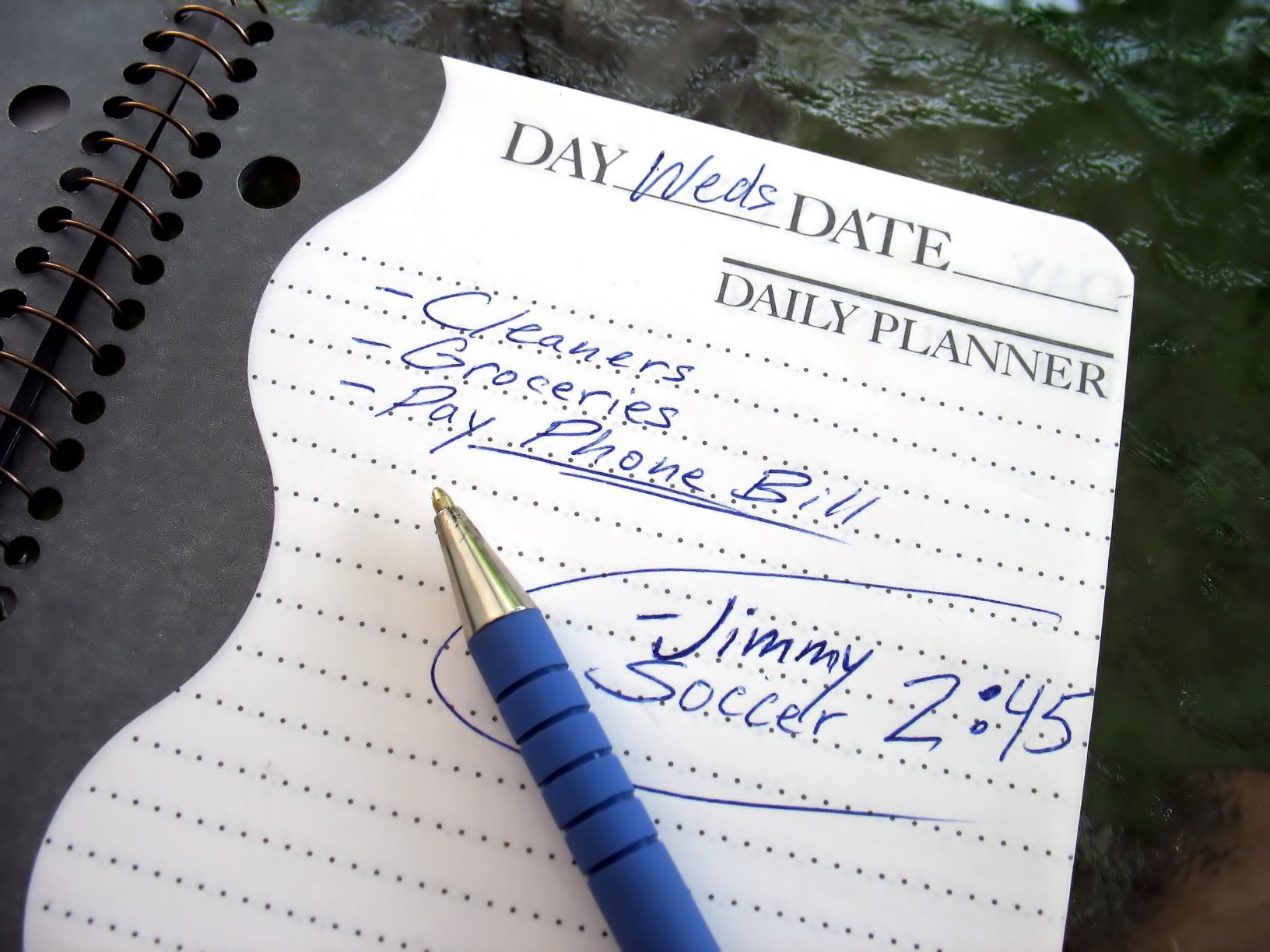
The children are watching… your every move, your every snack and your every minute carved out for yourself. They are hungry for attention, for something fun to do, for YOU. You could be their parent, uncle, grandparent, neighbor or even the passerby in the grocery store aisle, but the child has a fascination and need to soak up all stimuli. How can we fathom what is going on in their minds with neurons firing and brain cells absorbing YOU?
There are many similarities between the preparation for the school year, and learning more about what makes you, YOU.
School Supplies – We get a list of school supplies provided by the school perhaps 3-4 months before the new school year starts. Some people will purchase the full school supply package from the school, have the supplies delivered to the school and not worry about anything further – their job is done, without even reading the list. There is the group in the middle that have studied the list, reviewed the communal supplies like tissues and wipes, and child-specific – pencils, folders, and composition books and are working at their own pace to find the best deals and coupons at the best stores. And others will see the list, but not act upon it until the last days before the school year starts – nearly 100 days later – and will rush to the nearest store to gather everything and more.
Which is better, which is YOU? It really depends on your values. Group 1 saves mental stress but spends more. Group 2 saves money but takes on the mental stress throughout the summer. Group 3 spends more and has intense mental stress. Our personality type dictates how we handle the school supply task – and other to-do items.
Organizing the Calendar – The Summer months give many families a chance to escape from reality. The calendar belongs to you instead of the school system. Some people will fill the calendar with vacations and camps; there is something “to-do” everyday – essentially keeping the constant flow. Others will take each day as it comes, they may not know what day it is, what time it is and what is the next meal – the Summer is the Summer. The last group tries to have it all – keeping a foot in reality but having some fun along the months.
Which have you followed, which is YOU? It really depends on your circumstance. Group 1 may have more financial resources. Group 2 may have more time. Group 3 may need more control. Our life dictates how we handle the calendar – and other activities in our lives.
As you watch the frantic caregivers purchase school supplies, organize their calendars, and keep the youth entertained for just a few more days – remember there’s InsureYouKnow.org product offerings to reference those important records. It’s a safe place to store all the information in case you need to access it remotely – or from the comforts of your own home. Take stock of the summer memories and your current resources with an annual plan.
What do I really need?
July 23, 2019

Jumping down the rabbit hole of getting our affairs in order can seem like another chore on top of our full days. And where to start? The idea seems overwhelming – paperwork, copies, notarizing, legal counsel and fees. Questions add to our procrastination: What if I can’t find it? What if I don’t really know what my account numbers are? What if I can’t finish – does this just create more clutter?
There are many lists and suggestions of “in case of emergency” documents that everyone should have together, but when there are multiple people in your household, or multiple dependents – the task can seem confusing and overwhelming. I’ve thought of some suggestions of how to start the task, and then how to add to the folder or portfolio as time allows.
Stage 1: Locating documents.
Some of these are easier than others. Creating a physical file AND an electronic copy of these documents is vital in our new era of technology. Requests for “soft copies” or the need to provide 3 or 4 documents at a time makes it easier to utilize the electronic versions.
Suggestions for these documents can be found on our website – InsureYouKnow – but some of the easier ones are – Driver’s License, Social Security Card, Medical Insurance Card and Passport. Some of the trickier ones are Birth Certificate, Wedding License, Mortgage/Lease Paperwork and Vehicle Titles and may require you to reach out to the county office to apply for a copy.
Stage 2: Creating Lists.
If you are like me – making lists is easy. The hard part is filling in the information and remembering to update them. There are three types of lists that are important for ongoing upkeep.
Assets/Liabilities: Meaning – what do I have and what do I owe. Do you own property, land, business? Where do you put your money – bank, credit union, bonds, 401K? The liabilities are the companies you pay bills to – electric, cell phone, mortgage, pest control, car insurance. Essentially it’s the things that are in your head, but not documented in one place and certainly not available for all.
Contacts: Meaning – who are your most important people. Start with the top 10 list of people that you would like to know that a life change has happened. This doesn’t have to be in catastrophic instances – the lottery win would be a fantastic opportunity to utilize this list. Many times, there would be overlap in the lists for household members. Examples are children, siblings, parents, partners.
Medications: Most of us have this handy but is a good practice to have a medication list to share with a household member during an emergency or if we are unable to make it to the pharmacy for refills. There are several apps and templates available online to keep the lists uniform. A short narrative of the medical history can also be put with this list.
Stage 3: Fill in the gaps
As you get deeper in the rabbit hole, it will be clear that there’s items that you need to research further, and involve other parties. Examples include healthcare directives and living wills. These often need to be notarized to be valid and sometimes require a witness or legal professional. There are many options online but having conversations with those that you trust may uncover a resource that you can utilize that saves money, time and headache.
As you start putting all your documents together, consider using InsureYouKnow.org – an online information-safe, as a place to store them. This product gives you the ability to access documents, and files remotely – or from the comforts of your own home. There are various levels of access to allow your family members, caregivers or business associates insight into your documents – as needed. There is even a trusty reminder feature to help you remember that it’s time to update.
Happy Birthday America!
June 30, 2019

Happy Independence Day America. As the red, white and blue combinations emerge in our clothing and décor, marketing and sales galore treat our senses – It is a time for enjoyment in America. Fireworks, BBQ, Baseball, time with the family and friends – and for most of us – time off from work and the normal routine. Who doesn’t enjoy a birthday and time to celebrate, a time to kick-back and accept that the summer season is here – heat and all.
The 4th of July celebrations have been diversifying since the first official celebrations in 1777, when “Philadelphians remembered the 4th of July. Bells were rung, guns fired, candles lighted, and firecrackers set off.” Though we have introduced the summertime aspects of sports and outdoor foods to our traditions the fireworks remain!
Here are some facts about America that we can introduce into our own traditions:
- There are 126x more people in the United States than in 1776. There is a reason that the American population continues to grow. With the 2020 Census coming up – we’ll be able to have a more accurate count of who and where everyone lives. “In July 1776 there were an estimated 2.5 million people living in the Colonial United States. Currently there are approximately 316 million Americans.” Do you have such colossal growth or debt during your lifetime that you haven’t accounted for? Looking at all our accounts, the 401k accounts from our first place of employment, and checking with family members to see if there are any assets lurking out there. There may be more than you know.
- We started celebrating the 4th of July holiday 100 years after the Declaration was signed. If we waited that long to formalize the important things in our lives we would be in trouble. Power of Attorney, Wills, Healthcare directives, your birthday wish list, the Bucket List, – the family and friends may know what your wishes are – but have they changed over the years. Document and act upon the things that are important to you – before 100 years pass. Americans were so busy creating their young nation that they forgot to enjoy and recognize national holidays until 1870.
- We have a Declaration of Independence How many of us have read the declaration of Independence since we left school? There are lot of words, and a lot of fine print – and it’s the fine print that defines the why – why our military continues to fight for America. The British rules and regulations were stifling the growth of America, and the 13 states came together to put together a document to publicly declare freedom The full Declaration of Independence can be found in many books and the original lies in National Archives in Washington DC. Where is the history of your life, your family and the why?
As a proud American, with access to life, liberty and justice, the access we have to continue to keep our belongings safe is easy. With InsureYouKnow.org – an American based-company –our online information is safe. The ability to access documents, and files remotely – or from the comforts of your own home can be taken for granted, just like so many other things. An annual plan is also available for cost-savings.
Go figure – it’s Fathers’ Day
June 14, 2019

Happy Father’s Day to all the dads, fathers, papas, grandfathers and father-figures in our lives. The world would not be the same without them. Since 1910, the USA has honored the third Sunday in June to remember the “contribution that fathers and father figures make to the lives of their children.” As other countries have adopted this custom, some in August, September or December, the celebrations usually involve gifts and food.
Although the role of the father as being the breadwinner in the family, the one with the full-time job, or the one that leaves to go to work every day is not always the norm – there is still popular public opinion that this is the case. According to the Pew Research Center, in the United States only a quarter of families with children under the age of 18 have a father that is the breadwinner. That means that men are connecting with children in a different way to the 1970s, when almost half of these couples (47%) were in families where only the dad worked.
Do we have more money now than in our father’s generation? Where do my resources go? Father’s Day, like so many events, can often be a time of reflection. Does our habitual nature with finances stem from our father-figures’ habits?
- Spending. Work hard, play hard. For so many of us, the money is a means to an end. After the bills are paid – what makes us and our families happy? Is it the latest gadget or home improvement, the presents for the children, or the holidays and excursions? If your father-figure showed love and excitement spending on summer vacations with ice-creams and beach time, it is likely you will be doing a similar thing.
- Saving. Keep the money for a rainy-day – or for large events. The price of college, weddings, first-homes are skyrocketing. It’s not just a phrase about the good ol’ days – the dollar used to go much further. According to the CPI Calculator in 1910 $100 would buy the same as $2500 would buy today. With unemployment rates high and pay for jobs low, it is pretty difficult to cross the threshold from poverty to middle class, from middle class to rich, and rich to wealthy. Foregoing the restaurants and the international travel for 529 plans and down-payments on homes are options we can provide our children.
- Scaling Back. As we are encouraged to look ahead and plan for retirement and downsize – do we need the large home, the extra vehicles, the tax-rate for the school districts that we are currently in? Some current trends involve the KonMari method in finding joy in our possessions and discarding or rehousing others. Are our loved ones living in different states or countries that we don’t get to connect with because of distance. Perhaps owning a smaller property or finding a space in a favorite location is the best use of the resources now.
As you place yourself in the category that best fits you – and there is no-one that stays stagnant in their mindset – each requires monitoring of your assets to fit the lifestyle that you desire. This takes time and work, but there are tools out there that are designed to simplify your life, and give your family the visibility into your world.
As you reach to contact the father-figures in your world, or are considering a Father’s Day gift to remember – InsureYouKnow.org product offerings may be your answer. It’s a safe place to store all the information in case you need to access it remotely – or from the comforts of your own home. Taking stock of your memories and your current resources with an annual plan.
Summer Speculations
June 1, 2019

Can you believe it’s already June. Where did the first 5 months of the year go? And have you already planned out your summer, or has that been on the to-do list for the umpteenth week? Whether you have every weekend from Memorial Day to Labor Day booked, or you are planning to enjoy the lazy, lengthy days of summer – your money is usually a factor.
Summer vacations can be crowded and expensive. Nearly 100 million Americans are planning to take a family vacation in 2019, per AAA data, and 38 million traveled during Memorial Weekend alone. The tourism industry is ramping up pricing on accommodation, transportation, food, gas and admission fees to attractions. In 2016, 58 percent of Americans spent over $1,300 on travel. This statistic is increasing 30% year over year
How to reduce Summer spending – and increase your Personal savings.
- Travel. Where do you want to go? Do you have a destination in mind? There are peak destinations that four out of 10 U.S. adults are hoping to travel to in the summer. However there are hundreds of articles with off-peak options. Try to book your flights 45 days in advance, and avoid the US National Holidays and early-August if possible. Schools in the US and Europe are off for summer break and families are taking advantage of the last few weeks off.
- Accommodations You probably already have experience with hotel chains or bed and breakfast establishments, but now there are many other options. The explosion of home rentals priding themselves as vacation experiences, are catering to all types of travelers. There are 1 night rentals to multiple week possibilities. Resorts are also affordable with lodging-only options instead of all-inclusive.
- Attractions and Activities. From amusement parks to museums to waterparks – every location has activities to enjoy. Coupons and online discounts are available for most of the top attractions and there may even be reduced rates for visiting on weekdays vs. weekends. Some banks and credit cards also have affiliations – Museums on Us is an example.
- Time. Can you mentally and physically afford to take the break out of your routine? Your workplace may have vacation policies around when you can use your time-off. Consider if you would like to save some time for DIY at the home or local excursions.
At the end of the day – take the vacation that works for your budget and time circumstances. If you only have a weekend – a staycation may be much more enjoyable than spending multiple hours on planes trains and automobiles to reach your destination for just a few hours. If you have a limited budget – create a list of the must-haves and ignore the advertising, social media and recommendations that you may encounter.
Bon Voyage! or Enjoy your couch! Before you enjoy your summer break, don’t forget to upload all your documents onto InsureYouKnow.org. It’s a safe place to store all the information in case you need to access it remotely – or from the comforts of your own home.
Is Pet Insurance Worth It?
May 23, 2019
 Anyone with pets knows that taking care of them isn’t cheap. According to the American Pet Products Association, Americans spent more than $72 billion on their pets in 2018. From food to boarding, there are a lot of expenses associated with owning a pet.
One of the biggest expenses is veterinary care. A trip to the veterinarian isn’t cheap, nor should it be. Veterinarians have spent years in school learning how to care for and treat animals. They’re doctors for animals, and when Rover swallows something he shouldn’t or Tigger suddenly stops eating, their expertise is worth every penny.
But when money is tight, an unexpected trip to the vet can break your budget for the month. And that’s if you can afford to pay for care at all; some pet owners feel they have to put their beloved family member down because they can’t afford expensive medical treatments.
There is a potential solution: pet insurance. Just like your health insurance helps cover the cost of your medical care, pet insurance can defray some of the expenses associated with veterinary care. And just like you need to understand how your health insurance policy works in order to avoid an unexpected bill, you need to read the fine print on any pet insurance policy before signing on the dotted line.
If you’re trying to decide if pet insurance is the right decision for you, here are a few questions to ask yourself:
- Does your pet have any preexisting conditions? If so, stop right there. If your vet has diagnosed your pet with an ailment or disease already, pet insurance won’t cover any care for it. That may include illnesses or accidents related to the condition.
- How old is your pet? Generally speaking, the older the pet, the higher the premiums. You’ll get the best rates when your pet is still young. Keep in mind that the rate most likely will rise as your pet ages, and it’s not uncommon for people to drop pet insurance after their pet reaches a certain age.
- Is your pet prone to hereditary conditions? Many large dog breeds are known for hereditary conditions, such as hip dysplasia and torn ACLs. Insurers often won’t cover treatment for these conditions even if your pet wasn’t showing any symptoms when you initially bought coverage.
- Can you afford to save up instead? If you can afford it, it might be smarter to have a separate savings account for pet care. If you never need it, great—you can put that money toward paying down debt or a down payment on a house. Just keep in mind that should the worst occur, medical expenses can add up quickly.
Pet insurance is growing in popularity; according to the North American Pet Health Insurance Association, about 1.4 million pets in the U.S. and Canada were covered by a plan in 2014, up from 680,000 pets in 2008. If you’re considering purchasing pet insurance, be sure to explore all your options, including whether you can get it through your employer. Eleven percent of U.S. employers offer pet insurance benefits, according to the Society for Human Resource Management.
If you decide to purchase pet insurance, be sure to upload the policy and any related documents to InsureYouKnow.org. When you need to access them quickly, you’ll be glad they’re in a safe, secure, easy-to-find location.
Buying vs. Leasing a Car
May 7, 2019
 When it’s time to get a new car, one of the first decisions you’ll have to make is whether to buy it or lease it. If you aren’t paying cash and have to take out a loan, you’ll have a monthly payment either way. So which option is better?
While many financial experts recommend never leasing a car, there are a few times it does make sense. Here are some reasons you may want to lease a car:
- Lower monthly payments. Generally speaking, the monthly payment on a car lease is much lower than that of a car payment because it is based on a car’s depreciation instead of its purchase price. In addition, you may only have to put a little down, if anything at all.
- Fewer repair costs. Most likely, major repairs will be covered by your warranty. You’ll be responsible for general upkeep, but you won’t have to worry about a huge repair bill destroying your monthly budget.
- Less hassle when it’s time for a change. When you’re ready for a new car, you don’t have to worry about selling your old one. You can simply return the car when your lease expires and pick out a new one.
So why do people buy a car if it costs more and can be more of a hassle? Here are a few reasons:
- True ownership. Your car is yours. You can customize it as much as you like, and no one is going to expect you to keep it in pristine condition—or charge you if it isn’t.
- No mileage limits. When you lease a car, you must stay within your mileage limits or pay a pretty penny for exceeding them. When you buy a car, you can drive it as much and as far as you’d like.
- No monthly payment (eventually). If you have to take out a car loan, at some point you’ll pay it off and your monthly payment will drop to $0. When you lease, you will always have a monthly payment.
Looking at the big picture, leasing a car is actually more expensive in the long run. Not only will you always have a monthly payment, but also you won’t be building up any equity in your car that you can cash in later when you sell it.
But it’s not always about the money. If it’s important to you that you have a new car every few years with the latest technology and safety features, or if you use your car for business purposes and can write off related costs, leasing might be your best bet. Just make sure you run the numbers and take all factors into consideration.
Whether you decide to lease or buy, be sure to store the related documents on InsureYouKnow.org. This includes any loan documentation and/or a copy of your car’s title. It’s vital that you keep all your important financial documents in one place so you and your loved ones don’t have to dig through a mountain of paper whenever they need to be accessed.