
Category: Mental Health
Finding Your Muse: Music and Memory in Alzheimer’s Patients
September 1, 2026

Watching a loved one slowly lose pieces of their memory due to Alzheimer’s can be devastating. According to the Alzheimer’s Association, more than 7 million people in the U.S. are affected by this progressive disease, robbing them of critical thinking abilities. A growing body of scientific evidence now suggests that listening to music activates neural regions associated with memory, which is welcome news for Alzheimer’s patients and their caregivers.
Researchers from Monash University in Australia conducted a long-range study of over 10,000 people aged 70 and older and found that listening to music daily reduced the risk of developing dementia by nearly 40%. The group that was followed for 10 years also showed a 33% lower risk of dementia in those who played a musical instrument. “Our study suggests that lifestyle-based interventions, such as listening to and/or playing music, can promote cognitive health,” says Joanne Ryan, senior author of the study and head of the Biological Neuropsychiatry and Dementia research unit at Monash.
How does Alzheimer’s affect the brain?
Alzheimer’s is the most common form of dementia and is characterized by a slow decline in cognitive functioning due to a buildup of tau and amyloid proteins. As the disease progresses, healthy neurons in the brain lose their connections with one another and die, leading to memory loss over time. The disease typically starts in the brain region responsible for memory and ends in the brainstem, affecting critical heart and lung functions.
Some patients may have difficulty remembering the faces of their loved ones and may find their usual environment confusing and disorienting. For such patients, being exposed to familiar experiences and keeping the brain engaged and active is vital to slow the progress of this irreversible disease. “Personalized music programs can activate the brain, especially for patients who are losing contact with their environment,” says Norman Foster, MD, Director of the Center for Alzheimer’s Care and Imaging Research at the University of Utah Health.
What is the connection between music and memory?
Studies show that music that evokes certain emotions can allow people affected by Alzheimer’s to retrieve forgotten memories, even if the music isn’t relevant to memories they’re failing to recall. When a patient with Alzheimer’s hears familiar music, it unlocks certain memories and emotions. Researchers have discovered that long-term musical memory does not follow the same progression of decline as other cognitive abilities. It is currently unknown why this is the case, and research in this area is ongoing.
Music stimulates the temporal lobe and limbic system areas of the brain. It is largely observed that the emotions of a memory are better preserved in the mind than the memory itself, which is why music is such an important therapeutic tool for Alzheimer’s patients. By evoking emotional responses, music can allow individuals with Alzheimer’s to access memories that are difficult to recall.
Many Alzheimer’s patients also tend to suffer from anxiety and agitation, and benefit greatly from the release of endorphins that comes with listening to music. “Just hearing a certain musical piece or singing a song with others that is particularly meaningful to an individual can create strong positive feelings, evoke memories and generate joy,” says Alvaro Pascual-Leone, MD, a professor of neurology at Harvard Medical School.
What are the benefits of music therapy?
Listening to music regularly stimulates parts of the brain related to memory and attention. Familiar music from the affected patient’s past can also improve their recollection. “Music therapy can make a huge difference not only for people living with dementia, but also for the family caregivers supporting them,” says Kathy Siepker, an associate professor at the University of Arlington School of Social Work.
Siepker helped develop an app for people with Alzheimer’s that uses AI to sense the patient’s mood and plays familiar songs if they appear down or agitated. “Toward the later stages of the disease, patients often sit quietly, withdrawn,” says Siepker. “But when they hear familiar music—songs from their childhood or young adulthood—they often remember all the lyrics, sing along.”
The benefits of music therapy include:
- Relaxation
- Reduced anxiety and stress levels
- Mood regulation
- Improved memory
- Better coping skills
- Mood regulation
- Improved communication skills
- Reduced sense of pain
How to find and apply music therapy?
If you or your loved ones are ready to look for a licensed music therapist, refer to the Certification Board for Music Therapists to find one in your area. Alternatively, caregivers can use some of the strategies below to incorporate music into the lives of their loved ones living with Alzheimer’s:
- Create a playlist on Spotify, YouTube, or a related app of familiar songs from a time your loved one can recall.
- If they are fond of different genres, make separate playlists and use them at different times.
- Periodically update the list to expand the collection based on their reactions, since not all songs evoke joyful memories.
- Buy them a pair of wireless noise-canceling headphones for listening. This would allow them to be part of social gatherings where they feel like they are with family, but also need music to orient themselves.
- Remind them to listen to music when they feel anxious, confused, or agitated.
- Keep music accessible to them at all times.
World Alzheimer’s Day is observed each year on September 21. It serves as a reminder to us to raise awareness about Alzheimer’s disease and focus on ways to improve the lives of our loved ones living with this and related conditions.
Planning for Yourself and Loved Ones After a Cancer Diagnosis
June 15, 2026

The National Center for Health Statistics estimates that approximately 2,114,850 new cancer cases will occur in the United States in 2026. Hearing the words, “You have cancer,” is a moment that is often met with a rush of emotions, ranging from fear to confusion.
“The beginning is the worst because you want all of the answers. You don’t know your staging and your mind goes to a scary place,” says Emily Cheshire, a nursing professor in Colorado diagnosed with breast cancer last year.
While no one wants to think about worst-case scenarios after receiving a cancer diagnosis, taking time to plan ahead can provide peace of mind for both you and your loved ones.
Processing the Diagnosis
You may experience denial as you grasp the reality of your diagnosis. This can give some people the time they need to accept it, but if denial persists, that can stop someone from confronting the condition, delaying potentially life-saving treatments.
By keeping a notebook to write down questions, take appointment notes, and to store all of your medical records, you can begin to feel like you’re staying on top of your health. This level of organization can also help you and your loved ones see the full picture of your care plan.
Take an Account of Your Financials
One practical step is to organize important documents, including insurance policies, treatment options, medical records, medication lists, financial account information, and legal documents. The National Cancer Institute recommends discussing advance directives early and keeping important healthcare documents accessible in case you become unable to communicate your wishes.
Cancer treatment can also create financial challenges. Beyond medical bills, families may face costs related to travel, lodging, lost wages, and caregiving. Ask your healthcare team whether your cancer center offers financial counselors, patient navigators, or assistance programs that can help you understand costs and identify available resources.
Planning ahead also means having honest conversations with family members. Consider discussing who may help manage appointments, make healthcare decisions on your behalf if needed, and store important documents. Advance directives commonly include a living will, trust, and a healthcare power of attorney (also known as medical power of attorney or MPOA), which allows you to designate someone to make medical decisions if you cannot do so yourself.
These conversations can be difficult, but they can also reduce uncertainty and stress for families during a challenging time. Planning ahead does not mean giving up hope. Instead, it helps ensure that your wishes are understood and allows everyone to focus more fully on treatment, quality of life, and time together.
Emotional Toll
Just as cancer takes a toll on your physical health, the mental toll can be just as difficult. Many people experience emotions they’ve never had to deal with, which can intensify them. Feelings may also fluctuate frequently, but all of this is normal.
Some people feel that they have to be strong to protect their loved ones, but seeking support from them or other cancer survivors can be helpful. Others feel more comfortable speaking with a professional counselor or turning to their faith. “I’ve felt a lot of prayers from people, so I feel lifted and supported with that,” says Cheshire. “I don’t know if that’s what helps me have a positive attitude or if it’s the other things I do, but this is about finding beauty and something you’re grateful for while living in uncertainty.”
For many, expressing strong emotions like anger or sadness helps them let go. And even if you prefer not to share what you’re feeling, writing down your feelings can be just as effective. It’s just important to figure out what’s going to be the right outlet for you. By focusing on what you control, you can feel more empowered. Simply staying on top of doctors’ appointments and treatment schedules helps you and your family feel like you’re doing everything in your power to heal.
Turn your focus to strengthening your coping abilities, such as finding your support system of friends and family, and prioritizing what matters most to you. Cultivate a sense of hope by taking part in activities that bring you joy or allowing yourself to be comforted by your spiritual beliefs.
Caring for Your Family
Give those closest to you the space to process what they’re feeling. Let them know that you want them to speak honestly with you about what they’re feeling, when they’re ready to. Open discussions will allow everyone to connect and process the information together.
When you’re ready, ask them for the help you need, including going to doctors’ appointments and sitting through treatments with you. “My wife has been exceptional in taking on a majority of the family responsibilities,” says Kyle Stanfield, an Oregonian dad who has been battling cancer for seven years. “Knowing that you have that support at home is priceless.”
For those who want to help out caregivers but don’t know how, just act. “Check in on them, give them a call, invite them out for a meal or to a movie to take their mind off being a caregiver,” says Stanfield.
With Insureyouknow.org, you can store all of your notes, medical records, and care plans in one place, making it simple for you to stay organized. By periodically reviewing your care plan and then mentally setting it aside, you can free up your mind for everything else you want to focus on right now.
A Second Set of Eyes: What Guide Dogs Offer the Visually Impaired
June 1, 2026
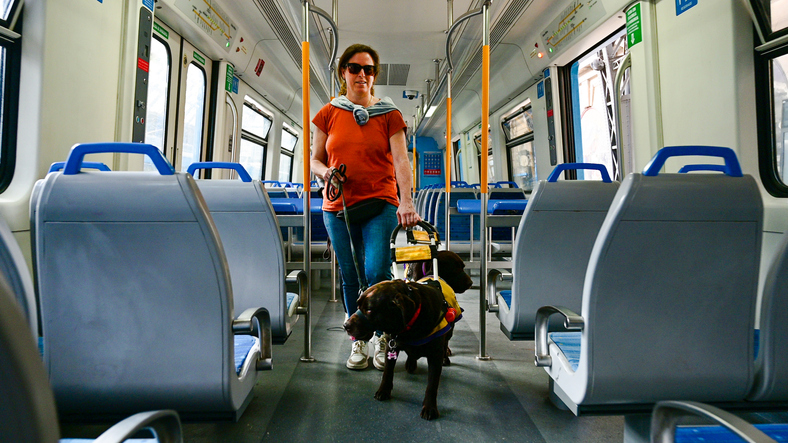
In the late 1920s, an article called “The Seeing Eye” was published. It told Americans about a successful guide dog training program for WWI soldiers in Germany. Letters poured in from readers, asking where they could find a guide dog of their own. A century later, there are an estimated 10,000 guide dog teams currently paired together in the United States alone. Guide dogs not only offer people with visual limitations greater independence but also companionship.
If you’re thinking about being paired with a guide dog, then here’s everything you need to know.
Who Qualifies?
There are several organizations that train and pair guide dogs, and they all have similar requirements. With The Guide Dogs of America, or GAD, individuals qualify for a guide dog if they are legally blind, 18 years old or over, and financially able to care for a guide dog. Applicants must also be able to walk 1-2 miles a day, or at least 30 minutes without stopping, independently or with a cane.
Training in orientation and mobility (O&M) is also required. O&M is training that helps visually impaired individuals navigate the world with confidence. It involves sensory and spatial awareness, searching skills, independent movement, and protective techniques. Every potential guide dog applicant must submit an O&M evaluation before being accepted into a training program.
What to Expect at Training
After an application is received, an instructor will reach out to the applicant for an interview. This is to get to know them and their lifestyle, so they can match individuals with the right dog.
Once individuals are accepted into the program, they are placed in the next class at the training campus. There, students will learn how to interact and work with guide dogs. Applicants are considered prospective guide dog handlers and therefore require training.
Before a guide dog is officially paired with its handler, an emotional bond must form between them. The right match is important so that they both feel safe with one another and can develop a deep level of trust.
“I wanted to expand my mobility ambitions rather than shrink them,” says Mike Brace, a paralympic skier who used a cane for many years. He was eventually paired with guide dog Izzy. “Izzy has allowed me to do more,” says Brace. “She gives me freedom of movement and independence. I can go anywhere with her and know that I will be able to find my way.”
To find a compatible training center nearby, the International Guide Dog Federation has a search-friendly database of training centers worldwide.
Benefits of Having a Guide Dog
While a guide dog’s primary purpose is to help its handler get from point A to point B, its assistance goes well beyond that. Having a guide dog brings new opportunities for social outings and interactions for its owner, resulting in greater self-confidence.
These highly trained dogs can help their owners travel safely using a skill known as obstacle avoidance. They help the handler navigate unexpected obstacles, such as a trash can or a blocked sidewalk. Another skill they use is traffic awareness, in which a dog will refuse to move forward if there is oncoming traffic. These guide dogs are so intelligent that they can disobey their handlers in certain instances, such as these, to keep them safe.
The dogs are also trained to spot essential landmarks, which are locations their handler will encounter in daily life. This means being able to go into a restaurant and quickly find the front counter and restrooms. Other landmarks include crosswalk poles with traffic buttons, benches or chairs, elevators, and exits.
For many visually impaired people, guide dogs can be a vital lifeline to more mobility and independence, but they also become family members. “You build up a very strong bond, being with it 24/7,” says John Welsman, a UK resident currently guided by a dog named Breck. “The dog is not only your mobility aid, it is your companion and communication aid.”
Guide dogs are also in a caregiving role. They learn to read unspoken signals, such as changes in posture or facial expressions, and can tell if their handler needs something. This creates a deep level of trust between them. “Assistance dogs care for humans, and humans also do their best to care for their assistance dogs,” says Suvi Satama, a professor at the University of Turku who studies the caregiving role of guide dogs. “In this way, vulnerability becomes relational, and both parties give and receive care.”
Baby Blues or Something More: What to Know About Postpartum Depression
May 15, 2026

Almost every parent experiences intense emotions when their child is born. But when these emotions persist, making it difficult for a woman to function and care for her baby, then it may be postpartum depression or PPD.
According to the Centers for Disease Control and Prevention, around 1 in 8 women develops PPD after giving birth. While the exact cause isn’t known, women experience an influx of hormones, producing nearly 10 to 100 times more estrogen and progesterone during and after pregnancy than they normally would.
May is Maternal Mental Health Awareness Month, and a time to reflect on this important issue. Sometimes when a new mom says she’s fine, that doesn’t mean she is. Many women are navigating exhaustion and overwhelm without any assistance. They feel like they should be able to handle everything, and so they hesitate to ask for help.
If you or someone you love may be experiencing postpartum depression, this is what you need to know.
Baby Blues or PPD?
Feelings of sadness are a normal part of having a child. In fact, up to 4 in 5 women experience the baby blues. Symptoms can include mood swings, bouts of crying, feeling irritated, trouble concentrating, and changes to your appetite and sleep. But if these symptoms persist past two weeks, then it may be postpartum depression.
“With baby blues, you’ll have more emotional ups and downs,” says Natalie Feldman, a psychiatrist at Mass General Brigham. “PPD involves really persistent low mood and makes daily tasks difficult.”
The early signs of postpartum depression can be feeling sad, hopeless, or overwhelmed – all of the time. A close partner or friend may notice that you’re having difficulty taking care of yourself or the baby. Other signs include fatigue, trouble eating or sleeping, withdrawing from family and friends, and having little to no interest in the baby.
If you’re experiencing these symptoms, talk to your healthcare provider as soon as possible. Postpartum depression is common, and there are successful treatment options.
If you’re not sure where to start, you can search for a provider through Postpartum Support International.
Treatment for PPD
Postpartum depression treatment may include medications, such as antidepressants, and individual or group counseling. “Experiencing emotional complications after having a baby doesn’t mean you’re a bad parent,” says Feldman. “And seeking help when you need it is the best way to care for your baby and your family.” The right treatment plan can help you feel like yourself again, so that you can show up for both yourself and your growing family.
Psychosocial support, meaning help from family and friends, is another equally important part of treatment. The lack of support systems in place for new parents can act as a contributor to postpartum depression. Factors such as inadequate parental leave and a lack of accessible mental healthcare give the message to new moms that their mental health is an afterthought.
“We see in movies that we’re supposed to be joyful and natural, and it’s supposed to just come so easily,” says Marianna Strongin, a clinical psychologist at Strong In Therapy. “But when the reality doesn’t match that narrative, it makes you feel more like a failure.” That can make it even harder for women to speak up.
How to Offer Real Support
Family members and loved ones can help new moms by offering to do household chores or helping with the baby, giving moms a chance to get some much-needed rest and time for self-care.
Support is often most effective when it’s easy to accept. That means instead of making open-ended statements, such as “Let me know if you need anything,” offer direct solutions. This could sound like, “Could I watch the baby for a bit, to give you some time for whatever you need right now?” Dropping off meals and picking up around the house are other great ways to offer direct help.
Practical support might also involve sharing with your partner what you need the most help with each day, such as making time for a shower. It doesn’t need to be complicated. Feeling supported often means knowing there are people in your corner, ready to help you if you need them.
- If you or someone you know is in crisis, call 911, or call or text 988. You may also go to 988lifeline.org to reach the Suicide and Crisis Hotline.
- For postpartum support, you can also reach the National Maternal Mental Health Hotline and call or text 1-833-9-HELP4MOMS or 1-833-TLC-MAMA.
- Postpartum Support International is another dedicated helpline, with resources and local support groups.
With Insureyouknow.org, expectant and new parents can keep all of their medical records – and the new baby’s records – in an organized place, making it an invaluable resource for growing families.
Take Action this April: Autism Acceptance Month
April 1, 2026
A recent storyline in The Pitt introduced viewers to Tal Anderson, an autistic character written authentically rather than falling into general stereotypes. This small shift reflects a broader move toward acceptance as practice. April is Autism Acceptance Month. It is about changing how people view, include, and respond to those on the spectrum. It is a time to raise awareness in the general public through advocacy and lift people up in the autism community.
“Because disability rights are human rights that should always move forward, autism awareness is a step toward autism acceptance that can grow further into autism appreciation,” says Tim Walz, the Governor of Minnesota, who has been vocal about his support for his son with a non-verbal learning disorder, along with ADHD.
Why Acceptance Demands More
According to the CDC, nearly 1 in 3 children under the age of 8 has been diagnosed with Autism Spectrum Disorder (ASD). It affects more boys than girls. There has been a 300% increase in cases over 20 years, suggesting a greater need for qualified practitioners, therapists, researchers, and caregiver support.
Because ASD presents differently from person to person, it is often misunderstood, leading to misjudgment in classrooms, workplaces, and everyday interactions. Broad assumptions hamper those differences, reinforcing the idea that autism looks the same in everyone.
“Despite having certain developmental challenges, a person with autism is not solely defined by their condition,” says Alexander Lopez, licensed occupational therapist and founder of the nonprofit gym Inclusive Sports and Fitness in New York. “That person is still a whole person with their own abilities, potential, and strengths.”
Albert Einstein is often recognized as one of the world’s smartest people. But not everyone knows that he also had ASD.
What the Community Needs
Autism is more than a diagnosis. It is a lived experience full of both challenges and triumphs. For some, it can mean sensory overload in crowded spaces. For others, it can affect how they function socially. For many others, their executive functioning is compromised to the point that it affects their daily lives and ability to study or work. “With supportive resources, many people on the autism spectrum develop greater independence, confidence, and meaningful participation in everyday life,” says Lopez.
For far too long, autism conversations have been led by people outside of the ASD community. Acceptance requires listening to those with lived experience. Their voices must be uplifted, and their experiences must be shared and heard. Autistic individuals frequently report feeling that their thoughts and experiences are compromised or stated inaccurately by well-meaning therapists, parents, friends, and teachers. “Through the practice of ethical listening, researchers can improve the inclusion of authentic autistic voice in research,” says Chandra Lebenhagen, a researcher and director of Including Autism. “It has the added benefit of ensuring that research topics and experiences are positive and meaningful to autistic individuals.”
Through advocacy, individuals with autism and their loved ones can find help in the community. Clear communication, predictable environments, and flexibility in how people learn or work can make the difference. Autism acceptance means making sure public places, including schools and workplaces, are inclusive. In schools, it means accommodating different learning styles without isolating students. In workplaces, it means rethinking hiring practices that filter out neurodiverse candidates. In public spaces, it means considering sensory needs, clear signage, and accessibility beyond physical design. Organizations can go further by building systems that do not rely on one way of thinking or behaving.
Here are just a few ways to take action:
- Amplify autistic voices – Read and share articles, books, movies, and other media created by and for people with autism.
- Create inclusive spaces – Help your workplace, public schools, and other community spaces implement sensory-friendly accommodations. Dress in blue on April 2.
- Support expansion of resources – Donate or fundraise to expand services and fund research.
- Advocate for policy change – Support legislation that creates inclusivity, such as the Autism CARES Act.
- Train yourself to do better – Autism Speaks has developed an Autism Friendly Training to help people learn how to interact with people with autism
“Citizens must take a more active role in engaging people of all neurotypes and creating a welcoming and accessible society for people with autism,” says Governor Walz.
Awareness and acceptance by themselves don’t change outcomes. This April, make it your business to play a small part in creating a lasting change for people with autism.
April should be a special time to recognize the contributions autistic individuals make and to ensure our communities support them. With Insureyouknow.org, you can keep your favorite articles, legislative research, and advocacy records in one place, making it easy for you to take action and support autism inclusivity.
Sandwich Generation Guide: Organize Parents’ & Kids’ Records
January 8, 2026

The Squeeze is Real
The term “Sandwich Generation” sounds polite, almost clinical. But for the millions of adults living it, the reality feels a lot more like a pressure cooker. They are squeezed tight. On one side, there are children needing help with homework, permission slips, and growing pains. On the other, aging parents need support with doctors, medications, and a lifetime of accumulated paperwork.
It is exhausting.
The hardest part usually isn’t the physical caregiving. It is the administration. It is being the unpaid, overworked secretary for two different households. One minute, a parent is hunting for a vaccination card for summer camp; the next, they are frantically searching for Mom’s Medicare supplement number because a receptionist is waiting on the line.
When these worlds collide, chaos wins. Unless, of course, there is a system in place.
Two Households, One Overloaded Brain
The main problem isn’t a lack of effort. It is a lack of centralization. The “Sandwich” caregiver is trying to run two different operating systems at once.
Consider the children. Their documentation is constant and urgent:
- Social Security cards (usually lost in a drawer somewhere).
- Immunization records that schools demand every September.
- Birth certificates for sports or travel.
Then look at the parents. Their paper trail is decades long and much heavier:
- Wills, Trusts, and Deeds (often hidden in “safe” places that no one can find).
- Complex lists of daily medications.
- Insurance policies that need to be renewed.
- The dreaded “In Case of Emergency” contacts.
Keeping the kids’ files in a backpack and the parents’ files in a dusty filing cabinet across town simply doesn’t work. Not in 2026. When an emergency happens, and they always happen at inconvenient times, nobody wants to be driving across town to find a piece of paper.
The “Kitchen Table” Talk
Getting organized starts with a conversation, not a scanner. This is the tricky part. Many adults feel awkward asking their parents about wills or bank accounts. It feels intrusive.
But the conversation doesn’t have to be about control. It should be about safety. The approach matters. Framing it as, “We need to make sure the doctors know what you need if you can’t tell them,” works a lot better than, “Give me your passwords.”
The goal is strictly practical: preventing a crisis from becoming a disaster.
Cut the Clutter: What Actually Matters?
A common mistake is trying to save everything. But honestly, nobody needs to digitize a utility bill from 1998. To survive the squeeze, caregivers need to be ruthless about what they keep.
The “Must-Have” list is actually quite short:
- The Legal Shield: Power of Attorney. This is non-negotiable. Without it, an adult child is legally a stranger to their parent’s bank or doctor.
- The Medical Snapshot: A simple, updated list of what pills they take and who their primary doctor is.
- The Money Trail: Just a list of where the accounts are. Not necessarily the balances, but the locations of the banks and insurance policies.
Stop Relying on Physical Folders
Paper is fragile. It burns, it tears, and most importantly, it stays in one place.
If a parent falls ill while the caregiver is on vacation, that physical folder in the hallway closet is useless. This is why moving to a digital system is the only logical step for a modern family.
Using a secure, encrypted platform, like InsureYouKnow.org, solves the geography problem. It puts the information in the cloud, protected by encryption that is tougher than any lock on a filing cabinet. It means the right information is available on a smartphone, right in the hospital lobby, exactly when it is needed.
Don’t Go It Alone
There is a hero complex in the Sandwich Generation. Everyone tries to carry the load solo. But that is a recipe for burnout.
Once the records are digital, they should be shared. A spouse, a reliable sibling, or a family attorney needs access, too. Modern digital vaults allow for this kind of “trusted partner” access. It ensures that if the primary caregiver gets the flu or gets stuck in a meeting, someone else can step in and handle the situation.
Finding Some Peace
At the end of the day, organizing these records isn’t really about paperwork. It is about buying back time.
Every minute saved by not hunting for a lost insurance card is a minute that can be spent actually being a parent or a son or daughter. The paperwork will always be there, but the stress doesn’t have to be. By merging these two chaotic worlds into one secure place, the Sandwich Generation can finally take a breath.
Love in the Final Chapter: Caring for a Loved One in Home Hospice
October 15, 2025

When it comes to end-of-life care, 71% of Americans believe the goal should be to help people die without pain, discomfort, and stress. The focus of hospice care is on quality of life and symptom management, and it is designed to provide comfort to individuals with a life expectancy of six months or less.
A team of medical professionals addresses the patient’s physical, psychological, and spiritual needs on a case-by-case basis, ensuring that every patient receives a care plan tailored to their specific needs. Care is most often delivered in the patient’s home, and the hospice team can support caregivers during this process.
Quality is Key
Hospice is end-of-life care, but that doesn’t mean someone receiving care will pass right away. While doctors recommend hospice when a patient only has six months or less to live and is no longer responding to curative treatments, many patients live longer. In such cases, what matters still is a patient’s quality of life, not quantity.
“Each person’s journey at the end of life is different,” says Jessica Kelly, a licensed hospice nurse in New York. “We tailor our care to meet those unique needs, whether that’s managing pain, supporting emotional well-being, or helping families share meaningful moments together.”
Home Care Takes a Toll
While it is nearly everyone’s preference to pass away in the comfort of their own home, the task of caregiving can be more than loved ones expect. “I do think that when patients are at home, they are in a peaceful environment,” says Parul Goyal, a palliative care physician. “It is comfortable for them. But it may not be comfortable for family members watching them take their last breath.”
The burden put on loved ones, especially spouses, can cause caregiver syndrome, which is characterized by the stress and burnout that comes from providing constant care to someone who is chronically or terminally ill.
“Our long-term-care system in this country is really using families, unpaid family members,” says Katherine Ornstein, a professor of geriatrics and palliative medicine at Mount Sinai. “What we really need to do is to broaden the support that individuals and families can have as they’re caring for individuals throughout the course of serious illness.”
Self-Care for Caregivers
Providing care to a hospice patient can be both rewarding and difficult. Social psychology researchers Richard Schulz and Joan Monin found that caregivers suffer when they witness their loved one’s suffering without feeling like they can remedy it. It becomes important not just to care for the patient but for caregivers to care for themselves as well.
One way to start accepting a terminal diagnosis is to begin getting a loved one’s affairs in order. It can be helpful to collect necessary documents and passwords and to begin sorting through possessions. Staying busy during the care process can help manage emotions as they arise.
Handling Grief
It’s easy to get paperwork and belongings in order. It’s not as easy to manage your grief. The loss of a loved one is among life‘s most significant stressors. Grief can affect every aspect of your health. While everyone’s experience is different, it is common to feel intense emotions during a loved one’s illness and after losing them.
Here are ways caregivers can take care after loss:
- Express your emotions. Bottling them up will only intensify them.
- Don’t put yourself on a timeline. People move forward at their own pace. Trust that your pain will lessen over time.
- Take care of yourself as you grieve. Eat nourishing meals, stay hydrated, and sleep enough.
- When you’re ready, exercise. It can reduce stress, tension, and sadness.
- Hospice providers make grief support groups available to anyone who has lost a loved one in hospice care.
- The Hospice Foundation also offers a newsletter to help during bereavement.
When to Seek Help
Most people find a way to adjust to their loss, but it is a painful and uncomfortable process. About 10% to 15% of people who are grieving have a complicated reaction to their loss. Grief experts agree that if grief is unmanageable, meaning someone has not returned to their pre-loss level of functioning within six to 12 months, it may be time to seek the professional help of a grief counselor. Your hospice team can help you find the care you need.
Handling a loved one’s affairs is one way caregivers can manage their grief. With Insureyouknow.org, you may organize financial documents, property records, and other documentation of personal effects. Getting everything in order can bring you some peace of mind during emotionally challenging times.
The Mental Health Gap: What Parents Miss and Teens Need
September 1, 2025

Your teen says they’re fine. But they’ve stopped texting friends, spend more time in their room, and their grades are slipping. Could you spot the signs if they were struggling? Only 58% of U.S. teenagers feel they get the emotional support they need—yet 93% of parents believe they’re providing enough.
Findings like these show that parents may not always realize when their child is struggling. Young people today face different challenges than their parents and previous generations did. More than ever, parents must understand the unique pressures young people are struggling with today.
Challenges Faced by Teens
Nearly 10% of all U.S. kids aged 3 to 17 experience anxiety, while 5% live with depression. A few causes are listed below:
- Many young people are dealing with packed schedules, the pressure to succeed in academics, sports, and extracurriculars, and the uncertainty of what comes after graduation. The pressure to excel can lead to burnout.
- With in-person learning, the fear of school shootings can create a general sense of day-to-day unease.
- Students who remember the pandemic lockdown may have posttraumatic stress from virtual learning and social isolation.
- Social media has introduced young people to near-constant comparison, leading to low self-esteem. Body dissatisfaction is leading to a rise in eating disorders.
- Concerns over climate change can also lead to feelings of hopelessness.
Warning Signs
As a parent, you have a good sense of what your child’s “normal” looks like. In addition to the more striking symptoms, such as mood swings, angry outbursts, or being more tearful than usual, you may notice:
- Changes in eating habits, weight, sleep, or other routines
- Loss of interest in the things they once enjoyed or quitting activities
- Withdrawing from close friends or family
- Academic struggles that seem different or more intense, such as a refusal to complete assignments
- Becoming more visibly worried or expressing constant worry
- Any signs of substance abuse or evidence of self-harm, such as cuts, burns, or bruises
Just because your child exhibits any of these symptoms does not mean they are experiencing a mental health crisis. Biological changes, including hormonal shifts that all teenagers must go through, can affect their mood and school performance.
“It’s kind of hard because these things correlate with puberty,” says Theresa Nguyen, vice president of policy and programs at Mental Health America. “It gets hard for parents because this period of time is so muddy.”
Converse Differently
Checking in with your child is an ongoing process, not a one-time occurrence. Normalizing regular conversations with your child supports their mental health and also gives them the foundation to come to you when they need help.
Kids avoid touchy subjects, especially if they fear being lectured or punished. Make sure your children know they can come to you with anything. Create a safe space for them by remaining approachable and nonreactive. Routine moments, such as car rides or dinner times, can be opportunities for discussion.
Avoid forcing conversations or asking direct questions like, “What’s wrong?” Instead, ask about specific things at school or what they might be looking forward to. They will be more willing to open up if they do not feel interrogated. Try listening more than you speak and resist the urge to give advice immediately.
The goal is not to fix everything for them, but to make sure they know they are supported. “As parents, our instinct is often to jump in with advice, but it’s very rare that that’s what teens are looking for,” says Lisa Damour, a clinical psychologist. “Teenagers often feel supported not through a conversation but through our steady presence. It’s about being around and available.”
Parents can show their teen how to care for their mental health by modeling those healthy behaviors themselves.
- Encourage good physical habits. Eat well and encourage exercise, both of which can be activities you do together. Every family member should have a bedtime and sleep routine.
- Limit screen time and social media. If your teen is resistant, approach it together as an experiment to see if it’s beneficial to take a break.
- Find activities that you enjoy and help them do the same. Ideally, you can find a few things to enjoy together, such as going for walks or watching movies.
“Lead by example,” advises Nguyen.
Your child’s pediatrician can help with any mental health concerns. They can explain treatment options, including medication, and refer you to a specialist for evaluation. Talking with a licensed mental health professional, for instance, can provide teens with a safe and judgment-free zone to process emotions and develop coping skills.
Your child’s care team can develop a crisis plan involving the steps to take if symptoms worsen. There are also courses for parents who want to learn more about mental health first aid. Teens who need to speak with someone immediately may always call The 988 Suicide & Crisis Lifeline or text “TALK” to 741741.
By staying organized, parents can create more time for family. “The single most powerful force for adolescent mental health is strong relationships with caring adults,” says Damour.
Your teen doesn’t need you to have all the answers. They just need to know you’re there every day, without conditions.
At Insureyouknow.org, parents may keep track of their child’s schedule, medical records, and other essential documents.
Extreme Weather and Mental Health
August 15, 2025

The physical effects of hurricanes and other natural disasters are known, but the psychological toll has often been overlooked. Events such as these can induce “disaster fatigue,” a form of emotional exhaustion that can reshape how people make choices in future situations.
While Southwestern states must endure hurricane season, residents in the West face similar stakes when confronted with several waves of massive wildfires. Look no further than the recent catastrophic Los Angeles fires to begin to understand the trauma survivors will endure for the rest of their lives.
Unfortunately, as the probability of natural disasters increases, so does disaster fatigue. That fatigue can make it challenging to encourage people to get out of harm’s way the next time they’re faced with a natural disaster.
In Florida, for instance, people are becoming less inclined to prepare for a second hurricane if they’re still digging out from the first. And it isn’t just fatigue from weather events. “It’s the COVID fatigue. It’s like, how many other things can they deal with? How much risk can they contend with?” says Laura Myers, a social scientist at the University of Alabama. “A lot of people are saying, ‘I’ve done all I can do, I’ve done the best I can do, and we’ll just see how it plays out.'”
If you think you may have experienced a form of disaster fatigue, here’s everything scientists know about the phenomenon so far and five ways to prevent or cope with the exhaustion.
What Exactly is Disaster Fatigue?
After constantly being warned about storms and other potential disasters, people can become emotionally worn out and mentally drained. Disaster or hurricane fatigue is a form of psychological exhaustion that occurs in individuals exposed to repeated weather events. Unlike acute stress, disaster fatigue accumulates over time, so repeated exposure to similar kinds of crises can wear an individual down to a point where their mind and body no longer have the energy to respond to threats.
The human body is built to handle stress in small amounts by activating the fight-or-flight response. During a threat, this system activates, enabling individuals to make quick, life-saving decisions. When someone knows that a natural disaster is coming, this system is hyperactivated for too long. Just one event is enough to trigger disaster fatigue, but repeated events without enough time to recuperate can leave the body overtaxed.
The Mental and Physical Symptoms of Disaster Fatigue
The kind of chronic stress endured during an extreme weather event can lead to anxiety, sleep disturbances, and even physical repercussions like headaches and digestive issues. Over time, people can also become emotionally numb or apathetic, especially in the face of a new disaster. Disaster fatigue can make it difficult for people to make decisions, while the likelihood of emotional outbursts increases, which can strain interpersonal relationships.
“What people might be experiencing is: irritability, trouble enjoying the things that they usually enjoy,” says Katie Planchard, a licensed clinical social worker with Ellie Mental Health. “They might have sleep disturbances, they might have issues in some of their relationships, or going to work and doing the things that they would typically do on a normal basis.”
While disaster fatigue is a somewhat newly studied phenomenon, some researchers say that it appears to leave many people facing mental health challenges, including anxiety and post-traumatic stress. That means that even after the weather passes, people can be left with the remaining trauma of having been in a dangerous situation.
Five Ways to Prevent and Cope with Disaster Fatigue
Taking care of yourself is both beneficial to your well-being and enables you to be more resilient and better prepared for stress. By adopting habits that will maintain your physical and mental health at all times, people can become more equipped to handle stressful events when they do occur.
- Form a Routine. Routines provide a sense of normalcy and control in any situation. Try to maintain regular sleep patterns, mealtimes, and daily activities as much as possible. “Make sure that you’re still meeting your basic needs, try to get good quality sleep, try to stick with your normal routine, try to make sure you’re eating enough meals and getting good nutrition, and drinking enough water,” Planchard says.
- Foster Connection. Social support is crucial during times of stress. Stay connected with friends, family, and community members. “If you have family and friends that you can talk to, make sure that you’re reaching out for that support,” Planchard says. “Reach out to your religious leaders. If you are working with a mental health professional, make sure you are talking with them.” Sharing your feelings and experiences with others can provide emotional support and reduce feelings of isolation.
- Exercise Regularly. Physical activity is a powerful stress reducer. Whether it’s a workout at home or going for a walk outside, make it an activity that you enjoy. Not only does exercise release endorphins, a natural mood booster, but physical activity can also improve sleep, which is often disturbed during stressful times.
- Take Digital Breaks. While it’s essential to stay informed about weather developments, constant exposure to news and social media can exacerbate anxiety and stress. Try scheduling regular breaks to give yourself a rest from worrying. Try to engage in relaxing activities such as reading, listening to music, meditation, or spending time in nature.
- Prepare For the Unexpected. By ensuring you have some money saved up in case you end up being out of work for an extended period, need to repair your home, or even relocate, you can alleviate the financial stress that often accompanies times of natural disasters. Another thing is to ensure that you and your loved ones have an evacuation plan. Considering the best course of action before disaster strikes can help ensure that you make the right decision in the moment and alleviate some of the stress ahead of time.
By finding ways to cope with stress, you can better prepare yourself for the unfortunate event of a natural disaster that strikes close to home. While it’s a misfortune that no one hopes for, taking care of yourself now is a way to feel like you’re getting ahead of whatever might come in the future. With Insureyouknow.org, you may store all of your identification, financial records, and medical information in one place, so that if disaster strikes, you’ll maintain access to your essential documents from anywhere. With one less thing to worry about, you can focus on what truly matters in an emergency: you and your loved one’s safety.
What to Do After a Loved One Dies
June 15, 2025

The loss of a loved one is one of life’s most stressful events. Almost ninety percent of people over the age of 16 have experienced grief, but 57% of Americans have experienced a significant loss within the last three years.
Mourning is the natural process someone will go through when a loved one passes away. Though many initially gather with friends and family to share the loss, the mourning process is personal and may last months or years.
Here are some gentle steps to take when processing the loss of a loved one.
Know the Symptoms of Grief
Dealing with death is something most people would rather avoid altogether, but grieving isn’t something to put off. Your grief is likely to be felt physically, emotionally, and psychologically. Allowing yourself to move through your feelings is integral to the process.
Give Yourself Time
Now is the time to take care of yourself. You don’t need to put an expiration date on your grieving. “Some people grieve for years, and while they become more functional as time goes on, they may still get hit out of nowhere with grief-related feelings,” says Dr. Judy Ho, host of the podcast Supercharged Life.
“Grief isn’t linear; it’s more circular. You may feel like you’ve accepted the loss, then something happens months later, and you circle back to denial,” says Ho. However long it takes you to begin feeling better is unique to your situation. So be gentle with yourself as you experience waves of mourning.
Routine is Everything
It is essential to develop and stick to a new routine. Many activities will feel different, and it’s okay to make changes accordingly and try new things. However, sticking to some of what’s normal for you can also be a great comfort. “Grief has a way of rocking our sense of safety, but routine creates stability, which often codes as safety,” says Dr. Anita Robinson, author of The Gift of Grief.
Lean on Your Support System
When a loved one dies, it affects everyone in their circle. “Don’t manage grief alone,” says Melissa Robinson-Brown, a clinical psychologist in New York. “If there were ever a time to lean on family and friends, this would be it.” Talk to those you feel most comfortable with and let them know what you’re experiencing.
While everyone finds their way to cope, it can be valuable to share the loss of someone and grieve together. People should be open and honest with one another and not try to hide their feelings. Because the roles of family members may change, it’s best to communicate with one another moving forward.
Bereavement Groups and Counseling
It may be helpful to join a bereavement support group. Bereavement means the state of having been deprived of something or someone valued, primarily through death. Being around others experiencing the same loss level helps many feel less alone. Hospices, hospitals, and community organizations will all have more information on support groups in your area.
One-on-one counseling can be an essential part of losing a loved one and processing that loss in a healthy way. Death can come as a great shock, and mental health counselors can offer a safe place for you to resolve those emotions. Through hospice, bereavement care is even provided for up to 13 months.
Experiencing the loss of a loved one can be a painful process. Focusing on the joy the relationship brought to your life is a great source of solace during the most emotional moments. With Insureyouknow.org, you may store your loved one’s records for safekeeping so that when it’s time to handle the logistics of someone passing, you’ll be up for the task.