
Tag: Holidays
Cooking Tips for a Safe Holiday With Loved Ones
December 15, 2025
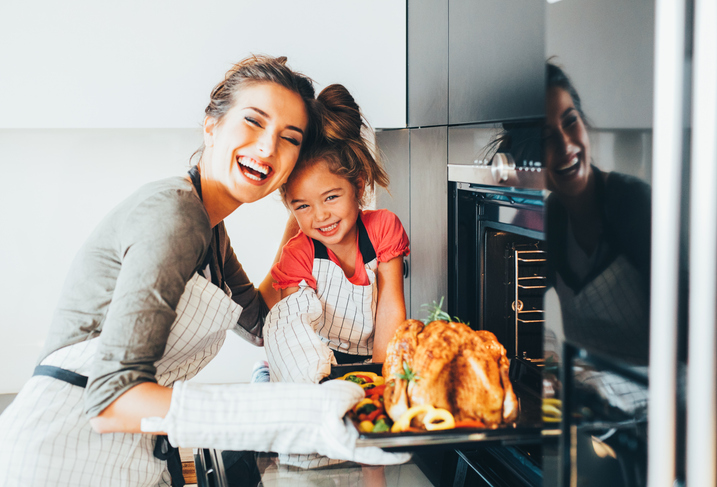
The holidays can get hectic, and with all of the comings and goings, kitchen accidents can happen quickly. According to the National Fire Protection Association (NFPA), Thanksgiving, Christmas Day, and Christmas Eve rank first, second, and third, respectively, for the most home cooking fires. On Thanksgiving Day alone, an estimated 1,446 home cooking fires were reported to U.S. fire departments in 2023.
“Every year, we see preventable fires and injuries caused by cooking accidents during the holidays,” says Peter Feldman, chairman of the Consumer Product Safety Commission. “We’re urging everyone to stay focused when in the kitchen because a few minutes of attention can make the difference between a happy holiday and a heartbreaking one.”
Prevent Holiday Kitchen Fires
Unattended cooking is the leading cause of cooking fires and fire deaths. Take these measures to prevent a cooking fire over the holidays:
- Always stay in the kitchen when you are cooking so that you can keep an eye on the food and never leave the house with food in the oven or on the stove.
- Keep flammable items like dish towels and oven mitts away from the stovetop and avoid wearing loose clothing when cooking.
- Keep young children and pets out of the kitchen. This will protect them from hot stoves and hot foods and liquids that could cause serious burns.
- Make sure the kitchen floors are cleared, and check the smoke alarms before the day of cooking.
If you have a small kitchen fire, do not pour water on it. Instead, smother the fire by placing a lid on the pan and turning it off. The stove top. Baking soda may also be used to put out small grease fires. If there is a fire in the oven, turn off the heat and keep the oven door closed. If the fire is large and there is extensive smoke, the home may be at risk. Call 911 once you are safe.
Reduce Cooking Day Stress
The first part of a stress-free holiday is to plan ahead. “Planning slows everything down so you can enjoy it,” says Emily Brubaker, a professional chef. “I have a prep list of each recipe broken down: ‘What can I do early?’ and ‘What do I need to do on the day of the meal?’”
Specific meal components, like side dishes, that can be made a couple of days ahead of time should be cooked and stored in the fridge so less needs to be done the day of the big meal. Deep clean your kitchen in advance to prevent contamination and clutter. “I start with spring-cleaning my pantry, my oven, my refrigerator, and my freezer,” says Brubaker. “I like to make sure I’m organized and ready to go.’
Thaw Turkey Safely
Many people don’t realize that large pieces of meat can take days to thaw in the fridge. Don’t make the mistake of waiting until the last minute to thaw something like a large turkey. A turkey must thaw at a safe temperature to prevent germs from growing quickly. “The number of days a frozen turkey takes to thaw in a refrigerator depends on the size,” says Troy Huffman, a retail food program manager at Colorado Department of Health and Environment. “A turkey 4-12 pounds takes one to three days to thaw, 12-16 pounds takes three to four days, 16-20 pounds takes four to five days, and 20-24 pounds takes five to six days.”
Preventing Foodborne Illness
According to the Centers for Disease Control and Prevention, about 48 million Americans, or 1 in 6, get sick from foodborne illnesses, leading to 128,000 hospitalizations and 3,000 deaths each year. There are basic food safety rules that every chef, even a home chef, should follow, especially when preparing food for others. Always keep raw meat, including poultry, seafood, and eggs, separate from all other foods in the grocery cart and in the refrigerator. To prevent juices from leaking onto other foods, meat should be stored at the bottom of the fridge in sealed bags or containers. To ensure meat is cooked thoroughly, use a food thermometer to verify the internal temperature is safe. All dishes should reach 165 degrees Fahrenheit.
Buffet Responsibly
Many of us leave hors d’oeuvres out for guests to pick on or serve buffet-style, but food shouldn’t be left out at room temperature for more than two hours, or one hour if it’s above 90 degrees. “After that window, the risk of bacteria growth increases and so increases the risk of foodborne illness,” says Carla Schwan, a food safety specialist at the University of Georgia Cooperative Extension. “If you want your food to sit out longer, remember to keep hot foods hot and cold foods cold. You could use warming trays or coolers to keep foods hot or cold to avoid the temperature danger zone.”
With Insureyouknow.org, you can store all your recipes, guest lists, and holiday budgets in one place, making it easy to reference on the big cooking day. By planning ahead, cooking for everyone over the holidays will be easier – and safer – than ever.
Wishing You Safe and Healthy Holiday Travels
December 1, 2025
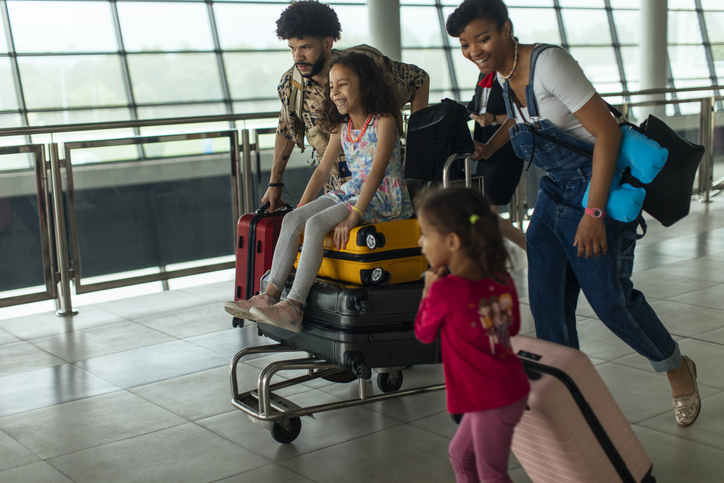
Traveling over the holidays is an opportunity to relax and reconnect with loved ones. But traveling during peak times can also be stressful. The crowds alone can cause some anxiety and concern. Last year, more than 132 million Americans travelled for the Thanksgiving weekend. By planning ahead, you can stay safe and healthy.
A survey of Motel 6 and Studio 6 found that 51 percent of holiday travelers plan to drive, compared to 13 percent who will travel by plane. It can be both easier and more affordable to drive, but according to the U.S. Department of Homeland Security, traveling by car during the holidays has the highest fatality rate of any major form of transportation.
Traveling by Car
By taking simple precautions, drivers can keep their passengers safe. “Number one: budget in extra time,” says Vicky Nguyen, a Consumer Investigative Correspondent for the Today Show. “Even just leaving 15 minutes earlier than normal can take some of the stress out of driving in general.”
Prepare in advance by doing the following:
- Complete any necessary automotive maintenance to ensure your car is ready for the road.
- Make sure you have a full tank of gas (or a full charge for an electric vehicle) the day before you leave.
- Pack the night before and aim for 7-8 hours of sleep.
- Pack water, snacks, and medicines for every passenger, including kids and pets.
- Get comfortable by adjusting your seat and preparing your navigation system before you get going.
“It also can’t hurt to map out your route and identify rest stops, gas stations, and food options,” says Stacey Barber, vice president of AAA Travel. In the case of traffic or bad weather, build in extra time or reschedule your departure. Locate lodging along your route ahead of your trip, in case you need to stop for a night.
Your emergency essentials should include a portable cell phone charger, a first-aid kit, blankets for cold temperatures, a flashlight with extra batteries, jumper cables, and spare tires.
Follow basic driving safety guidelines, including buckling up, obeying the speed limit and other road laws, giving your full attention to the road, especially in construction zones, and avoiding distractions, such as cell phone use.
Plan to take breaks, about every two hours or 100 miles, to avoid getting sleepy on the road. Short walks and stretches during breaks can also help prevent and alleviate pain associated with prolonged sitting.
If you’re driving, keep gifts and other valuables out of sight, preferably in the trunk. At rest stops and in airports, stay alert, be aware of your surroundings, and keep your belongings close.
Traveling by Plane
If you’re flying, plan on getting to the airport two hours before your scheduled departure time. “We ask travelers to pack their patience, especially during peak travel days,” says Ha Nguyen McNeill, a TSA administrator.
Book an early flight. Flights departing after 9 a.m. are twice as likely to be delayed than those scheduled between 5-8 a.m.
Airlines are also reminding passengers to bring their Real ID, which is required for flying as of early May, and to download an airline’s app to track flight updates and receive alerts.
To avoid getting sick while flying, it’s essential to maintain a healthy diet and stay hydrated for at least a few days before traveling. Pack simple, healthy snacks, such as nuts or dried fruit, and a refillable water bottle to bring with you. Keep any necessary medicine in a carry-on so that you can access it easily.
During your flight:
- Handle your own belongings as much as possible.
- Wash your hands whenever possible with soap and water, and carry hand sanitizer and antibacterial wipes with you.
- Avoid touching your face or eyes. If you have to cough or sneeze, use a tissue.
- If you’re sick, consider postponing your trip until you recover.
No one wants to spend their vacation worrying about whether or not their house is safe. By taking basic precautions, homeowners can protect their properties from becoming easy targets of theft.
“A simple step is to lock everything. Ensure all doors, windows, and entry points are locked, including garage doors and sliding glass doors,” says Kimani George of the University of Alabama Police Department. “Secure exterior doors with sturdy deadbolt locks, and leave blinds or curtains in their usual positions. Completely closed curtains can make it obvious you’re away.”
Other steps to protect your home include the following:
- Use timers on indoor and outdoor lights to mimic a routine.
- Install visible cameras on the exterior of the home.
- Ask them to collect mail or packages (or suspend deliveries).
- Arrange for lawn maintenance to avoid the look of a vacant home
- Do not share travel plans on social media.
Announcing holiday plans or posting vacation pictures on social media puts you at a security risk. “By posting pictures of your trip on social media sites, you are alerting the public that your home is currently vacant,” says George. “It is a safer option to wait until you return home before sharing the memories of your travels.”
Holiday travel can be stressful, but being prepared can help you enjoy the time away with loved ones while staying safe and healthy. With Insureyouknow.org, you can keep all of your travel documents and personal identification in one place for easy planning and smooth travels.
The Most Wonderful/Stressful Time of the Year
December 1, 2021

Welcome to what is referred to as both the “most wonderful” and the “most stressful time of the year.” During the second year of the COVID-19 pandemic, you may be experiencing stress and depression—unwanted emotions that can ruin your holidays and impact your physical and mental health.
Although you can’t control inflation, high gas prices, food and toy shortages, and shipping delays, you can be realistic, plan ahead, and seek support to overcome holiday stress and depression. You may even end up embracing the “most wonderful time of the year.”
Tips to Deal with Seasonal Pressures
Be realistic. COVID-19 cases are on the rise in some areas and even if you’ve been vaccinated, you may decide not to gather with friends and relatives in person. You can opt for a virtual celebration or increase efforts to share photos, texts, emails, phone calls, or videos with loved ones.
Avoid overspending, especially if you’re already feeling financial stress. Consider alternatives to expensive gifts by donating to charities in giftees’ names or by making and giving homemade presents.
Strive to decorate your home, create meals and desserts, and select gifts that will be appreciated not because they are “perfect” but because they are heartfelt and sincere.
Plan ahead. Compile lists of recipients and specific gift ideas; don’t go to browse in busy stores, hoping for inspiration. Save time and frustration caused by traffic and parking congestion by shopping online for items on your gift list. Schedule specific times to shop, bake, and attend social events. Plan menus and then create a detailed grocery list to prevent forgetting needed ingredients.
Acknowledge your feelings. Stress about gatherings with family and friends, or feeling grief about missing loved ones, may result in sadness and grief. Take time to acknowledge and express your feelings. You can’t force yourself to be happy just because it’s the holiday season. If you celebrate in person or in other ways as described above, set aside differences and controversial topics and concentrate on positive conversations.
Practice mindfulness by bringing your attention to the present moment and avoid getting stressed about past or future events.
Reach out. If you feel lonely or isolated, seek out community, religious or other social events, or communities. Many helpful organizations have websites, online support groups, social media sites, or virtual events that can offer support and companionship.
Volunteering your time and doing something to help others also are good ways to lift your spirits and broaden your friendships. Consider dropping off a meal and dessert at a friend’s home or to a community center that serves less fortunate individuals during the holidays.
Learn to say no. Set priorities based on preserving your well-being and don’t overextend yourself or you may wind up feeling resentful and overwhelmed. Learn to feel guilt-free when you decline invitations and recognize that you sometimes need to allow yourself to say no to demands on your time.
Maintain healthy habits. Get ample sleep, eat well—even at holiday events—and stay physically active in your daily routine. Maintaining healthy habits during the holiday season will be one of your best defenses against stress. When you feel a bout of stress coming on, have a healthy snack before a holiday party to curb your desire for high-calorie food and drink. Try deep-breathing exercises, meditation, or yoga. Avoid excessive tobacco, alcohol, and drug use.
Take a breather. Make time for yourself. Find an activity you enjoy like taking a walk, listening to calming music, or reading (or listening to) a book. Disconnect temporarily from social media and electronic devices.
Seek professional help if you need it. Even after following all the tips listed above, you may find yourself feeling continuously sad or anxious, beset by physical complaints and lack of sleep, and unable to face daily chores. If these feelings last for a while, talk to your doctor or a mental health professional. If you rely on medications to maintain your physical and mental health, make sure your prescriptions are up-to-date and that you have an adequate supply when your doctor’s office or pharmacy may be closed or have reduced hours during the holidays.
InsureYouKnow.org
At InsureYouKnow.org, you can keep a handy record of your prescriptions, refill expiration dates, and contact information for healthcare providers who prescribe and pharmacies that fill your medications.
Home for the Holidays
December 17, 2020
As 2020 comes to a close, memories of past holiday gatherings with family and friends may increase the stressful and isolating feelings you have experienced during the COVID-19 pandemic. Holiday celebrations will be different this year to prevent the spread of COVID-19.
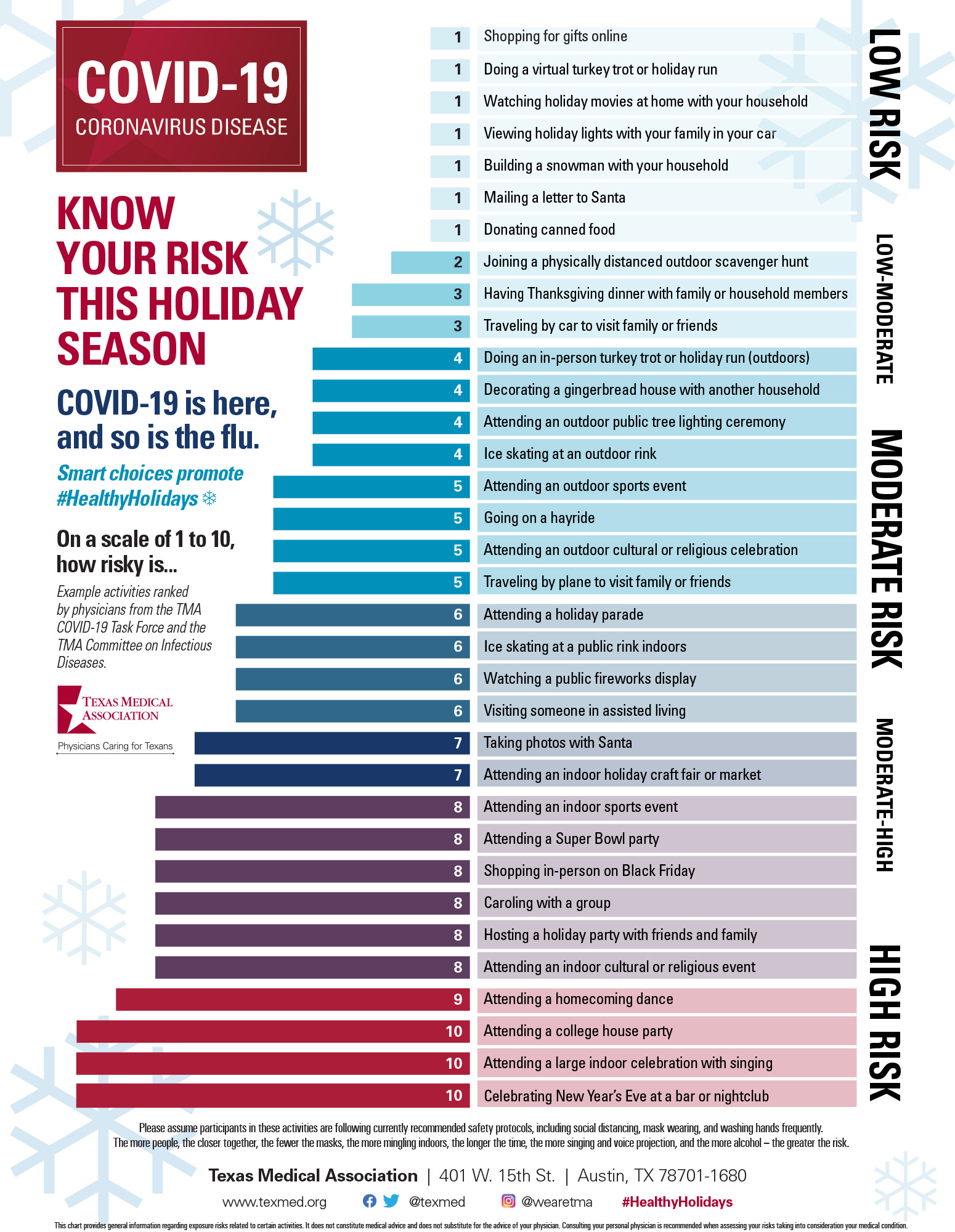
Texas Medical Association has compiled a Know Your Risk This Holiday Season chart to provide a list of high-risk activities to avoid and fun alternatives to adapt that pose lower risk of spreading COVID-19. The chart ranks 34 holiday activities from least to most risky so holiday revelers can make informed choices during the busiest travel and social-gathering season of the year. Among the least risky items on the chart are shopping for gifts online, watching holiday movies at home, or viewing holiday lights with your family in your car. The riskiest activities include attending a large indoor celebration with singing, attending a college house party, and celebrating New Year’s Eve at a bar or nightclub.
The Centers for Disease Control and Prevention (CDC) reports that the best way to stay safe and protect others this holiday season is to stay home and celebrate with people with whom you live. Getting together with family and friends who do not live with you can increase the chances of getting or spreading COVID-19 or the flu.
Travel Plans up in the Air
Travel is highly discouraged because it may increase your chance of getting and spreading COVID-19. Consider postponing travel and staying home to protect yourself and others this year.
If you are considering traveling, the CDC recommends asking yourself the following questions before you make your travel plans.
- Are you, someone in your household, or someone you will be visiting at increased risk for getting very sick from COVID-19?
- Are cases high or increasing in your community or your destination? Check CDC’s COVID Data Tracker for the latest number of cases.
- Are hospitals in your community or your destination overwhelmed with patients who have COVID-19? To find out, check state and local public health department websites.
- Does your home or destination have requirements or restrictions for travelers? Check state and local requirements before you travel.
- During the 14 days before your travel, have you or those you are visiting had close contact with people they don’t live with?
- Do your plans include traveling by bus, train, or air which might make staying 6 feet apart difficult?
- Are you traveling with people who don’t live with you?
If the answer to any of these questions is “yes,” you should consider making other plans, such as hosting a virtual gathering or delaying your travel.
The safest thing to do is to stay home, but if you do decide to travel, testing can make travel safer but it does not eliminate all risk.
Safety Measures from Home and Back
If you decide to travel, get a flu vaccine prior to traveling and follow these safety measures during your trip to protect yourself and others from COVID-19:
- Wear a mask in public settings—on public and mass transportation, at events and gatherings, and anywhere you will be around people outside of your household.
- Avoid close contact by staying at least 6 feet apart from anyone who is not from your household.
- Wash your hands often with soap and water for at least 20 seconds or use hand sanitizer that contains at least 60 percent alcohol.
- Avoid contact with anyone who is sick.
- Avoid touching your face mask, eyes, nose, and mouth.
According to the CDC, for those who decide to travel, COVID-19 tests should be considered one to three days before the trip and again three to five days afterward. The agency also recommends travelers reduce non-essential activities for a full week after they return or for 10 days if not tested afterward.
Based on extensive modeling, the CDC has revised quarantine guidance and now recommends that people who have been in contact with someone infected with the virus can resume normal activity after 10 days, or seven days if they receive a negative test result. That’s down from the 14-day period recommended since the pandemic began.
At InsureYouKnow.org, you can keep track of travel insurance, medical records, including any COVID-19 testing and results as well as vaccines for the flu and COVID-19, when it becomes available. Social gatherings next winter are predicted to be more enjoyable and fraught with less fear of contracting and spreading a coronavirus. You’ll also have more opportunities to travel and to reconnect with family and friends after a COVID-19 vaccine has been disseminated worldwide.