
Tag: Family
Plan a Memorable Vacation Without Breaking the Bank
July 1, 2026
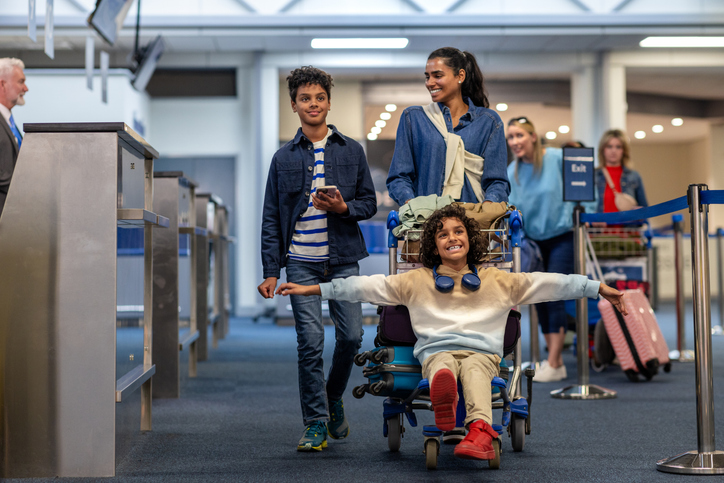
Most vacations end twice. The first time is when you unpack your suitcase. The second is when the credit card bill arrives. That second ending has become increasingly familiar to American families. Nearly eight in 10 Americans plan to take at least one vacation each year, yet the average one-week vacation for a family of four costs about $8,000. For many households, the desire to get away competes with rising prices, making travel feel more like a financial burden than a chance to recharge.
Fortunately, a memorable vacation doesn’t have to come with a luxury price tag. With thoughtful planning and making a few strategic choices, you can enjoy travel without spending more than you can afford.
Start with Your Budget, Not Your Destination
It’s easy to fall in love with a destination before looking at the price tag. Instead, determine how much you can comfortably spend before browsing flights or hotels. Include transportation, lodging, meals, activities, parking, souvenirs, and a small emergency cushion.
Planning ahead is one of the simplest ways to save money. According to Sally French, a travel expert at NerdWallet, travelers often underestimate everyday expenses. “People often underestimate what they spend while traveling because they only think about airfare and hotels,” says French. “Planning for meals, transportation, and unexpected expenses makes vacations far less stressful.”
Consider one of these budget-friendly destinations:
- Greenville, South Carolina
- Chattanooga, Tennessee
- Rapid City, South Dakota
- Gettysburg, Pennsylvania
- Cincinnati, Ohio
- San Antonio, Texas
- Bentonville, Arkansas
- Clearwater, Florida
MoneyLion has a list of 20 of the cheapest places to travel in the U.S. in 2026.
Be Flexible
Travel during the shoulder season when hotel rates and airfare are often lower. Flying midweek, considering nearby airports, and comparing similar destinations can all stretch your budget.
Save on the Big Expenses
Transportation and lodging usually consume the largest share of a vacation budget, but they also offer the biggest opportunities to save. Choose accommodations with a kitchenette so you can prepare breakfast or pack lunches. Compare the total cost of a hotel—including parking, resort fees, and taxes—not just the nightly rate. Eat where the locals eat instead of near major attractions, and leave a little room in your budget for unexpected experiences that often become the most memorable parts of a trip.
Look for Free Experiences
It’s easy to assume the best experiences come with the highest admission prices. Some of the best vacation memories are free. Walk through a historic downtown, visit a farmers market, hike a scenic trail, or attend a community festival. According to Pauline Frommer, editorial director of Frommer’s Travel Guides, meaningful travel isn’t defined by luxury. “Travel doesn’t have to be expensive to be meaningful. The best trips are often those that allow you to connect with a place and its people rather than simply check attractions off a list,” says Frommer.
Travel writer Rick Steves shares a similar philosophy. “The most memorable travel experiences often happen when you slow down and connect with everyday life,” says Steves.
Don’t Overlook the Staycation
If travel isn’t in the budget this year, consider taking a staycation instead. Reserve a nearby hotel, explore museums you’ve never visited, spend the day at a local park, or try restaurants that have always been on your list. The key is to treat the time as a real vacation. Put away your work email, silence notifications, and resist the temptation to catch up on household chores. Even a weekend spent exploring your own community can provide the change of pace many families need.
With a little planning, you can make your vacation memorable without making it expensive.
Wishing You Safe and Healthy Holiday Travels
December 1, 2025
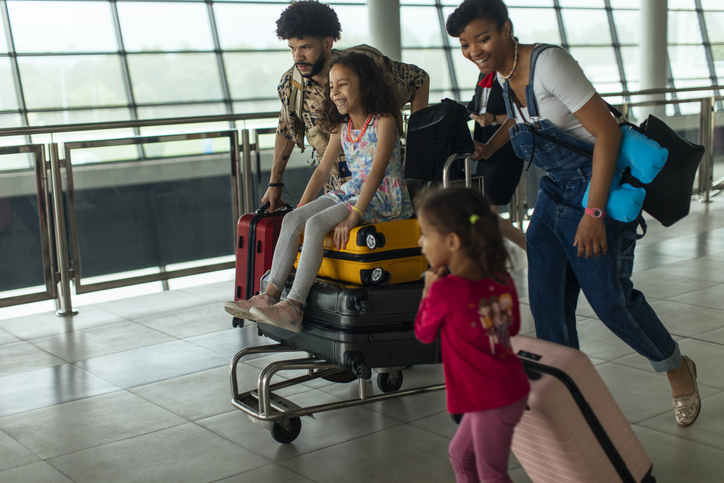
Traveling over the holidays is an opportunity to relax and reconnect with loved ones. But traveling during peak times can also be stressful. The crowds alone can cause some anxiety and concern. Last year, more than 132 million Americans travelled for the Thanksgiving weekend. By planning ahead, you can stay safe and healthy.
A survey of Motel 6 and Studio 6 found that 51 percent of holiday travelers plan to drive, compared to 13 percent who will travel by plane. It can be both easier and more affordable to drive, but according to the U.S. Department of Homeland Security, traveling by car during the holidays has the highest fatality rate of any major form of transportation.
Traveling by Car
By taking simple precautions, drivers can keep their passengers safe. “Number one: budget in extra time,” says Vicky Nguyen, a Consumer Investigative Correspondent for the Today Show. “Even just leaving 15 minutes earlier than normal can take some of the stress out of driving in general.”
Prepare in advance by doing the following:
- Complete any necessary automotive maintenance to ensure your car is ready for the road.
- Make sure you have a full tank of gas (or a full charge for an electric vehicle) the day before you leave.
- Pack the night before and aim for 7-8 hours of sleep.
- Pack water, snacks, and medicines for every passenger, including kids and pets.
- Get comfortable by adjusting your seat and preparing your navigation system before you get going.
“It also can’t hurt to map out your route and identify rest stops, gas stations, and food options,” says Stacey Barber, vice president of AAA Travel. In the case of traffic or bad weather, build in extra time or reschedule your departure. Locate lodging along your route ahead of your trip, in case you need to stop for a night.
Your emergency essentials should include a portable cell phone charger, a first-aid kit, blankets for cold temperatures, a flashlight with extra batteries, jumper cables, and spare tires.
Follow basic driving safety guidelines, including buckling up, obeying the speed limit and other road laws, giving your full attention to the road, especially in construction zones, and avoiding distractions, such as cell phone use.
Plan to take breaks, about every two hours or 100 miles, to avoid getting sleepy on the road. Short walks and stretches during breaks can also help prevent and alleviate pain associated with prolonged sitting.
If you’re driving, keep gifts and other valuables out of sight, preferably in the trunk. At rest stops and in airports, stay alert, be aware of your surroundings, and keep your belongings close.
Traveling by Plane
If you’re flying, plan on getting to the airport two hours before your scheduled departure time. “We ask travelers to pack their patience, especially during peak travel days,” says Ha Nguyen McNeill, a TSA administrator.
Book an early flight. Flights departing after 9 a.m. are twice as likely to be delayed than those scheduled between 5-8 a.m.
Airlines are also reminding passengers to bring their Real ID, which is required for flying as of early May, and to download an airline’s app to track flight updates and receive alerts.
To avoid getting sick while flying, it’s essential to maintain a healthy diet and stay hydrated for at least a few days before traveling. Pack simple, healthy snacks, such as nuts or dried fruit, and a refillable water bottle to bring with you. Keep any necessary medicine in a carry-on so that you can access it easily.
During your flight:
- Handle your own belongings as much as possible.
- Wash your hands whenever possible with soap and water, and carry hand sanitizer and antibacterial wipes with you.
- Avoid touching your face or eyes. If you have to cough or sneeze, use a tissue.
- If you’re sick, consider postponing your trip until you recover.
No one wants to spend their vacation worrying about whether or not their house is safe. By taking basic precautions, homeowners can protect their properties from becoming easy targets of theft.
“A simple step is to lock everything. Ensure all doors, windows, and entry points are locked, including garage doors and sliding glass doors,” says Kimani George of the University of Alabama Police Department. “Secure exterior doors with sturdy deadbolt locks, and leave blinds or curtains in their usual positions. Completely closed curtains can make it obvious you’re away.”
Other steps to protect your home include the following:
- Use timers on indoor and outdoor lights to mimic a routine.
- Install visible cameras on the exterior of the home.
- Ask them to collect mail or packages (or suspend deliveries).
- Arrange for lawn maintenance to avoid the look of a vacant home
- Do not share travel plans on social media.
Announcing holiday plans or posting vacation pictures on social media puts you at a security risk. “By posting pictures of your trip on social media sites, you are alerting the public that your home is currently vacant,” says George. “It is a safer option to wait until you return home before sharing the memories of your travels.”
Holiday travel can be stressful, but being prepared can help you enjoy the time away with loved ones while staying safe and healthy. With Insureyouknow.org, you can keep all of your travel documents and personal identification in one place for easy planning and smooth travels.
Home for the Holidays
December 17, 2020
As 2020 comes to a close, memories of past holiday gatherings with family and friends may increase the stressful and isolating feelings you have experienced during the COVID-19 pandemic. Holiday celebrations will be different this year to prevent the spread of COVID-19.
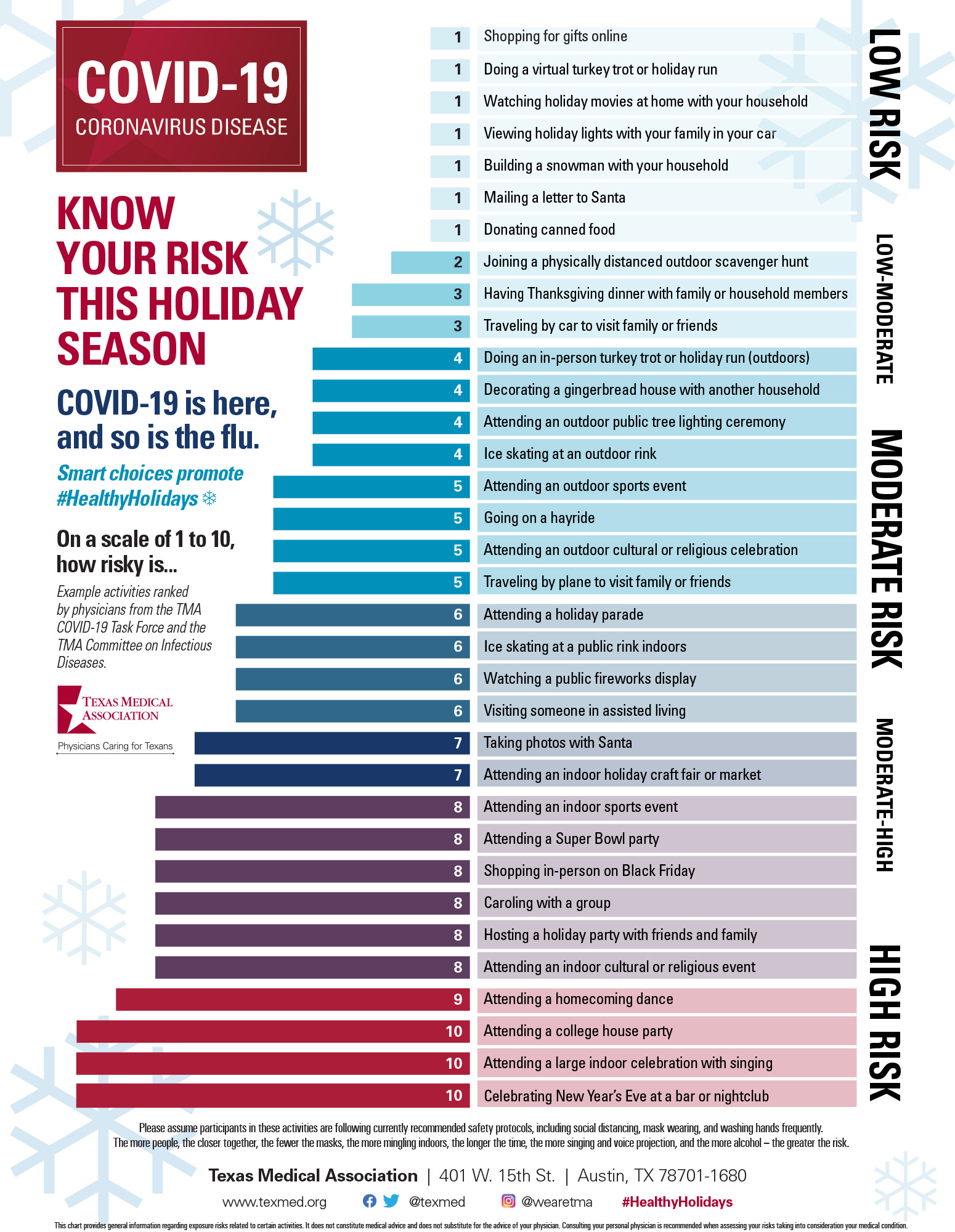
Texas Medical Association has compiled a Know Your Risk This Holiday Season chart to provide a list of high-risk activities to avoid and fun alternatives to adapt that pose lower risk of spreading COVID-19. The chart ranks 34 holiday activities from least to most risky so holiday revelers can make informed choices during the busiest travel and social-gathering season of the year. Among the least risky items on the chart are shopping for gifts online, watching holiday movies at home, or viewing holiday lights with your family in your car. The riskiest activities include attending a large indoor celebration with singing, attending a college house party, and celebrating New Year’s Eve at a bar or nightclub.
The Centers for Disease Control and Prevention (CDC) reports that the best way to stay safe and protect others this holiday season is to stay home and celebrate with people with whom you live. Getting together with family and friends who do not live with you can increase the chances of getting or spreading COVID-19 or the flu.
Travel Plans up in the Air
Travel is highly discouraged because it may increase your chance of getting and spreading COVID-19. Consider postponing travel and staying home to protect yourself and others this year.
If you are considering traveling, the CDC recommends asking yourself the following questions before you make your travel plans.
- Are you, someone in your household, or someone you will be visiting at increased risk for getting very sick from COVID-19?
- Are cases high or increasing in your community or your destination? Check CDC’s COVID Data Tracker for the latest number of cases.
- Are hospitals in your community or your destination overwhelmed with patients who have COVID-19? To find out, check state and local public health department websites.
- Does your home or destination have requirements or restrictions for travelers? Check state and local requirements before you travel.
- During the 14 days before your travel, have you or those you are visiting had close contact with people they don’t live with?
- Do your plans include traveling by bus, train, or air which might make staying 6 feet apart difficult?
- Are you traveling with people who don’t live with you?
If the answer to any of these questions is “yes,” you should consider making other plans, such as hosting a virtual gathering or delaying your travel.
The safest thing to do is to stay home, but if you do decide to travel, testing can make travel safer but it does not eliminate all risk.
Safety Measures from Home and Back
If you decide to travel, get a flu vaccine prior to traveling and follow these safety measures during your trip to protect yourself and others from COVID-19:
- Wear a mask in public settings—on public and mass transportation, at events and gatherings, and anywhere you will be around people outside of your household.
- Avoid close contact by staying at least 6 feet apart from anyone who is not from your household.
- Wash your hands often with soap and water for at least 20 seconds or use hand sanitizer that contains at least 60 percent alcohol.
- Avoid contact with anyone who is sick.
- Avoid touching your face mask, eyes, nose, and mouth.
According to the CDC, for those who decide to travel, COVID-19 tests should be considered one to three days before the trip and again three to five days afterward. The agency also recommends travelers reduce non-essential activities for a full week after they return or for 10 days if not tested afterward.
Based on extensive modeling, the CDC has revised quarantine guidance and now recommends that people who have been in contact with someone infected with the virus can resume normal activity after 10 days, or seven days if they receive a negative test result. That’s down from the 14-day period recommended since the pandemic began.
At InsureYouKnow.org, you can keep track of travel insurance, medical records, including any COVID-19 testing and results as well as vaccines for the flu and COVID-19, when it becomes available. Social gatherings next winter are predicted to be more enjoyable and fraught with less fear of contracting and spreading a coronavirus. You’ll also have more opportunities to travel and to reconnect with family and friends after a COVID-19 vaccine has been disseminated worldwide.