
Tag: Emergency Preparedness
Medical ID Wallet Cards vs. Digital Access: Which is Better?
February 11, 2026
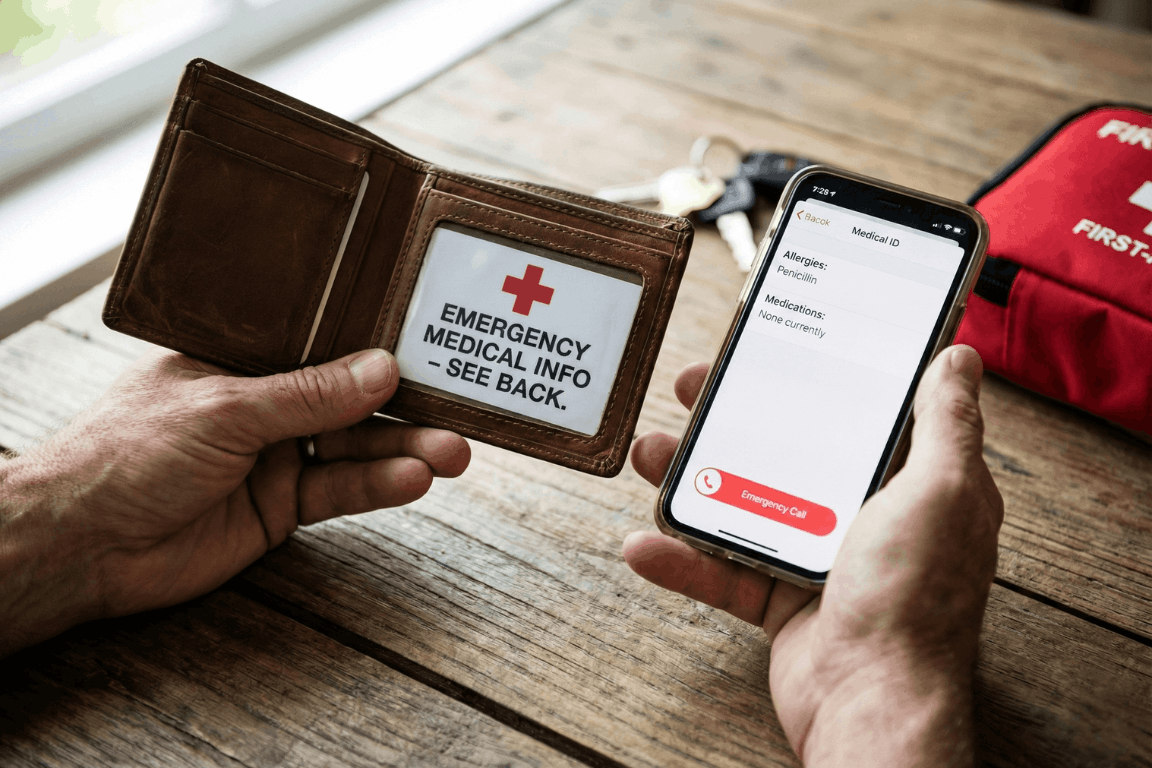
The Emergency Question
Picture someone collapsing in a store, unable to talk. Paramedics rush over but need answers. What allergies does this person have? What medications? Any serious health problems? Should these details live on a card in their wallet or sit on their phone?
Here’s the thing: picking just one isn’t the best move.
Medical ID Wallet Cards
Advantages
- Battery? What battery? These cards just work, period.
- First responders get it: About 95% of EMTs know to check wallets.
- Zero connectivity needed: Mountains, basements, middle of nowhere. Doesn’t matter.
- Won’t break the bank: Spend maybe $5-10 once, that’s it.
Disadvantages
- There’s only so much room on a tiny card.
- Wallets get misplaced or left at home sometimes.
- People forget to scratch out old info and add new stuff.
- Cards get wet, fade, or become hard to read after a while.
Digital Smartphone Medical IDs
Advantages
- Room for everything: Write down every single medication and condition.
- Updates take two seconds: New prescription? Changed doctors? Fixed instantly.
- Talks to 911: iPhones automatically send this stuff when someone dials emergency.
- Costs nothing: Already sitting in the phone waiting to be used.
Disadvantages
- Dead phone equals zero help.
- Some paramedics haven’t learned the tricks for every phone type yet.
- Accidents crack screens and destroy phones pretty often.
- Weird fact: Only about 1 in 4 people actually bother setting this up.
The Smart Choice: Use Both
- Medical Alert Jewelry: Get a bracelet stamped with the biggest health concern plus “SEE WALLET CARD”.
- Wallet Card: The most important stuff, right there in physical form.
- Digital Medical ID: Everything else stored on the phone (make sure it shows without unlocking).
- Backup Copies: Stick extras in the glove box, desk drawer, with Mom or a close friend. Consider using a secure digital vault like InsureYouKnow to store copies of medical cards, insurance information, and emergency contacts that family members can access when needed.
Quick Setup
Wallet Card:
- Write down allergies, health conditions, meds, who to call.
- Get it laminated so it lasts.
- Make a few copies.
iPhone:
- Open Health app → Find Medical ID → Turn on “Show When Locked”.
Android:
- Go to Settings → Look for Safety & Emergency → Switch on “Show on Lock Screen”.
Total time needed: about 10 minutes.
Real Examples
- Diabetic collapse: Woman’s wallet card listed her insulin information. Paramedics knew exactly what to do.
- Allergic reaction: Guy’s phone shattered during his fall. Good thing his wallet card mentioned that penicillin allergy.
- Lost senior: Older woman wandered off, couldn’t remember her name. Her iPhone Medical ID had her daughter’s number right there.
Who Needs This?
People dealing with:
- Health stuff like diabetes, seizures, heart trouble.
- Bad allergies that could turn dangerous.
- Pills they take every day.
- Pacemakers, implants, that kind of thing.
Common Mistakes
- Picking one method and ignoring the other.
- Setting it up once and never looking at it again.
- Leaving the lock screen access turned off on phones.
- Keeping it secret from family members.
The Bottom Line
Why choose? Wallet cards save the day when phones quit. Digital files hold way more detail than any card could. Together, they’ve got each other’s backs.
- Money spent: Less than fifty bucks
- Time invested: Ten minutes
- Potential payoff: Might literally save someone’s life
Action Steps
- Today: Get that phone Medical ID set up (takes 5 minutes).
- This week: Print out a wallet card (another 5 minutes).
- Twice a year: Check both and update anything that changed.
When things go wrong, having a backup plan makes all the difference.
Storing Everything Securely
Beyond wallet cards and phone apps, keeping digital copies of medical information in a secure vault ensures family members can access critical details during emergencies. Platforms like InsureYouKnow provide encrypted storage for medical records, insurance policies, medication lists, and emergency contacts. This creates another layer of protection, especially when someone needs to share information with multiple family members or caregivers.
Medical History Cheat Sheet: What ER Doctors Need
February 4, 2026
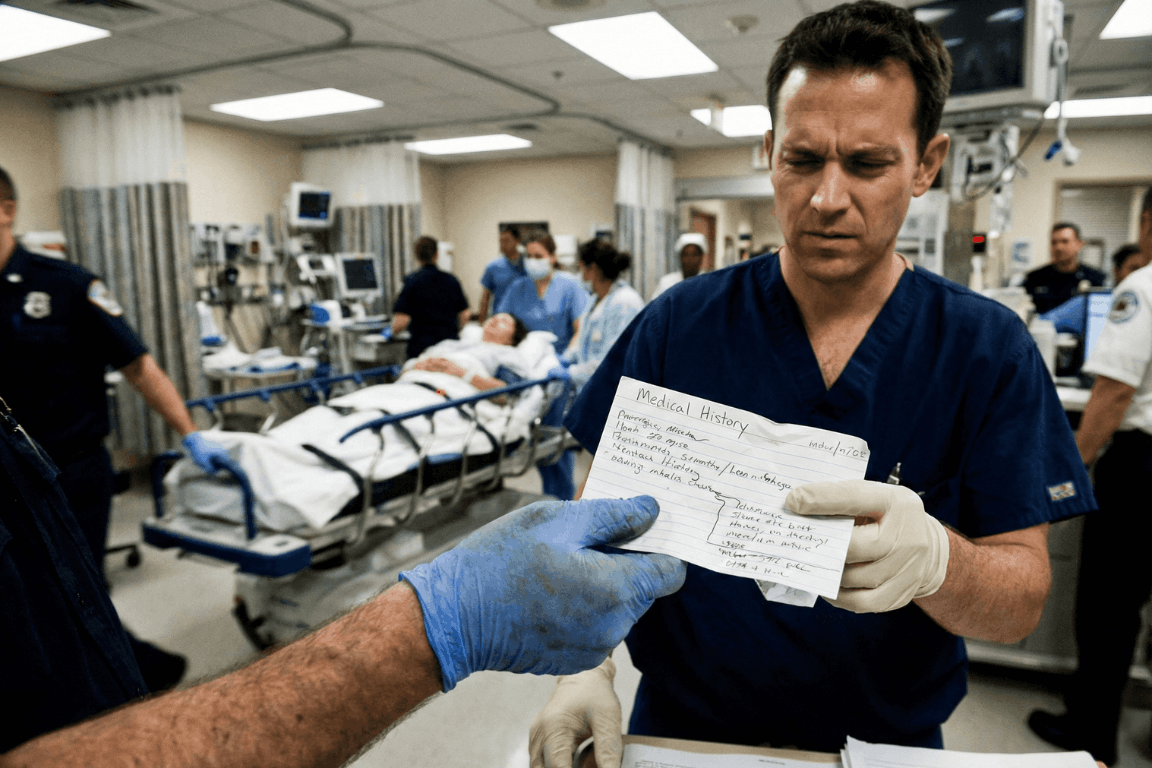
The “Golden Hour” Gap
The Emergency Room is a storm. Noise. Chaos. Speed. Doctors and nurses fight the clock. They chase the “Golden Hour.” That tiny window where fast action beats death.
But silence is the enemy. Ambulances dump patients who can’t talk. Shock takes over. Or they are out cold. In that high-pressure moment, a missing detail, a drug allergy, an old surgery, sends the team down the wrong road. That road ends badly.
Ask any ER staffer. They agree on one thing. A simple “cheat sheet” is the best tool a person can bring through those doors.
Why Memory Fails in a Crisis
People think they will remember. “I know my meds,” they say. They are wrong. Trauma wipes the brain clean. Pain and fear take over. A patient knows they take a “heart pill.” The name? Gone. The dose? Forgotten.
A written paper fixes this. It talks when the mouth cannot. It stops the guessing game between a frantic arrival and safe care.
The ER Doctor’s Wish List: 6 Essentials
What goes on the paper? Forget the thick file. Medical teams want facts. Facts that change the plan right now.
1. The “Big Picture” Demographics
Before the IV goes in, the team must know who they are treating. They need to know who signs the forms.
- Full Legal Name and Date of Birth: This finds old records in the computer.
- Blood Type: Vital for fast transfusions.
- Emergency Contacts: A spouse. A parent. Someone who answers “yes” or “no” to surgery when the patient can’t.
2. The Medication List (Crucial)
This part kills people if it’s wrong. Drug interactions cause huge messes in hospitals. Be exact:
- Prescription Drugs: The name. The dose (like 50mg). The schedule.
- Over-the-Counter (OTC) Meds: Aspirin. Ibuprofen. They seem safe. They aren’t. They thin blood. They hit kidneys.
- Supplements and Vitamins: Herbal pills often fight with anesthesia.
Note: Never write “Take as directed.” That tells the doctor zero.
3. The Allergy Alert
Does the patient hate penicillin? Latex? Contrast dye? The team needs to know. Now. The wrong drug turns a broken bone into a breathing emergency. List the allergen and the reaction. “Penicillin: Hives.” “Peanuts: Throat shuts.”
4. Past Medical History (PMH)
Context is king. A stomach ache in a healthy teen is one thing. In a Crohn’s patient, it’s another.
- Chronic Conditions: Diabetes. Asthma. Epilepsy. High blood pressure. Heart issues.
- Implants: Pacemakers. Metal rods. Artificial joints. The team must know this before an MRI scan starts.
- Past Surgeries: A quick list. “Appendectomy, 2015.” “C-Section, 2020.”
5. Recent History
Sometimes the clue is new. A note about travel, especially overseas, helps. So does a note about recent hospital stays. This helps doctors spot weird infections.
6. Insurance and Directives
Life comes first. But paperwork causes headaches later. List Insurance Policy and Group Numbers. Also, check for an Advance Directive or DNR (Do Not Resuscitate) order. A copy must exist. Otherwise, the patient’s wishes get ignored.
Paper vs. Digital: The Accessibility Problem
Old advice? Keep a card in a wallet. But paper sucks. It fades. It tears. It gets lost. Or it sits in a kitchen drawer while the car crash happens three towns over.
Digital vaults like InsureYouKnow.org changed the game. Storing this “Cheat Sheet” in a secure cloud keeps data safe. It stays ready. A trusted partner pulls up the vault on a phone. Seconds later, the ER team has the facts.
The Final Diagnosis
Being ready isn’t paranoia. It is smart. A Medical History Cheat Sheet takes ten minutes. It pays off in safety. It lets doctors work faster. It stops bad errors. And it gives families peace. They know the health story is clear. Even when the room is silent.
Fire, Flood, or Theft: Are Your Documents Actually Safe?
December 10, 2025
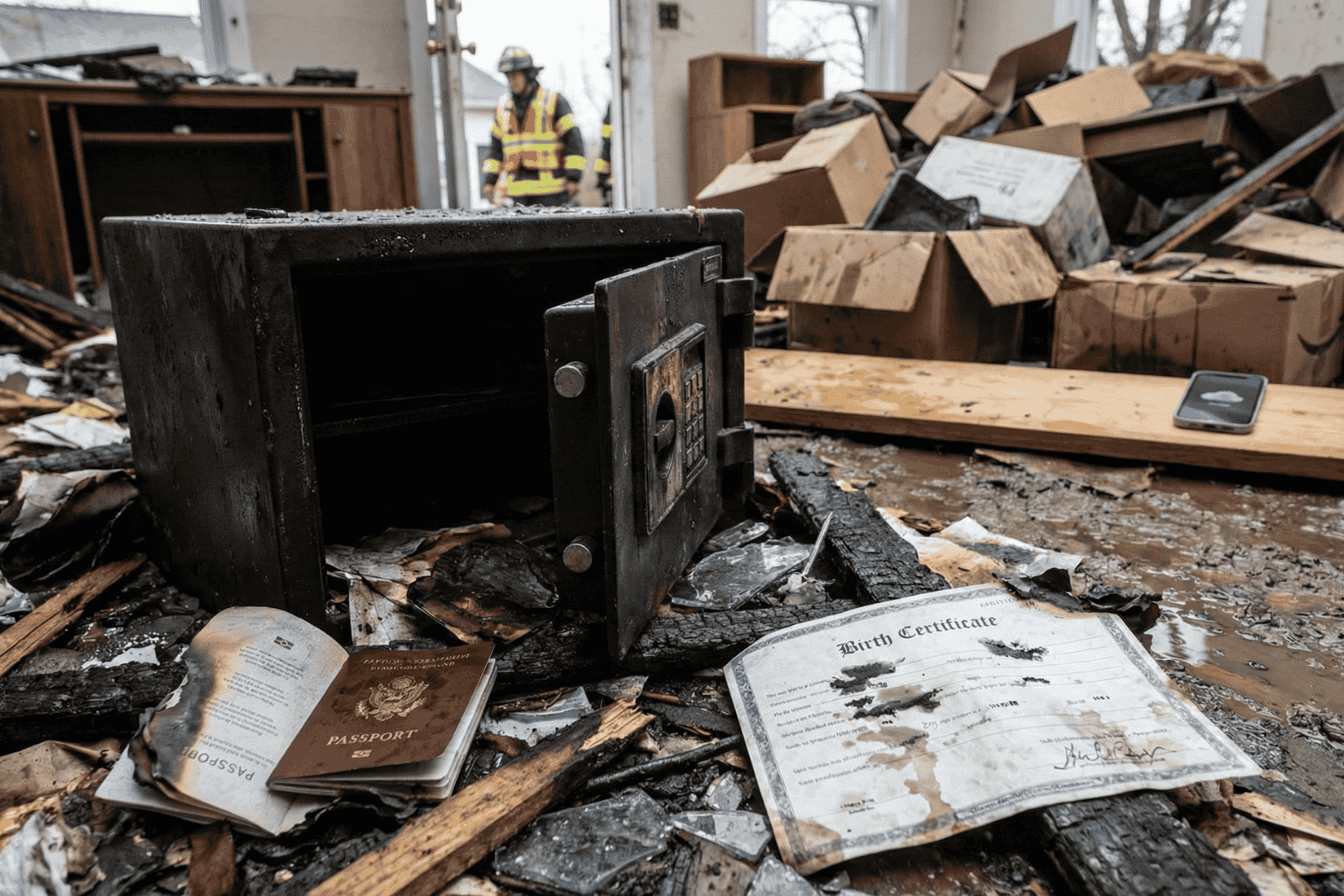
We all have that one spot.
Maybe it’s a dedicated drawer. Maybe it’s a filing cabinet. Or, if you’re feeling responsible, it’s a heavy metal box shoved in the back of the master closet. You toss your birth certificates, the deed to the house, and the passports in there. You lock it. You think, “Done. That’s safe.”
We obsess over the expensive stuff. We insure the car. We put a giant rubber case on the new phone. We hide the jewelry. But we hardly ever stop to think about the paperwork.
Here is the cold, hard truth: If a disaster levels your house, losing the TV is just an inconvenience. You go to the store. You buy another one.
But losing the paper trail that proves you exist? That isn’t an errand. That is a nightmare.
So, take a good, hard look at your setup. Is it actually secure? Because that “safe spot” might just be the most dangerous place in your home.
The Great “Fireproof” Lie
You bought a safe. It has a sticker on the front that says FIREPROOF in big, bold, reassuring letters. You trust it.
But dig into the fine print. Most of those boxes you buy at the hardware store aren’t actually fireproof. They are fire-resistant.
It sounds like splitting hairs, but it matters. Usually, that resistance only buys you about 30 minutes. Maybe an hour if you spent the big bucks. But house fires don’t check their watch. If a fire burns hotter or longer than that rating, the inside of that safe becomes a kiln. The paper inside doesn’t just get warm; it cooks.
And then, there is the water.
How do you put out a fire? With thousands of gallons of high-pressure water. Or maybe the disaster is a flood. Most consumer safes aren’t sealed tight. They leak. So, you might survive the flames only to crack open your safe and find a brick of wet, unreadable pulp where your will used to be.
The Identity Trap
Picture the week after a major disaster. Your home is gone or uninhabitable. You are stuck in a hotel room. You need to access your bank account, file an insurance claim, and maybe apply for emergency aid.
But your ID was in the house.
It starts a loop that will drive you up the wall. You need a driver’s license to get a certified copy of your birth certificate. But wait—you need a birth certificate to get a replacement license. You need proof of residency to talk to the bank, but your utility bills burned up with the filing cabinet. You end up stuck, unable to prove you are who you say you are, right when you need access to your money the most.
If Two Guys Can Lift It, It’s Gone
Burglars are lazy, but they aren’t stupid. They know exactly where people keep the goods.
If you haven’t bolted that safe into the concrete foundation, it isn’t a safe. It’s a takeout box. A thief isn’t going to stand there fiddling with the combination lock like in the movies. They are just going to pick it up, walk out the door, and crack it open later in their garage.
Sure, they want the cash or the watches. But once they have your Social Security card? They have hit the jackpot. Identity theft is a much deeper hole to dig out of than simple robbery. You can replace a stolen laptop in a day. Cleaning up a stolen identity takes years of fighting with credit bureaus.
The Only Real Fix: Get It Off-Site
Paper is fragile. It burns, it tears, it rots, and it fades. Relying on a single physical copy of anything important is a gamble.
The only way to win is to put a copy where the fire can’t burn it and the thief can’t grab it. You have to go digital.
This is why InsureYouKnow.org exists. It isn’t just about storage; it’s about survival.
- Your Phone is the Key: If you have to evacuate in ten minutes, you don’t need to grab the heavy paperwork. You just need your phone. All your policy numbers, medical records, and deeds are right there.
- Real Security: We aren’t talking about a random Google Drive folder. We are talking about encryption that keeps your data locked down. Only you have the key.
- The “What If” Plan: If something happens to you, your family doesn’t have to tear the house apart looking for the life insurance policy. You can set it up so they get access exactly when they need it.
What You Need to Scan Today
Don’t go crazy scanning every grocery receipt. Focus on the “High Value” targets. If losing it would ruin your month, scan it.
- The “Who Am I” Docs: Birth certificates, passports, Social Security cards.
- The “What I Own” Docs: The house deed, car titles, huge asset receipts.
- The Money: A cheat sheet with bank account numbers and credit card hotlines.
- The Protection: Declarations pages for your home, auto, and life insurance.
- The Legacy: Wills, Trusts, and Power of Attorney forms.
The Bottom Line
A physical safe is great for storing a spare set of car keys or a watch. But it shouldn’t be the only thing standing between you and total chaos.
Backing up your life on a secure digital vault is the cheapest insurance policy you will ever buy. It costs almost nothing, takes a few minutes, and ensures that no matter what happens to the house, your life remains intact.
Don’t wait for the emergency. Handle it now.
Pre-Accident Planning: Stay Ready for Emergencies and Save Time
August 27, 2025
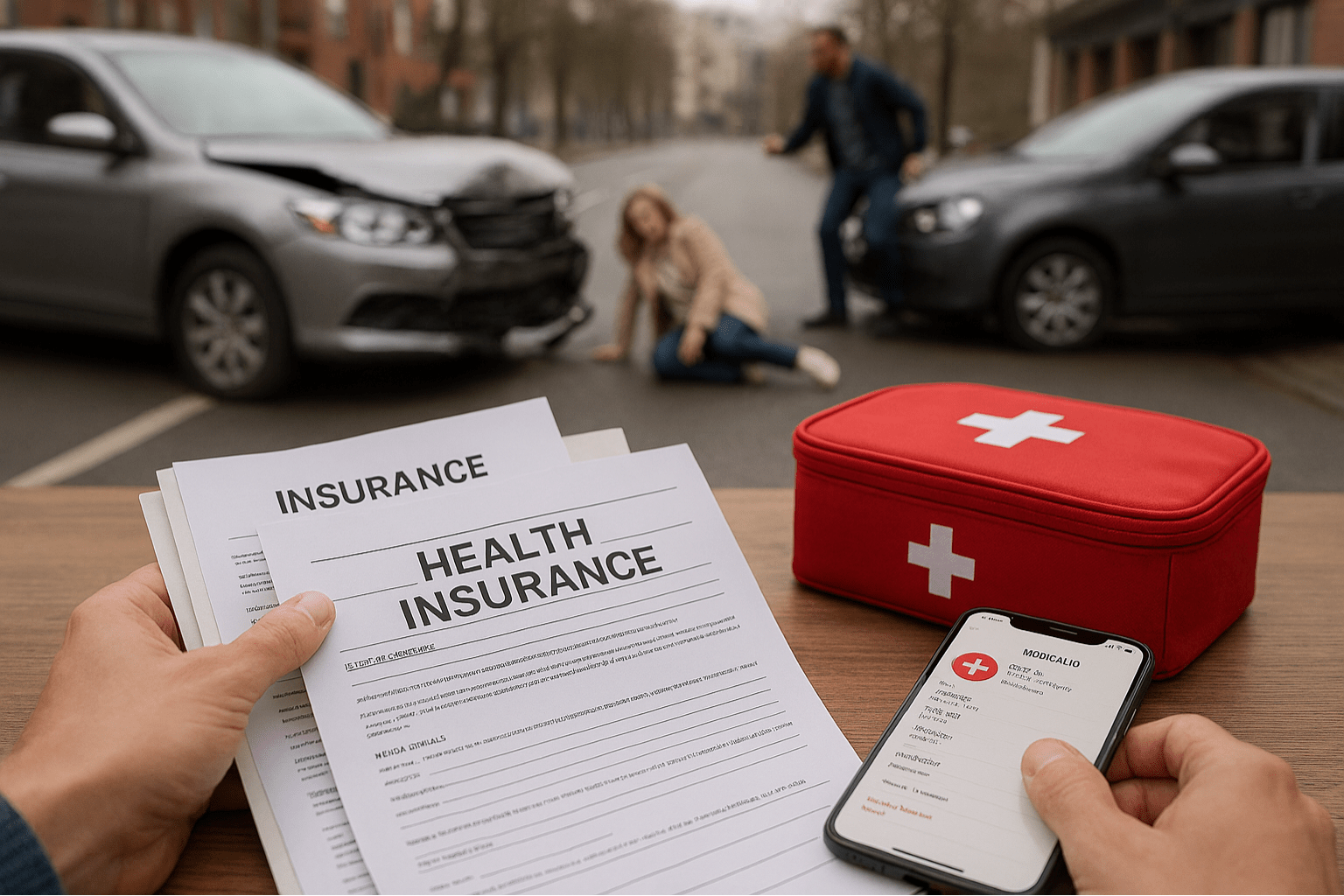
Nobody wakes up thinking, “Today I’ll have an accident.” But they happen. Sometimes when you’re driving, sometimes when you’re just making dinner. Suddenly, paramedics are asking questions: Any allergies? Medications? Who do we call?
If that info isn’t handy, things slow down. And in a crisis, slow is the last thing you want. I’ve personally seen families scramble through wallets and phones looking for details. It’s stressful and avoidable.
That’s why it makes sense to set up your health and insurance info now, not later. It doesn’t take long, and it could make all the difference in a critical moment.
What is Pre-Accident Planning?
Most people don’t really think about pre-accident planning until something goes wrong. Honestly, you probably haven’t either. It’s basically just having your key health and insurance info ready before an emergency ever happens. Nothing fancy. Just the stuff that can actually save time.
So what should you have? Here’s the quick list:
- A short record of your medical history.
- The medicines you take and how often.
- Any allergies doctors should know about.
- Names and numbers of people you’d want called first.
- Your insurance info, so care isn’t delayed.
Imagine this: you’re in a minor car accident and can’t talk. Paramedics show up and need to know if you’re allergic to a medication. If that info isn’t ready, they’re guessing. But if you’ve planned ahead, it’s right there. Seconds matter. And really, that’s the whole point, making sure first responders and doctors can help you as fast as possible.
Using Digital Tools for Emergency Preparedness
You probably keep most of your important info scattered—papers, cards, maybe even a few notes on your phone. But when an emergency hits, digging through that stuff wastes precious time. That’s where digital tools come in. Secure online vaults let you store all your health and insurance details in one place.
The best part? Only authorized people, like family, doctors, or first responders, can access it when it’s needed. Even if you can’t talk or move, the right people can get the info fast.
Why use a digital vault? Well, there are a few big advantages:
- Quick access – no more shuffling through papers or cards.
- Less paperwork – everything is in one organized spot.
- Safe backup – your info is secure, and you won’t lose it.
Honestly, setting this up doesn’t take long, but it can save a lot of stress and make sure you or your loved ones get the right care right away.
Real-Life Examples
Emergencies can happen when you least expect them. I once read about someone in a car mishap who couldn’t speak. Luckily, their family had a digital vault with all the key info, medical history, allergies, and medications. Paramedics got it fast. No guessing, no delays.
Another story: a senior fell at home. Their family had health and insurance info ready. EMTs didn’t waste time searching. Care started right away, and things went much smoother.
Studies show having info ready can cut treatment delays by up to 30%. That means fewer mistakes, faster care, and less stress for everyone. Honestly, most of us forget to do this until it happens. Spending a few minutes now could save a lot of trouble later.
Steps to Get Started
Okay, honestly, starting with pre-accident planning isn’t rocket science. Most of us just forget about it until something happens. But if you take a few minutes now, it can save a lot of panic later.
First things first, grab all your important stuff. Your medical history, medications, allergies, emergency contacts, insurance info, just toss it in one place. Trust me, you don’t want to be hunting for papers or digging through apps in a rush.
Next, find a safe spot to store it. Could be a digital vault, an app, whatever works for you. Just make sure only people you actually trust can get to it.
Then, make it easy to read. Like, sections for meds, allergies, contacts, insurance, whatever makes sense to you. Don’t overthink it.
And hey, don’t forget to update it. New meds, changed contacts, insurance stuff, small tweaks make a big difference when time is ticking.
Honestly? It might feel like a tiny thing. But having this ready can make everything smoother if something goes wrong. A few minutes now could seriously save you a lot of stress later.
Conclusion
Okay, so pre-accident planning might sound small, but honestly, it can really matter when stuff hits the fan. Like, having your meds, medical history, allergies, emergency contacts, and insurance info all ready and easy to grab can save you a ton of stress. Maybe even a life, who knows.
And here’s the thing, you don’t need to wait. Just start. Grab your info, toss it somewhere safe, and make sure you can actually get to it. Peek at it every now and then, update stuff if things change.
And, well, emergencies don’t give warnings. Every second counts. Being ready can really make a difference. A few minutes now could save hours later, or worse. Seriously.