
Tag: document storage
Why Emailing Files to Yourself Is Not a Secure Strategy
December 17, 2025
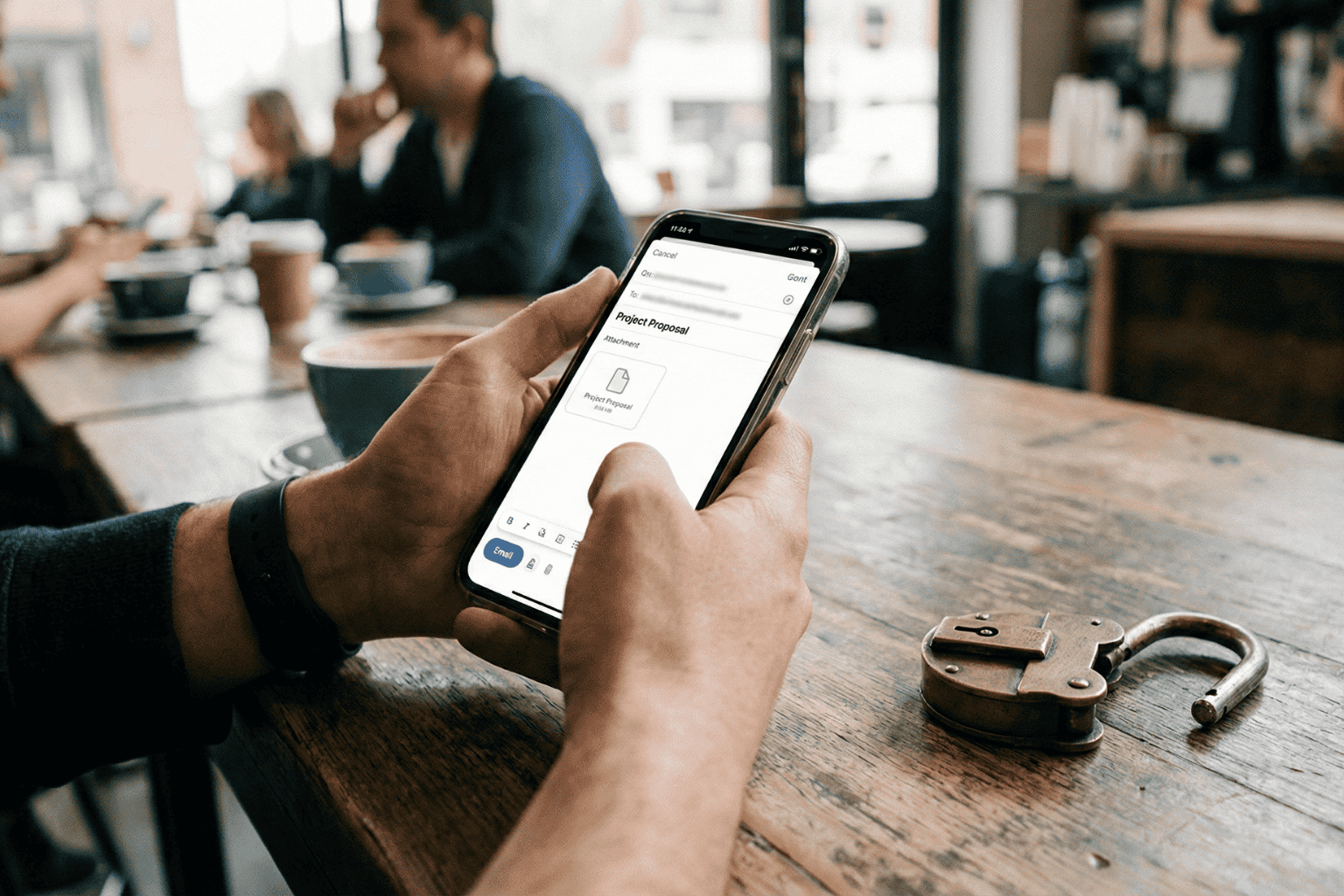
It happens. A tax return needs saving. A passport needs copying. Time is short. The solution seems obvious: attach the file, type in the email address, and hit send.
Done. Safe. Accessible from anywhere.
Or so it seems.
That “Sent” folder feels like a private archive. In reality, it is a ticking time bomb. Cybersecurity pros don’t view email as a vault. They view it as a sieve. It leaks. And when it comes to the blueprints of a person’s life, wills, deeds, insurance policies, using email for storage isn’t just a bad habit. It is a security nightmare.
The Glass Envelope
Here is the thing about email. It feels private. It requires a password to log in, after all. But once a message leaves the draft folder, it travels across the open web. It hops from server to server.
Think of it less like a sealed letter and more like a postcard. The postman can read it. The sorting clerk can read it. Anyone who intercepts the mail truck can read it.
While big tech companies lock the front door, the data inside often sits in plain text. If a hacker guesses a password, or if the email provider has a breach, those attachments aren’t encrypted. They are just sitting there. Open. Readable. Ready to be stolen.
The Trap of “Searchability”
The best feature of email is also its biggest flaw. It is searchable.
Type “tax” into the search bar, and boom: five years of returns appear. Convenient for the user? Absolutely. But it is even more convenient for a thief.
When cybercriminals crack an account, they don’t scroll through boring updates from Netflix or Amazon. They run bots. These automated scripts hunt for gold. They scan for keywords like “SSN,” “Scan,” “Medical,” or “Deed.”
In three seconds flat, a hacker can scrape a decade of sensitive life data. That PDF of a driver’s license sent in 2019? The user forgot it. The hacker found it. And now, identity theft is just a few clicks away.
The “Whoops” Factor
Then there is the human element. We are clumsy.
Predictive text is great until it isn’t. A user starts typing “Sarah” to send a financial statement to a spouse. The computer autofills “Sarah” the realtor from four years ago. The “Send” button is hit before the brain catches up.
Too late.
There is no taking it back. A total stranger now holds the keys to a private financial life. It happens constantly. It is messy. And it is completely preventable.
The Fix: A Real Vault
If the inbox is a postcard, a Secure Digital Vault is a steel fortress.
This is why platforms like InsureYouKnow.org exist. They don’t just “store” files. They lock them down.
The difference lies in the math. Real security uses AES-256 encryption. Imagine taking a document and putting it through a shredder that turns it into millions of mathematical shards. The only person with the glue to put it back together is the account owner. Even if a thief stole the server, they would get nothing but digital noise.
Plus, a vault brings order to chaos.
When a crisis hits, a fire, a sudden hospital trip, nobody wants to dig through a mountain of spam to find an insurance policy. A vault keeps things sorted. Medical. Legal. Financial. Everything in its right place.
The Bottom Line
Convenience is a trap. Saving ten seconds by emailing a file is not worth the misery of untangling a stolen identity.
Vital documents don’t belong in the “Sent” folder. They belong behind a lock. So, go ahead. Search the inbox for “scan.” Delete the results. And put those files somewhere they actually belong.
Newly Married? Important Insurance and Legal Documents to Save Now
November 26, 2025

Most couples spend the first weeks of marriage figuring out things like whose coffee style wins, which side of the bed belongs to whom, and how two different families do holidays. It is fun, chaotic, and full of learning. What usually doesn’t get discussed at first is paperwork. Not exactly romantic, but surprisingly important.
At some point, something small happens that reminds couples that paperwork matters. Maybe the doctor’s office asks for updated insurance. Maybe the bank asks for proof of name change. Maybe a car insurance rep needs beneficiary information right away. Moments like these make people realize how helpful it would have been to organize everything sooner.
So, here is a simple guide to make life a little easier for newly married couples.
Start with the marriage certificate
This one becomes the “key” to a lot of changes. It opens the door to updating names, insurance, bank accounts, and tax filing status. It is worth keeping the original somewhere safe and also scanning a copy so it is easy to find when someone asks for it unexpectedly.
If there is a name change, IDs need updating
Changing a last name takes more effort than most people expect. A few things usually need updating:
- Driver’s license or state ID
- Passport
- Social Security information
Scanning the updated documents helps avoid digging through drawers later.
Review health insurance
Many couples take a look at their coverage after marriage. Sometimes one partner has the better plan, or combining coverage saves money. It helps to keep:
- Current policy papers
- Digital insurance cards
- Provider phone numbers
It is amazing how often those papers are needed during stressful times.
Life insurance becomes part of the picture
No one likes thinking about worst-case scenarios, especially right after a wedding. But life insurance is an act of love and responsibility. Storing the policy and beneficiary information makes sure everything is clear if it is ever needed.
Home and car insurance too
Once couples live together or share a car, insurance companies need updated details. It is easier later if things like renters or homeowners insurance, auto insurance papers, and proof of valuable belongings are collected in one spot instead of scattered everywhere.
Financial documents and beneficiary details
Money looks different once two lives merge. Some couples join accounts. Others keep things separate. Whatever the setup, it is helpful to keep a record of things like:
- Bank info
- Retirement plans and investment details
- Mortgage or loan documents
This stuff can get confusing fast if it is not organized.
Estate planning might sound early… but it matters
Nobody wants to think about wills or medical decisions during the honeymoon stage. Still, life happens, and having things like a will or medical directive stored safely can protect the person you love most. It is one of those things you do hoping it never has to be used.
Where should everything go?
A lot of couples start out with good intentions and then end up stuffing these papers into random folders, drawers, or email attachments. The safest route is somewhere they can always access, even during emergencies, usually a secure digital vault for documents. It keeps things organized, private, and available when life throws a surprise.
A simple takeaway
Marriage brings a lot of joy and a little chaos. While sorting through insurance and legal papers might not feel urgent, it is one of those grown-up things that protects everything two people are building together. Once documents are updated and stored safely, it becomes one less thing to worry about and more energy can go back to enjoying married life.
How to Choose a Medical Power of Attorney and Stay Prepared
November 6, 2025

A few years ago, a close friend of mine went through something that completely changed how I look at “being prepared.” Her dad had a stroke while working in the garden. One minute he was watering plants, the next, he was in the hospital, unable to speak. The doctors were asking who could make medical decisions for him, but no one had an answer. Everyone froze.
It was heartbreaking to watch. Her mom was in shock, her siblings were arguing, and everyone was scared. Nobody knew what he would have wanted.
That day taught me something that I’ll never forget. Planning ahead isn’t just about being responsible. It’s an act of love. And that’s exactly what a Medical Power of Attorney is all about.
What a Medical Power of Attorney Really Means
A Medical Power of Attorney (MPOA) sounds like a complicated legal thing, but it’s actually simple. It’s a document that lets you choose someone you trust to make healthcare decisions if you can’t.
That person, your agent, doesn’t suddenly take over your life. They only step in if you can’t speak for yourself. Their role is to protect your wishes and make sure what you want actually happens.
It’s one of those things we tend to put off, but once it’s done, it brings a quiet kind of comfort. You know things will be okay, even if you can’t explain what you want in the moment.
Why It Matters
If you don’t have a Medical Power of Attorney, hospitals usually turn to whoever’s nearby or follow state laws about next of kin. That can work, but it can also cause a lot of tension. In stressful moments, people don’t always think clearly. They guess, they argue, they panic.
Having an MPOA avoids all that. It gives doctors one clear person to speak with and gives your family direction when things feel uncertain. It’s a simple form, but it can prevent a lot of heartache later.
How to Choose the Right Person
Choosing your agent isn’t about who’s closest to you. It’s about who knows you best. The person you trust most doesn’t have to be family. It could be a friend, a sibling, or someone who simply understands you.
Here’s what to think about:
- Who stays calm under pressure?
- Who knows how you feel about medical care and quality of life?
- Who will listen to doctors carefully and ask good questions?
- Who will do what you want, even if others disagree?
Once you decide, talk to them. It doesn’t need to be formal or serious. Maybe just bring it up during a car ride or while cooking dinner. Tell them how you feel about certain treatments or what kind of care you’d want. These honest conversations matter so much more than any form.
Keeping Your Documents in Order
Once your form is signed, keep it somewhere easy to find. In an emergency, no one wants to dig through stacks of paper.
Here’s what to keep together:
- Your MPOA form (signed and dated).
- A Living Will or Advance Directive describing your medical preferences.
- A HIPAA release form so your agent can speak with doctors.
- Health insurance cards and policy info.
- Emergency contacts for family and doctors.
- Photo IDs for you and your agent.
I like to keep mine in a labeled folder at home and another copy saved online. It’s one of those “just in case” things that saves everyone stress later.
Why Digital Storage Helps
Paper gets lost. It gets packed in a box or tossed by accident. That’s why having a digital copy is smart.
A secure site like InsureYouKnow.org makes it easy to upload and store important documents safely. You can label them, share access with your agent, and know that if you ever need them, they’re right there. It’s simple, private, and safe.
It’s not about being tech savvy, it’s about being practical.
Keep It Updated
Life changes. People move, relationships shift, new doctors come into your life. Once a year, take five or ten minutes to check that your MPOA and other forms are still up to date.
It doesn’t take long, but it gives you peace of mind that everything’s current.
A Final Thought
Setting up a Medical Power of Attorney isn’t about expecting bad things to happen. It’s about kindness, for yourself and the people who love you.
Once it’s done, you can stop worrying. You’ll know that, no matter what happens, your family won’t be left guessing. They’ll already know because you cared enough to prepare.
It’s not just a document. It’s peace of mind, and maybe one of the most loving things you can do.