
Cooking Tips for a Safe Holiday With Loved Ones
December 15, 2025
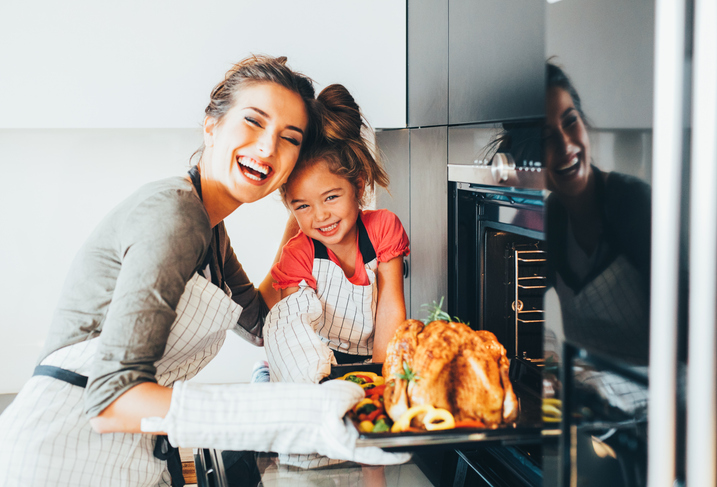
The holidays can get hectic, and with all of the comings and goings, kitchen accidents can happen quickly. According to the National Fire Protection Association (NFPA), Thanksgiving, Christmas Day, and Christmas Eve rank first, second, and third, respectively, for the most home cooking fires. On Thanksgiving Day alone, an estimated 1,446 home cooking fires were reported to U.S. fire departments in 2023.
“Every year, we see preventable fires and injuries caused by cooking accidents during the holidays,” says Peter Feldman, chairman of the Consumer Product Safety Commission. “We’re urging everyone to stay focused when in the kitchen because a few minutes of attention can make the difference between a happy holiday and a heartbreaking one.”
Prevent Holiday Kitchen Fires
Unattended cooking is the leading cause of cooking fires and fire deaths. Take these measures to prevent a cooking fire over the holidays:
- Always stay in the kitchen when you are cooking so that you can keep an eye on the food and never leave the house with food in the oven or on the stove.
- Keep flammable items like dish towels and oven mitts away from the stovetop and avoid wearing loose clothing when cooking.
- Keep young children and pets out of the kitchen. This will protect them from hot stoves and hot foods and liquids that could cause serious burns.
- Make sure the kitchen floors are cleared, and check the smoke alarms before the day of cooking.
If you have a small kitchen fire, do not pour water on it. Instead, smother the fire by placing a lid on the pan and turning it off. The stove top. Baking soda may also be used to put out small grease fires. If there is a fire in the oven, turn off the heat and keep the oven door closed. If the fire is large and there is extensive smoke, the home may be at risk. Call 911 once you are safe.
Reduce Cooking Day Stress
The first part of a stress-free holiday is to plan ahead. “Planning slows everything down so you can enjoy it,” says Emily Brubaker, a professional chef. “I have a prep list of each recipe broken down: ‘What can I do early?’ and ‘What do I need to do on the day of the meal?’”
Specific meal components, like side dishes, that can be made a couple of days ahead of time should be cooked and stored in the fridge so less needs to be done the day of the big meal. Deep clean your kitchen in advance to prevent contamination and clutter. “I start with spring-cleaning my pantry, my oven, my refrigerator, and my freezer,” says Brubaker. “I like to make sure I’m organized and ready to go.’
Thaw Turkey Safely
Many people don’t realize that large pieces of meat can take days to thaw in the fridge. Don’t make the mistake of waiting until the last minute to thaw something like a large turkey. A turkey must thaw at a safe temperature to prevent germs from growing quickly. “The number of days a frozen turkey takes to thaw in a refrigerator depends on the size,” says Troy Huffman, a retail food program manager at Colorado Department of Health and Environment. “A turkey 4-12 pounds takes one to three days to thaw, 12-16 pounds takes three to four days, 16-20 pounds takes four to five days, and 20-24 pounds takes five to six days.”
Preventing Foodborne Illness
According to the Centers for Disease Control and Prevention, about 48 million Americans, or 1 in 6, get sick from foodborne illnesses, leading to 128,000 hospitalizations and 3,000 deaths each year. There are basic food safety rules that every chef, even a home chef, should follow, especially when preparing food for others. Always keep raw meat, including poultry, seafood, and eggs, separate from all other foods in the grocery cart and in the refrigerator. To prevent juices from leaking onto other foods, meat should be stored at the bottom of the fridge in sealed bags or containers. To ensure meat is cooked thoroughly, use a food thermometer to verify the internal temperature is safe. All dishes should reach 165 degrees Fahrenheit.
Buffet Responsibly
Many of us leave hors d’oeuvres out for guests to pick on or serve buffet-style, but food shouldn’t be left out at room temperature for more than two hours, or one hour if it’s above 90 degrees. “After that window, the risk of bacteria growth increases and so increases the risk of foodborne illness,” says Carla Schwan, a food safety specialist at the University of Georgia Cooperative Extension. “If you want your food to sit out longer, remember to keep hot foods hot and cold foods cold. You could use warming trays or coolers to keep foods hot or cold to avoid the temperature danger zone.”
With Insureyouknow.org, you can store all your recipes, guest lists, and holiday budgets in one place, making it easy to reference on the big cooking day. By planning ahead, cooking for everyone over the holidays will be easier – and safer – than ever.