
Category: Paperwork
Public WiFi vs. Your Data: Why You Need a Secure Vault
January 28, 2026
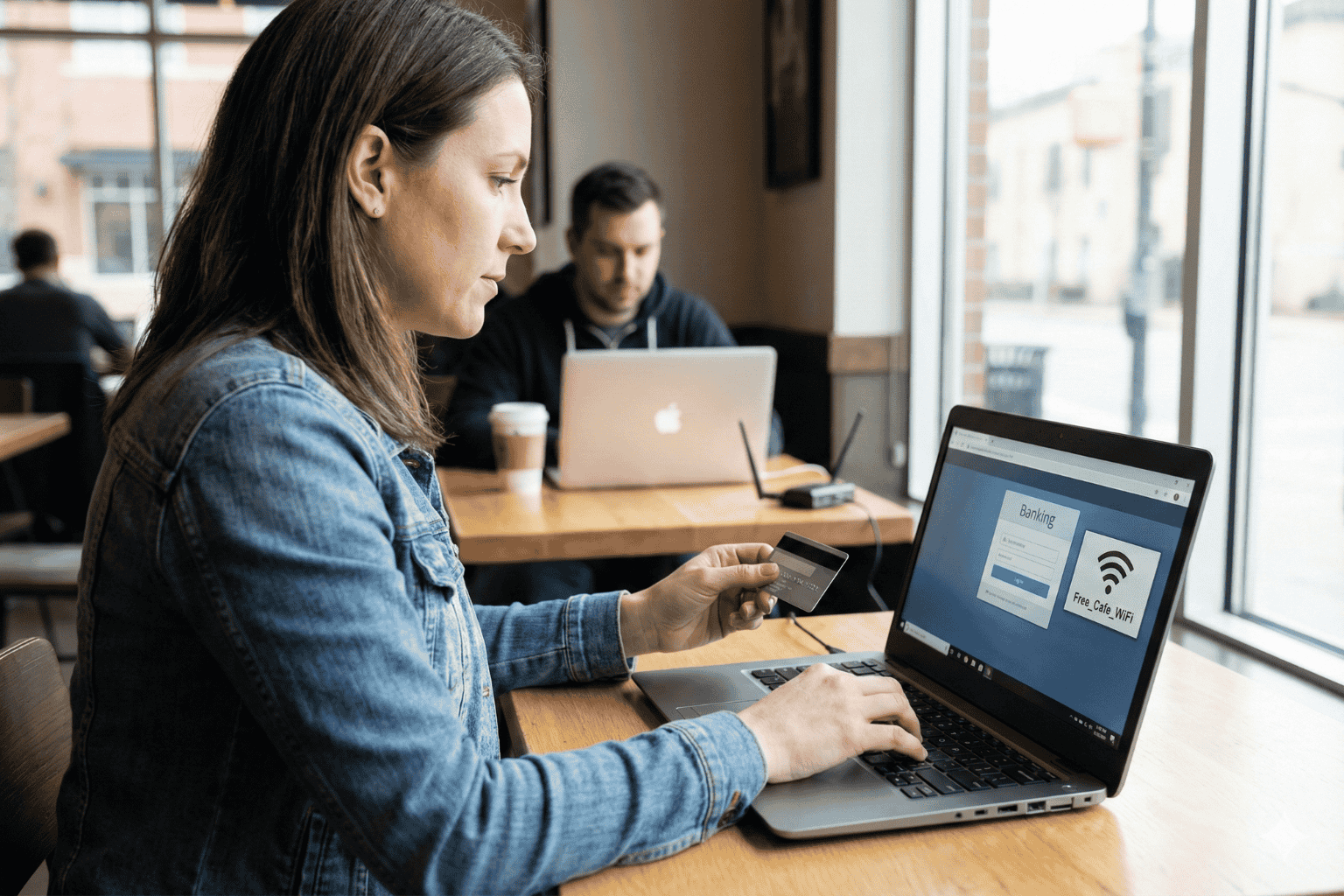
The Open Window
A traveler sits at a crowded airport gate. The flight is delayed. Boredom sets in. The phone comes out, and there it is: “Free Airport WiFi.”
Click. Connected.
It feels like a small victory. A chance to check a bank balance, pay a credit card bill, or look up a policy number.
But that click? It is the digital equivalent of leaving a house key under the doormat and hoping no one looks.
In 2026, we treat our phones like fortresses. We lock them with faces and fingerprints. Yet, the moment we connect to an open network, we lower the drawbridge. We invite the world in. And the world is watching.
The Invisible Eavesdropper
Here is the ugly truth about public internet: it is loud.
When data leaves a phone on a secure home network, it whispers. On public WiFi, it screams.
The danger isn’t usually some master criminal in a hoodie. It is often just software. Simple, cheap scripts running on a laptop three seats away. These programs are like digital vacuums. They suck up everything floating through the air.
- The Man-in-the-Middle: A hacker cuts in line. The user sends a password to the bank. The hacker catches it, copies it, and then passes it to the bank. The login works. The user has no idea they just handed over their keys.
- The Fake Twin: You see a network called “Coffee_Shop_Free.” It looks real. It isn’t. A scammer set it up five minutes ago. Connect to it, and the device effectively belongs to them until you disconnect.
The “Inbox” Mistake
Fear makes people do silly things. When travelers get nervous about logging in, they turn to an old, bad habit: The Email Search.
“I won’t log in,” they think. “I’ll just find that PDF I emailed myself.”
This is a disaster.
An email inbox is not a safe. It is a glass box. Email accounts are the most hacked targets on the planet. If a thief gets into an email account, they don’t just read letters. They find the tax returns from 2024. They find the scan of the child’s birth certificate. They find the list of “backup codes.”
Using an inbox to store life’s vital documents is like hiding jewelry in a clear plastic bag. It doesn’t work.
The Real Fix: A Digital Vault
So, what is the answer? Carry a filing cabinet? Never go online?
No. The answer is a Secure Digital Vault.
This is where platforms like InsureYouKnow.org step in. They aren’t storage bins. They are armored trucks.
1. It Shreds the Data A real vault uses encryption that mimics the banking world, like Amazon Cloud security. If a hacker snatches a file from the air, they don’t get a readable document. They get noise. A jumbled mess of code that means nothing. The thief gets the envelope, but they can never read the letter.
2. Nobody Knows the Code Privacy matters. The best systems run on “zero-knowledge” rules. That means the company holding the data doesn’t have the password. Even if they wanted to look, they couldn’t. The user holds the only key.
3. Get In, Get Out With a vault, the data lives in the cloud, not on the device. A user can log in on a hotel computer, check a passport number, and vanish. No files left in the “Downloads” folder. No trail for the next guest to find.
Peace of Mind
Security usually feels like a headache. Extra steps. More passwords.
But actually? It is freedom.
It is the ability to lose a wallet in Paris and not fall apart. Why? Because the backup copies of every card and ID are sitting behind an iron door in the cloud. Accessible. Safe. Ready.
Public WiFi is fine for reading gossip columns or checking the weather. But for the heavy stuff like the money, the legacy, and the identity, stay off the open road. Put the valuables in a vault. Lock it up. Then go enjoy the coffee.
Swedish Death Cleaning for Your Digital Life: A Simple Guide
January 15, 2026
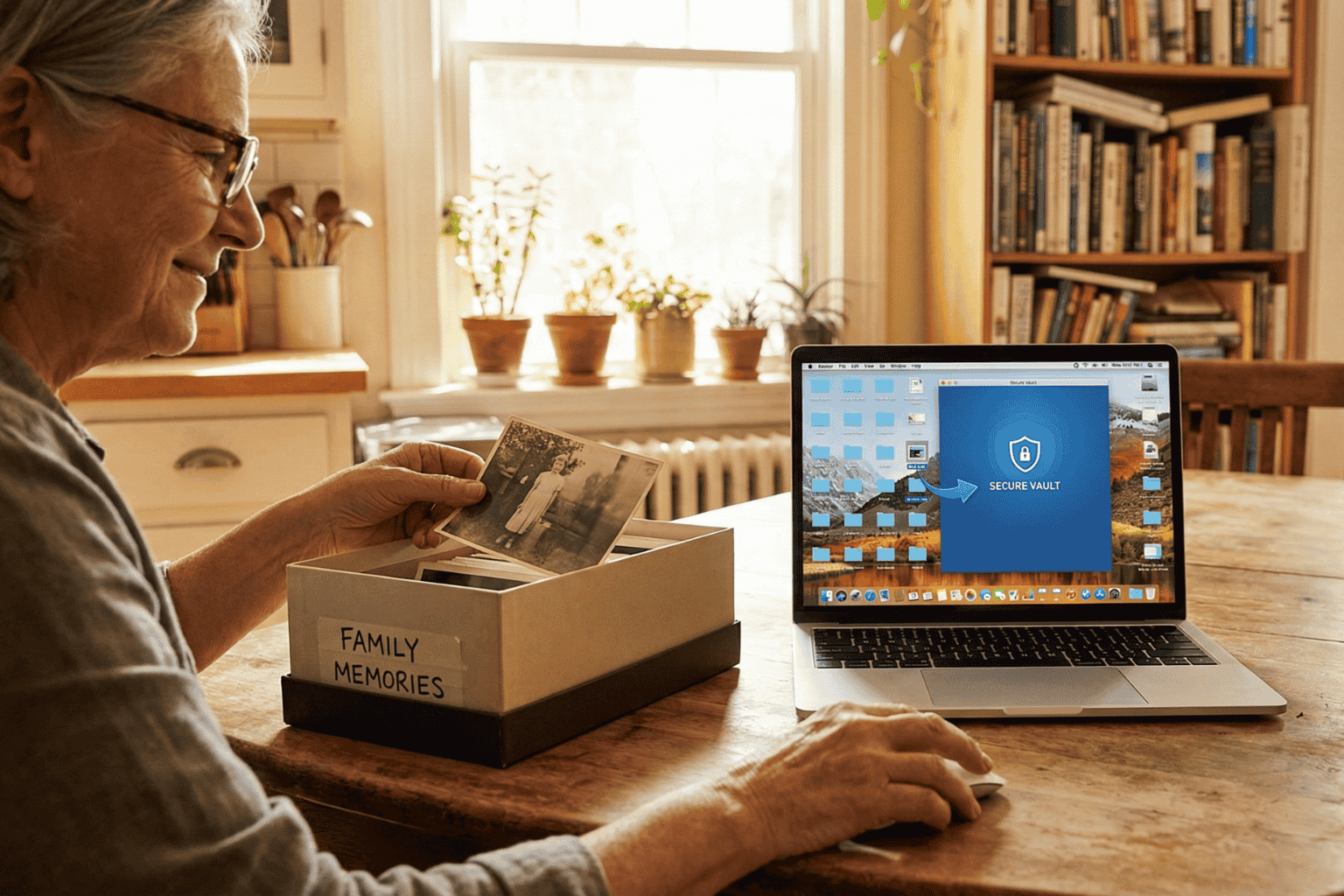
The mess you can’t see
There is a Swedish concept that has been making the rounds lately called döstädning. In English, it translates to “Swedish Death Cleaning.” It sounds a bit dark on the surface. Maybe even depressing. But the idea is actually pretty practical: you clear out your physical belongings, the dusty boxes, the clothes that don’t fit, the broken furniture, so your family isn’t stuck dealing with a mountain of junk when you are gone.
But here is the thing about modern life in 2026: the biggest mess isn’t in the garage. It’s floating in the cloud.
People are walking around right now with thousands of blurry photos, email accounts from ten years ago, and passwords that exist only in their heads. It is a silent chaotic mess. And if something happens, that digital chaos becomes a massive headache for the people left behind. Applying a little döstädning to the online world isn’t just about being tidy. It is about saving loved ones from a nightmare.
First, stop the bleeding
Before trying to organize the important stuff, the useless noise has to go.
Think about the average inbox. It is usually stuffed with newsletters that haven’t been opened since 2019 and receipts for things long thrown away. The first step of the clean-up is arguably the best part: hitting unsubscribe. If a subscription hasn’t provided value in the last six months, cut it loose.
Then look at the bank statement. How many streaming services or random apps are charging five dollars a month for nothing? Canceling those doesn’t just save cash today; it stops a confusing financial web from forming later. It is less for the family to untangle.
And then, the photos. Digital hoarding feels safe because it doesn’t take up room in the house. But leaving someone 50,000 screenshots to sort through is rough. Deleting the junk helps the real memories stand out.
The problem with passwords
Imagine cleaning up a whole house, locking the front door, and then throwing the key into a river. That is basically what happens when a digital life is organized but locked down.
In the past, important documents lived in a filing cabinet. A physical key could be found. Today? The “key” is a complex password or a face scan. If nobody else has those credentials, the assets inside, bank accounts, sentimental emails, crypto wallets, might as well not exist. They are locked in a digital vault with no door.
Scribbling passwords on a sticky note is risky. But keeping them entirely memorized is worse.
A smarter way to store it
Once the trash is deleted, what is left? The vital stuff. The deeds, the insurance policies, the wills, the vet records for the dog. These are the papers families panic over during an emergency.
Leaving these files scattered across three different cloud drives and a laptop desktop is a recipe for disaster. The strategy has to shift from “saving” to “managing.”
This is why platforms like InsureYouKnow.org are picking up steam. They aren’t just storage drives. They are digital safety deposit boxes. It gives people a single, encrypted place to put the things that actually matter. And unlike a regular hard drive, it bridges the gap. It keeps the data safe from hackers but ensures a trusted person can actually get to it when they need to.
It answers the question “Where is the policy?” before anyone even has to ask.
A lighter load
Calling it “Death Cleaning” makes it sound heavy. But honestly? It feels more like life cleaning.
There is a real sense of relief that comes from knowing the digital house is in order. No more background stress about lost files or forgotten logins. Just the calm knowledge that if life throws a curveball, the family won’t be stuck fighting with customer support to get into an account. They will have everything they need, right there, ready to go.
Sandwich Generation Guide: Organize Parents’ & Kids’ Records
January 8, 2026

The Squeeze is Real
The term “Sandwich Generation” sounds polite, almost clinical. But for the millions of adults living it, the reality feels a lot more like a pressure cooker. They are squeezed tight. On one side, there are children needing help with homework, permission slips, and growing pains. On the other, aging parents need support with doctors, medications, and a lifetime of accumulated paperwork.
It is exhausting.
The hardest part usually isn’t the physical caregiving. It is the administration. It is being the unpaid, overworked secretary for two different households. One minute, a parent is hunting for a vaccination card for summer camp; the next, they are frantically searching for Mom’s Medicare supplement number because a receptionist is waiting on the line.
When these worlds collide, chaos wins. Unless, of course, there is a system in place.
Two Households, One Overloaded Brain
The main problem isn’t a lack of effort. It is a lack of centralization. The “Sandwich” caregiver is trying to run two different operating systems at once.
Consider the children. Their documentation is constant and urgent:
- Social Security cards (usually lost in a drawer somewhere).
- Immunization records that schools demand every September.
- Birth certificates for sports or travel.
Then look at the parents. Their paper trail is decades long and much heavier:
- Wills, Trusts, and Deeds (often hidden in “safe” places that no one can find).
- Complex lists of daily medications.
- Insurance policies that need to be renewed.
- The dreaded “In Case of Emergency” contacts.
Keeping the kids’ files in a backpack and the parents’ files in a dusty filing cabinet across town simply doesn’t work. Not in 2026. When an emergency happens, and they always happen at inconvenient times, nobody wants to be driving across town to find a piece of paper.
The “Kitchen Table” Talk
Getting organized starts with a conversation, not a scanner. This is the tricky part. Many adults feel awkward asking their parents about wills or bank accounts. It feels intrusive.
But the conversation doesn’t have to be about control. It should be about safety. The approach matters. Framing it as, “We need to make sure the doctors know what you need if you can’t tell them,” works a lot better than, “Give me your passwords.”
The goal is strictly practical: preventing a crisis from becoming a disaster.
Cut the Clutter: What Actually Matters?
A common mistake is trying to save everything. But honestly, nobody needs to digitize a utility bill from 1998. To survive the squeeze, caregivers need to be ruthless about what they keep.
The “Must-Have” list is actually quite short:
- The Legal Shield: Power of Attorney. This is non-negotiable. Without it, an adult child is legally a stranger to their parent’s bank or doctor.
- The Medical Snapshot: A simple, updated list of what pills they take and who their primary doctor is.
- The Money Trail: Just a list of where the accounts are. Not necessarily the balances, but the locations of the banks and insurance policies.
Stop Relying on Physical Folders
Paper is fragile. It burns, it tears, and most importantly, it stays in one place.
If a parent falls ill while the caregiver is on vacation, that physical folder in the hallway closet is useless. This is why moving to a digital system is the only logical step for a modern family.
Using a secure, encrypted platform, like InsureYouKnow.org, solves the geography problem. It puts the information in the cloud, protected by encryption that is tougher than any lock on a filing cabinet. It means the right information is available on a smartphone, right in the hospital lobby, exactly when it is needed.
Don’t Go It Alone
There is a hero complex in the Sandwich Generation. Everyone tries to carry the load solo. But that is a recipe for burnout.
Once the records are digital, they should be shared. A spouse, a reliable sibling, or a family attorney needs access, too. Modern digital vaults allow for this kind of “trusted partner” access. It ensures that if the primary caregiver gets the flu or gets stuck in a meeting, someone else can step in and handle the situation.
Finding Some Peace
At the end of the day, organizing these records isn’t really about paperwork. It is about buying back time.
Every minute saved by not hunting for a lost insurance card is a minute that can be spent actually being a parent or a son or daughter. The paperwork will always be there, but the stress doesn’t have to be. By merging these two chaotic worlds into one secure place, the Sandwich Generation can finally take a breath.
Divorce & Data: How to Split Your Digital Life Safely
December 26, 2025
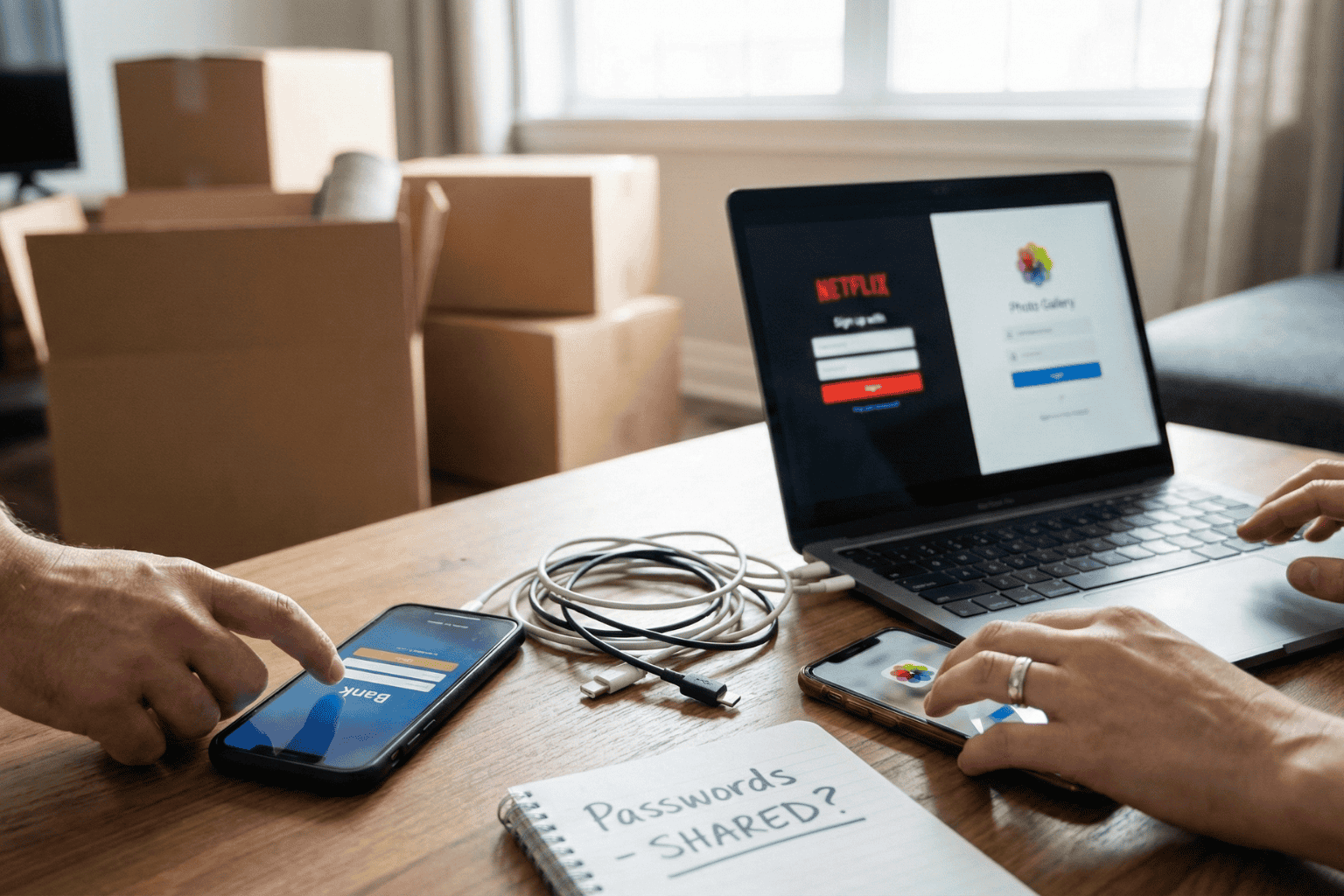
The Digital Aftermath
Breaking up used to mean splitting the vinyl collection and deciding who keeps the couch. Simple. Tangible. But today? The most complicated part of a separation isn’t sitting in the living room; it’s floating in the cloud.
We live online. A marriage in 2025 is basically a massive web of shared Netflix logins, joint bank apps, Amazon purchase histories, and thousands of photos on a server somewhere. This is the “Digital Split,” and honestly, it is messy. If people ignore it, they risk more than just awkwardness. They risk security leaks, drained accounts, and losing memories that actually matter.
Untangling this web takes a bit of grit, but it has to be done. Here is the playbook for separating a digital life without everything crashing down.
1. The Audit (Or: Seeing the Mess)
Before changing a single password, stop. Take a breath. You can’t fix what you can’t see. Most couples are far more digitally enmeshed than they realize. The first move is a simple audit.
Sit down and write it out. All of it.
- The Money: It’s not just the big bank account. Think Venmo, PayPal, crypto wallets, and those “buy now, pay later” apps.
- The Boring Stuff: Who pays the electric bill? Whose email is on the mortgage portal?
- The Fun Stuff: Spotify duos, Netflix profiles, gaming accounts.
- The Doorstep: Uber, Lyft, DoorDash.
Imagine the chaos if one person kills a shared credit card on Amazon without saying a word. Subscriptions bounce. Deliveries get canceled. It’s a headache nobody needs right now. Awareness is the best defense.
2. Locking the Virtual Doors
Once the list is ready, it’s time to secure the perimeter. Financial data is vulnerable, and emotions can make people do rash things.
For personal accounts like email, private checking, and social media, the passwords need to change. Today. And please, no more using the dog’s name or that old anniversary date. Pick something random.
This is also the moment to turn on Two-Factor Authentication (2FA) everywhere. It’s annoying, sure, but it’s a lifesaver. Even if an ex-partner guesses the new password, they can’t get in without the code sent to the phone. Also, dig into credit card apps and check for “authorized users.” If that isn’t cleared up, one person could be stuck paying for the other’s post-breakup therapy shopping.
3. The Photo Dilemma: Keep, Don’t Delete
This hurts the most. Who gets the pictures? The wedding video? The baby photos? Unlike a physical album, nobody has to lose out here.
The rule is strict: Duplicate, don’t delete.
Legally, wiping a hard drive or deleting a cloud account can be seen as destroying assets. It’s a bad look in court. Instead, buy a big external hard drive. Download everything, every shared memory, and hand the drive over. Or, use Google Photos to make a massive shared album, let them download it all, and then cut the link. Everyone walks away with their memories intact. No data lost.
4. Cutting the Invisible Ties
Then there are the things running in the background. The invisible tethers.
Check location sharing. Apps like “Find My” or Google Maps are great for knowing when a spouse is home for dinner, but after a split? It’s just surveillance. Unless there’s a solid reason to keep it on, like co-parenting coordination, shut it down.
The smart home is another trap. If one partner moves out, they shouldn’t still have the code to the front door or access to the Nest cameras. Watching an ex-partner come and go via a phone screen isn’t healthy for anyone.
5. The “Legacy” Check
It’s dark, but it matters. Check the beneficiaries.
Life insurance, 401(k)s, and investment apps all have that little “Transfer on Death” field. People fill it out once and forget it exists. If it isn’t updated, an ex-spouse could technically inherit money meant for kids or a new family ten years from now. It takes five minutes to fix, but it saves a lifetime of legal trouble later.
Final Thoughts
Separating a life is heavy work. But in this era, the digital separation is just as heavy as the physical one. It’s about privacy, security, and eventually, peace of mind. By locking down the data and safely copying the memories, the path forward gets a little bit clearer.
Pull the last three months of bank statements. That’s usually where the hidden subscriptions are hiding. Good luck.
Why Emailing Files to Yourself Is Not a Secure Strategy
December 17, 2025
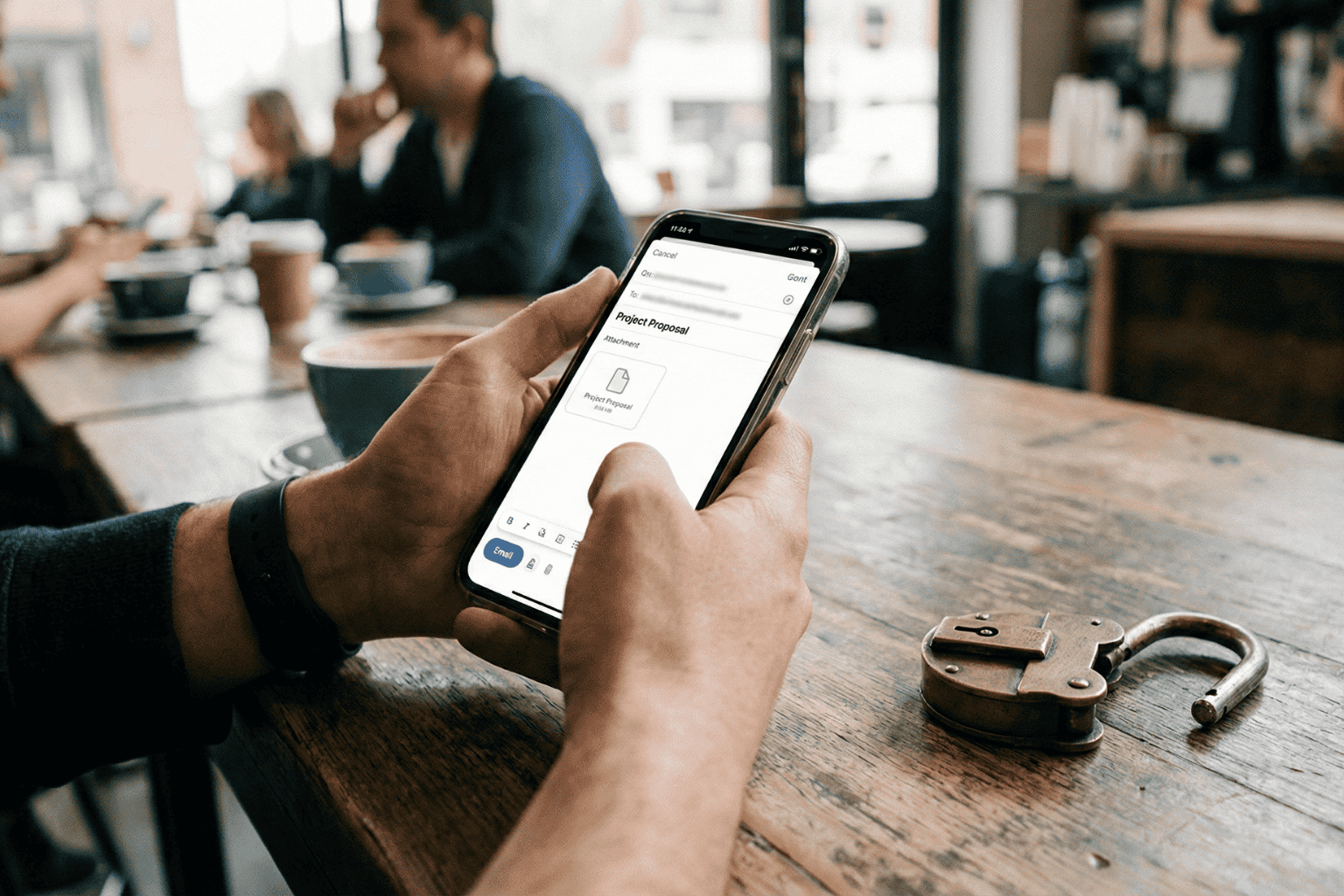
It happens. A tax return needs saving. A passport needs copying. Time is short. The solution seems obvious: attach the file, type in the email address, and hit send.
Done. Safe. Accessible from anywhere.
Or so it seems.
That “Sent” folder feels like a private archive. In reality, it is a ticking time bomb. Cybersecurity pros don’t view email as a vault. They view it as a sieve. It leaks. And when it comes to the blueprints of a person’s life, wills, deeds, insurance policies, using email for storage isn’t just a bad habit. It is a security nightmare.
The Glass Envelope
Here is the thing about email. It feels private. It requires a password to log in, after all. But once a message leaves the draft folder, it travels across the open web. It hops from server to server.
Think of it less like a sealed letter and more like a postcard. The postman can read it. The sorting clerk can read it. Anyone who intercepts the mail truck can read it.
While big tech companies lock the front door, the data inside often sits in plain text. If a hacker guesses a password, or if the email provider has a breach, those attachments aren’t encrypted. They are just sitting there. Open. Readable. Ready to be stolen.
The Trap of “Searchability”
The best feature of email is also its biggest flaw. It is searchable.
Type “tax” into the search bar, and boom: five years of returns appear. Convenient for the user? Absolutely. But it is even more convenient for a thief.
When cybercriminals crack an account, they don’t scroll through boring updates from Netflix or Amazon. They run bots. These automated scripts hunt for gold. They scan for keywords like “SSN,” “Scan,” “Medical,” or “Deed.”
In three seconds flat, a hacker can scrape a decade of sensitive life data. That PDF of a driver’s license sent in 2019? The user forgot it. The hacker found it. And now, identity theft is just a few clicks away.
The “Whoops” Factor
Then there is the human element. We are clumsy.
Predictive text is great until it isn’t. A user starts typing “Sarah” to send a financial statement to a spouse. The computer autofills “Sarah” the realtor from four years ago. The “Send” button is hit before the brain catches up.
Too late.
There is no taking it back. A total stranger now holds the keys to a private financial life. It happens constantly. It is messy. And it is completely preventable.
The Fix: A Real Vault
If the inbox is a postcard, a Secure Digital Vault is a steel fortress.
This is why platforms like InsureYouKnow.org exist. They don’t just “store” files. They lock them down.
The difference lies in the math. Real security uses AES-256 encryption. Imagine taking a document and putting it through a shredder that turns it into millions of mathematical shards. The only person with the glue to put it back together is the account owner. Even if a thief stole the server, they would get nothing but digital noise.
Plus, a vault brings order to chaos.
When a crisis hits, a fire, a sudden hospital trip, nobody wants to dig through a mountain of spam to find an insurance policy. A vault keeps things sorted. Medical. Legal. Financial. Everything in its right place.
The Bottom Line
Convenience is a trap. Saving ten seconds by emailing a file is not worth the misery of untangling a stolen identity.
Vital documents don’t belong in the “Sent” folder. They belong behind a lock. So, go ahead. Search the inbox for “scan.” Delete the results. And put those files somewhere they actually belong.
Fire, Flood, or Theft: Are Your Documents Actually Safe?
December 10, 2025

We all have that one spot.
Maybe it’s a dedicated drawer. Maybe it’s a filing cabinet. Or, if you’re feeling responsible, it’s a heavy metal box shoved in the back of the master closet. You toss your birth certificates, the deed to the house, and the passports in there. You lock it. You think, “Done. That’s safe.”
We obsess over the expensive stuff. We insure the car. We put a giant rubber case on the new phone. We hide the jewelry. But we hardly ever stop to think about the paperwork.
Here is the cold, hard truth: If a disaster levels your house, losing the TV is just an inconvenience. You go to the store. You buy another one.
But losing the paper trail that proves you exist? That isn’t an errand. That is a nightmare.
So, take a good, hard look at your setup. Is it actually secure? Because that “safe spot” might just be the most dangerous place in your home.
The Great “Fireproof” Lie
You bought a safe. It has a sticker on the front that says FIREPROOF in big, bold, reassuring letters. You trust it.
But dig into the fine print. Most of those boxes you buy at the hardware store aren’t actually fireproof. They are fire-resistant.
It sounds like splitting hairs, but it matters. Usually, that resistance only buys you about 30 minutes. Maybe an hour if you spent the big bucks. But house fires don’t check their watch. If a fire burns hotter or longer than that rating, the inside of that safe becomes a kiln. The paper inside doesn’t just get warm; it cooks.
And then, there is the water.
How do you put out a fire? With thousands of gallons of high-pressure water. Or maybe the disaster is a flood. Most consumer safes aren’t sealed tight. They leak. So, you might survive the flames only to crack open your safe and find a brick of wet, unreadable pulp where your will used to be.
The Identity Trap
Picture the week after a major disaster. Your home is gone or uninhabitable. You are stuck in a hotel room. You need to access your bank account, file an insurance claim, and maybe apply for emergency aid.
But your ID was in the house.
It starts a loop that will drive you up the wall. You need a driver’s license to get a certified copy of your birth certificate. But wait—you need a birth certificate to get a replacement license. You need proof of residency to talk to the bank, but your utility bills burned up with the filing cabinet. You end up stuck, unable to prove you are who you say you are, right when you need access to your money the most.
If Two Guys Can Lift It, It’s Gone
Burglars are lazy, but they aren’t stupid. They know exactly where people keep the goods.
If you haven’t bolted that safe into the concrete foundation, it isn’t a safe. It’s a takeout box. A thief isn’t going to stand there fiddling with the combination lock like in the movies. They are just going to pick it up, walk out the door, and crack it open later in their garage.
Sure, they want the cash or the watches. But once they have your Social Security card? They have hit the jackpot. Identity theft is a much deeper hole to dig out of than simple robbery. You can replace a stolen laptop in a day. Cleaning up a stolen identity takes years of fighting with credit bureaus.
The Only Real Fix: Get It Off-Site
Paper is fragile. It burns, it tears, it rots, and it fades. Relying on a single physical copy of anything important is a gamble.
The only way to win is to put a copy where the fire can’t burn it and the thief can’t grab it. You have to go digital.
This is why InsureYouKnow.org exists. It isn’t just about storage; it’s about survival.
- Your Phone is the Key: If you have to evacuate in ten minutes, you don’t need to grab the heavy paperwork. You just need your phone. All your policy numbers, medical records, and deeds are right there.
- Real Security: We aren’t talking about a random Google Drive folder. We are talking about encryption that keeps your data locked down. Only you have the key.
- The “What If” Plan: If something happens to you, your family doesn’t have to tear the house apart looking for the life insurance policy. You can set it up so they get access exactly when they need it.
What You Need to Scan Today
Don’t go crazy scanning every grocery receipt. Focus on the “High Value” targets. If losing it would ruin your month, scan it.
- The “Who Am I” Docs: Birth certificates, passports, Social Security cards.
- The “What I Own” Docs: The house deed, car titles, huge asset receipts.
- The Money: A cheat sheet with bank account numbers and credit card hotlines.
- The Protection: Declarations pages for your home, auto, and life insurance.
- The Legacy: Wills, Trusts, and Power of Attorney forms.
The Bottom Line
A physical safe is great for storing a spare set of car keys or a watch. But it shouldn’t be the only thing standing between you and total chaos.
Backing up your life on a secure digital vault is the cheapest insurance policy you will ever buy. It costs almost nothing, takes a few minutes, and ensures that no matter what happens to the house, your life remains intact.
Don’t wait for the emergency. Handle it now.
Why Freelancers Need Vault for Business, Insurance and Personal Docs
December 3, 2025

Running a small business or working independently as a freelancer can be incredibly rewarding, but it also comes with a unique kind of pressure. There is no support team to handle accounts, filing, legal paperwork or insurance policies. Everything falls on one person. And when documents get scattered across laptops, email inboxes, envelopes, and drawers, that pressure doubles.
Many professionals don’t realise the value of having one organised vault for business, insurance, and even personal documents until something goes wrong like a tax review, a lost invoice, a sudden medical emergency or an unexpected client dispute. Situations like these can turn a normal week into chaos if the necessary files aren’t available when they’re needed.
The Hidden Risk Behind Scattered Paperwork
Almost every freelancer or business owner ends up collecting a long list of important documents over time:
- Contracts and NDAs
- Tax records and GST filings
- Business registration and licenses
- Insurance policies
- Personal documents like PAN / Aadhaar / passport copies
- Client invoices and payment proofs
When these are stored in different places some printed, some emailed, some saved on a mobile phone, some forgotten on a hard drive it becomes hard to track what exists and what is missing. Searching for one paper in the middle of work is stressful and wastes valuable time that could be spent earning money.
It is not just about convenience scattered documents increase the chances of financial loss, missed tax claims, denied insurance claims and even legal trouble.
Why a Single Vault Makes Life Easier
Keeping all important documents in one vault (preferably digital) can completely transform the way a business operates. A well-organised vault helps in:
Faster Access When Needed
Instead of digging through old emails or piles of files, documents are found in seconds. During tax season, project negotiations, audits or emergencies, this makes an unbelievable difference.
Confidence with Clients and Authorities
Being able to quickly retrieve contracts, invoices or payment receipts shows professionalism. It also protects the business during disputes or late payments.
No More Panic During Emergencies
If a device breaks, a document goes missing or an accident occurs, a vault ensures that everything is backed up and safely stored.
Clear Separation of Personal and Business Finances
Many freelancers mix personal and business papers by accident. Keeping them in labelled folders inside one vault keeps everything organised without confusion.
Which Documents Should Be Included?
A good vault should include every document that is hard to replace, legally important or financially relevant. For example:
Business-related documents
- Licenses and registrations
- Client contracts and project agreements
- Invoices sent and payment receipts
- Expense proofs bills, subscriptions, travel, utilities
- Bank statements and annual reports
Insurance-related documents
- Health insurance policies
- Life insurance details
- Business and asset insurance
- Renewal receipts and claim history
Personal documents
- Identity proofs such as Aadhaar, PAN, Passport
- Important legal documents
- Nominee details
Keeping everything in one vault does not mix the documents it simply allows them to be stored together but categorised, making access extremely efficient.
Digital Vault vs Physical Storage Which Is Better?
Some business owners still rely on physical files, and while that is familiar, it has limitations. Paper can be misplaced, damaged by water or fire and is hard to access when travelling or working remotely.
A digital vault has several advantages:
- Documents can be accessed anytime, even while travelling or from another device
- Multiple categories and labels reduce confusion
- Search options make it easy to locate files quickly
- Backup storage ensures documents are not lost
- Sensitive information can be password protected
For professionals who work across locations or serve international clients, digital access becomes even more valuable.
Real-World Scenarios Where a Vault Saves the Day
A secure, organised vault may feel like an optional system until the moment it becomes essential:
- A client wants to verify payment for an old invoice
- A large company payroll team requests old tax receipts for onboarding
- A medical emergency requires quick access to insurance details
- A visa form needs a scanned copy of passport and financial proof
- A GST or income tax review asks for expense records from previous years
Having everything stored neatly in one place turns stressful events into simple tasks.
A Small Habit That Leads to Big Stability
Building a vault doesn’t require complicated software or a huge investment. It only needs a habit: every time an important document arrives, store it in the vault immediately. Small, consistent organisation protects both personal and professional life in the long run.
For freelancers and small business owners, a vault is not just storage. It is preparation. It is peace of mind. It is a safety net during the uncertain moments that every business eventually faces.
Final Thought
Success in business isn’t only about skills or marketing. It is also about stability and preparedness. Keeping business, insurance and personal documents in one secure vault gives a professional the confidence to grow without fear of losing control over paperwork. With organised records, business becomes smoother, income becomes predictable and stressful situations become manageable.
Newly Married? Important Insurance and Legal Documents to Save Now
November 26, 2025

Most couples spend the first weeks of marriage figuring out things like whose coffee style wins, which side of the bed belongs to whom, and how two different families do holidays. It is fun, chaotic, and full of learning. What usually doesn’t get discussed at first is paperwork. Not exactly romantic, but surprisingly important.
At some point, something small happens that reminds couples that paperwork matters. Maybe the doctor’s office asks for updated insurance. Maybe the bank asks for proof of name change. Maybe a car insurance rep needs beneficiary information right away. Moments like these make people realize how helpful it would have been to organize everything sooner.
So, here is a simple guide to make life a little easier for newly married couples.
Start with the marriage certificate
This one becomes the “key” to a lot of changes. It opens the door to updating names, insurance, bank accounts, and tax filing status. It is worth keeping the original somewhere safe and also scanning a copy so it is easy to find when someone asks for it unexpectedly.
If there is a name change, IDs need updating
Changing a last name takes more effort than most people expect. A few things usually need updating:
- Driver’s license or state ID
- Passport
- Social Security information
Scanning the updated documents helps avoid digging through drawers later.
Review health insurance
Many couples take a look at their coverage after marriage. Sometimes one partner has the better plan, or combining coverage saves money. It helps to keep:
- Current policy papers
- Digital insurance cards
- Provider phone numbers
It is amazing how often those papers are needed during stressful times.
Life insurance becomes part of the picture
No one likes thinking about worst-case scenarios, especially right after a wedding. But life insurance is an act of love and responsibility. Storing the policy and beneficiary information makes sure everything is clear if it is ever needed.
Home and car insurance too
Once couples live together or share a car, insurance companies need updated details. It is easier later if things like renters or homeowners insurance, auto insurance papers, and proof of valuable belongings are collected in one spot instead of scattered everywhere.
Financial documents and beneficiary details
Money looks different once two lives merge. Some couples join accounts. Others keep things separate. Whatever the setup, it is helpful to keep a record of things like:
- Bank info
- Retirement plans and investment details
- Mortgage or loan documents
This stuff can get confusing fast if it is not organized.
Estate planning might sound early… but it matters
Nobody wants to think about wills or medical decisions during the honeymoon stage. Still, life happens, and having things like a will or medical directive stored safely can protect the person you love most. It is one of those things you do hoping it never has to be used.
Where should everything go?
A lot of couples start out with good intentions and then end up stuffing these papers into random folders, drawers, or email attachments. The safest route is somewhere they can always access, even during emergencies, usually a secure digital vault for documents. It keeps things organized, private, and available when life throws a surprise.
A simple takeaway
Marriage brings a lot of joy and a little chaos. While sorting through insurance and legal papers might not feel urgent, it is one of those grown-up things that protects everything two people are building together. Once documents are updated and stored safely, it becomes one less thing to worry about and more energy can go back to enjoying married life.
What Happens If You Don’t Keep Your Insurance Info Updated?
November 19, 2025

Most of us buy insurance with good intentions. We sign the papers, file them away, and honestly, we don’t think much about them again. Life gets busy. Updating insurance info is the kind of task that quietly slips off the radar. But here’s the thing: life changes constantly, and your insurance doesn’t magically keep up.
If your policy stays the same while everything else in your life shifts around, you might end up with coverage that doesn’t match your situation anymore. And that usually shows up at the worst possible time.
Why Keeping Info Updated Actually Matters
Insurance companies depend on accurate details. They decide coverage and pricing based on the information you gave them at the start. If something meaningful changes and you don’t tell them, the policy may not reflect reality anymore.
Think about how often little changes happen: moving to a different place, adding someone new to the family, buying things you’d be upset to lose, fixing up your house, or even having changes at work. None of these moments seem “insurance-worthy” at the time, but they actually matter.
What Could Happen If Nothing Gets Updated
A lot of people assume that as long as premiums are paid, everything is fine. Unfortunately, insurance doesn’t exactly work that way.
1. Claims Might Not Go Smoothly
If something goes wrong and you file a claim, the insurer will check whether your information matches your real situation. If they find a big difference, the claim might get delayed, reduced, or rejected. For example, if your home is worth more because of renovations and you didn’t update the policy, the payout probably won’t cover the full damage.
2. You Might Not Have Enough Coverage
People often don’t realize their coverage is outdated until something happens. Maybe your family has grown, or you’ve bought more valuable items. A policy that once fit perfectly might not come close now.
3. The Policy Could Be Cancelled
Insurance companies expect major details to be accurate. If something important wasn’t updated, they can cancel the policy. In rare cases, they may even say it was never valid.
4. Renewal Might Become Expensive
Sometimes outdated details cause confusion during reviews. Even if the claim goes through, renewal might come with a higher price tag.
5. Stress Piles Up When You Least Want It
Insurance is supposed to offer relief during stressful times. Outdated information can turn that relief into more stress, more paperwork, more delays, and more frustration.
Things Worth Reviewing From Time to Time
It helps to check these once in a while:
- Where you live
- Changes in your family
- Any expensive new purchases
- Home improvements or upgrades
- Vehicle changes or new drivers
- Major health or job changes
- Beneficiaries
A simple yearly check is enough for most people.
Easy Ways to Keep Everything Updated
You don’t need to make this complicated. A few easy habits can help:
- Glance over your policies once a year.
- Whenever something big happens, just send a quick update.
- Keep all your insurance documents in one place so you don’t forget what you have.
- Make a short list of things that typically change over time.
- Ask the insurer when you’re unsure; they’re used to these questions.
Final Thoughts
Insurance is meant to support you when life gets tough, but it can only do that if the information behind the policy reflects your current situation. When details sit unchanged for too long, the coverage weakens and sometimes disappears when you need it most.
A few minutes of updating here and there can save you from a lot of trouble later. It doesn’t take much, but it makes a big difference when life throws something unexpected your way.
Moving Into a New Home? Important Documents to Update and Store
November 12, 2025

The day you move into a new home is always a blur. There are boxes everywhere, someone’s hunting for the screwdriver, and the Wi-Fi isn’t working yet. Between excitement and exhaustion, paperwork usually ends up in a pile somewhere, the “I’ll deal with it later” pile.
That pile matters more than it seems. Hidden inside are the documents that prove ownership, protect your investment, and make sure you’re covered if life throws a surprise your way. Spending even half an hour getting it sorted now can save weeks of hassle later.
Here’s an easy way to stay ahead of it all.
Step 1: Collect the Home Documents
Start with the basics: anything connected to the property itself.
The deed, the lease, closing papers, inspection reports, property taxes, the list’s not short, but every one of those pages has a job to do.
Keep them together. Snap photos or scan copies and upload them to a secure place such as InsureYouKnow.org. Paper can get lost, wet, or tossed out by mistake. A digital backup doesn’t.
Step 2: Update Every Insurance Policy
It’s easy to forget how many places your address lives: homeowners, renters, car, health, even life insurance. If you’ve moved, they all need an update.
A change of address sometimes shifts coverage or premiums. Check each policy, make sure everything looks right, and store a copy in your vault. When you actually need those papers, you won’t have to dig through drawers.
Step 3: Review Finances and Bills
Moving tends to scatter money trails. One bank has your old address, a credit card statement goes missing, and a subscription quietly keeps charging the wrong account.
Before things snowball, log in to each account, banks, credit cards, utilities, and loan providers, and double-check that your information’s current. Grab a recent statement or two and save them. Come tax season, you’ll be glad you did.
Step 4: Fix the ID and Legal Stuff
This is the least exciting part, but it matters. Out-of-date identification can make the simplest tasks harder.
Head to the DMV, update your license, change your voter registration, and check your vehicle paperwork. If you’ve moved to a different state, renew your passport details too. Take a quick photo of each ID and tuck it safely into your digital folder, one less worry if a wallet ever goes missing.
Step 5: Round Up Family and Pet Records
Families (and pets) come with paperwork of their own: school transcripts, vaccination cards, medical histories, and adoption or license documents.
Put them all in one place. Upload copies so you can reach them instantly when someone needs a school form or a vet asks for proof of shots. It’s one of those tiny habits that saves time again and again.
Step 6: Check Estate and Emergency Documents
A new home changes the big picture. If you own more now than before, or live in a different state, some legal documents might need attention.
Look at your will, trust, and power of attorney. Make sure beneficiaries are still correct and that addresses match. Upload those to your vault and share access only with the people you absolutely trust. That small act can spare family members confusion later.
Step 7: Why Digital Storage Beats a Drawer of Folders
Paper doesn’t last forever. It fades, tears, and somehow always disappears when you’re in a hurry. Digital storage, especially a secure platform like InsureYouKnow.org, keeps everything in one spot, encrypted and easy to reach from anywhere.
You can label folders, set reminders for renewals, and grant limited access to family or advisors. It turns chaos into order, quietly, efficiently, without any stress.
A Quick Reality Check
Moving is a mix of energy, emotion, and endless details. Once the boxes are gone and the house starts to feel like home, take an hour, grab that pile of paperwork, and go through it.
Scan, upload, label, done. Then forget about it for a while.
It’s not the glamorous side of homeownership, but it’s the one that keeps everything running smoothly. A little organization now means fewer surprises later, and that’s worth more than any new piece of furniture.